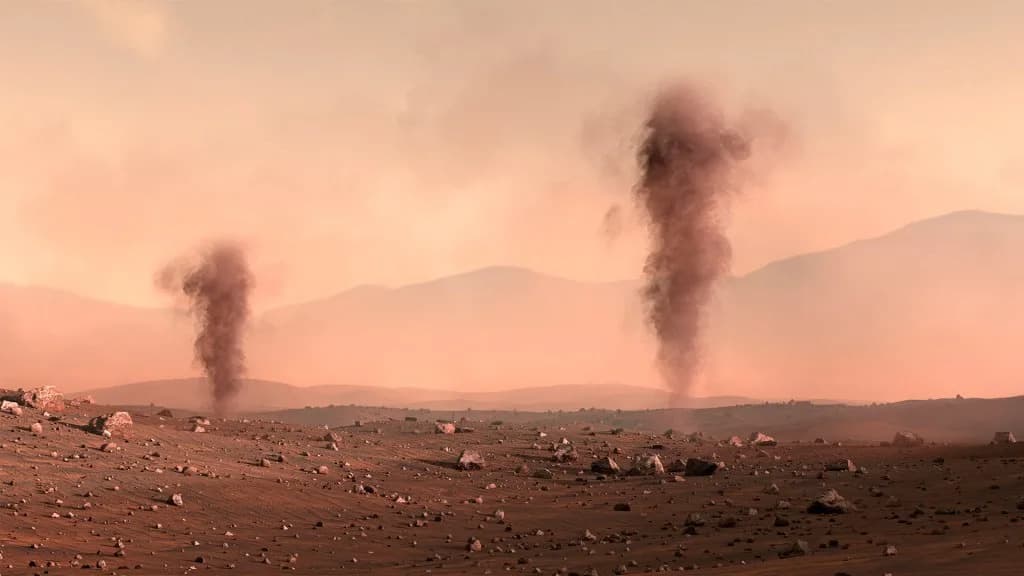
After rain on Dec. 16, videos showed parts of Hormoz Island's coast turning crimson as iron-rich soil washed into the sea, producing red waterfalls and ruby-colored waves. The island's high iron oxide content gives the runoff a Mars-like tint. This runoff-driven coloring is different from "blood rain," which involves atmospheric dust coloring falling raindrops. The effect is natural and typically temporary, dispersed by tides and currents.
Hormoz Island Turns Mars-Red After Rain — Iron-Rich Runoff Creates Red Waterfalls and Ruby Waves

File photo: A woman walks along the beach on Hormoz Island in the Gulf Strait of Hormuz, off the Iranian port city of Bandar Abbas, on April 29, 2019. (Photo: ATTA KENARE/AFP via Getty Images)
Videos from Hormoz Island, off Iran's southern coast in the Persian Gulf, captured a striking scene after rain on Dec. 16: parts of the shoreline turned a deep crimson as red water flowed down cliffs and ruby-hued waves crashed onto the beach.
What Happened
The dramatic color came from the island's iron-rich soil. When rainwater mobilized the iron oxide in surface sediments, runoff carried the red particles into coastal waters, tinting waterfalls and surf for a short time. Footage of the phenomenon circulated widely online because of its vivid, Mars-like appearance.
Why It Looks Like Mars
Iron oxide, the same compound that gives Mars its rusty hue and causes metals to rust on Earth, is abundant in Hormoz's soil. Unlike the meteorological phenomenon known as "blood rain" — where airborne dust or sand colors falling raindrops — Hormoz's color comes from surface runoff washing iron-rich sediment into the sea.
Natural and Temporary: The red tint is a temporary, natural effect caused by erosion and runoff after heavy rain; it does not indicate contamination of the ocean by synthetic pollutants.
While spectacular to see, the effect is short-lived as tides and currents disperse the sediment. Scientists and local observers say the phenomenon is an example of how local geology can dramatically alter coastal appearance when heavy rain interacts with mineral-rich terrain.
Help us improve.