Astronomers report evidence for a possible new class of explosion called a superkilonova, combining a supernova and a subsequent kilonova from a neutron-star merger. Observations from gravitational-wave detectors and telescopes worldwide support the interpretation that a rapidly rotating massive star collapsed, unusually forming two neutron-star remnants that later merged. If validated, this would be the first observed superkilonova and would bolster theories of core fragmentation in spinning stars.
Astronomers Report Possible First-Ever 'Superkilonova' — A Supernova Followed by A Neutron-Star Merger

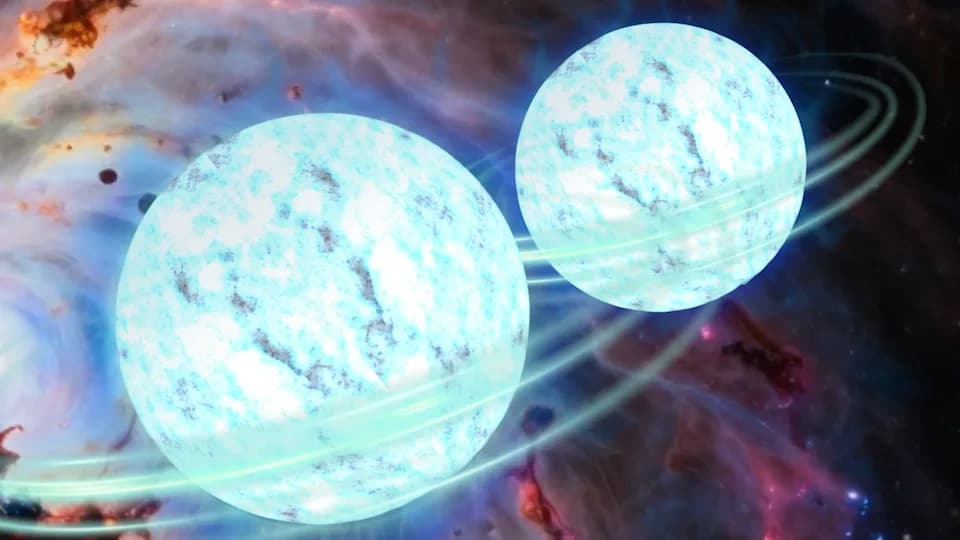
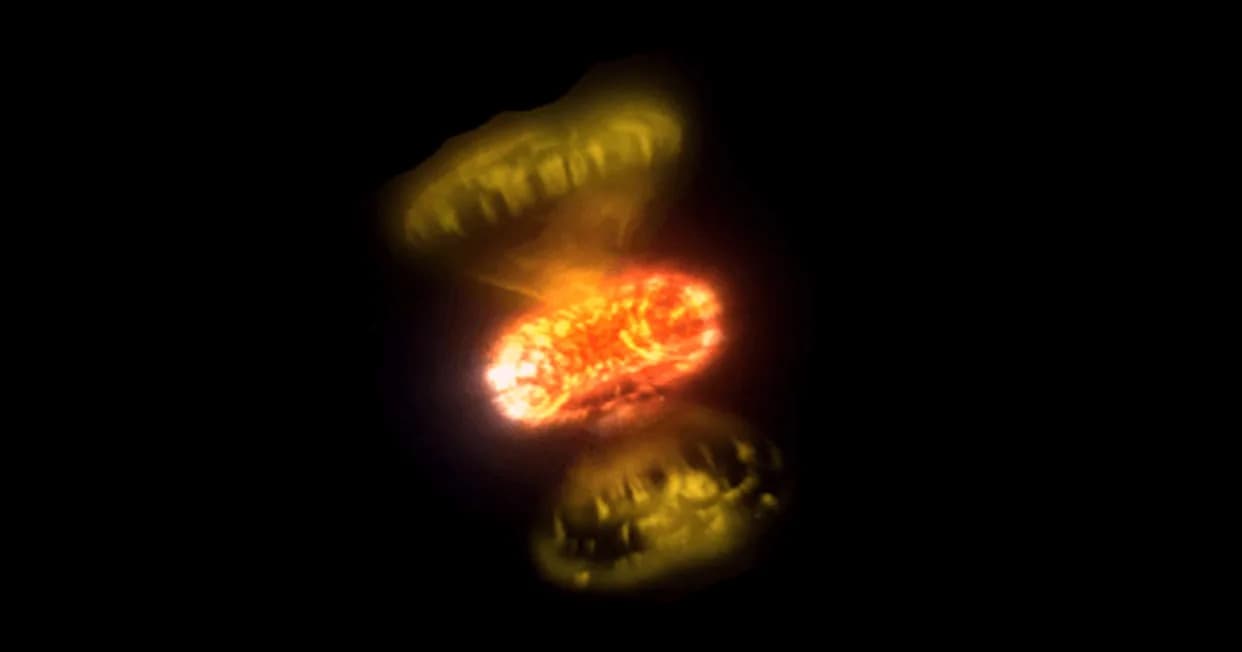
The final stage of a superkilonova.
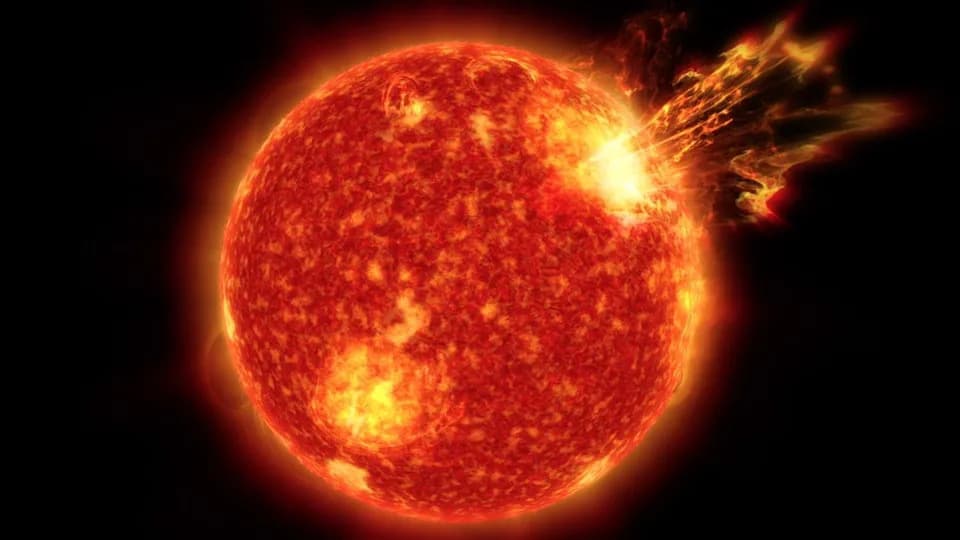
A team of astronomers reports evidence for a potential new class of stellar explosion they are calling a superkilonova — an event that appears to combine a conventional supernova with a subsequent kilonova produced by a neutron-star merger.
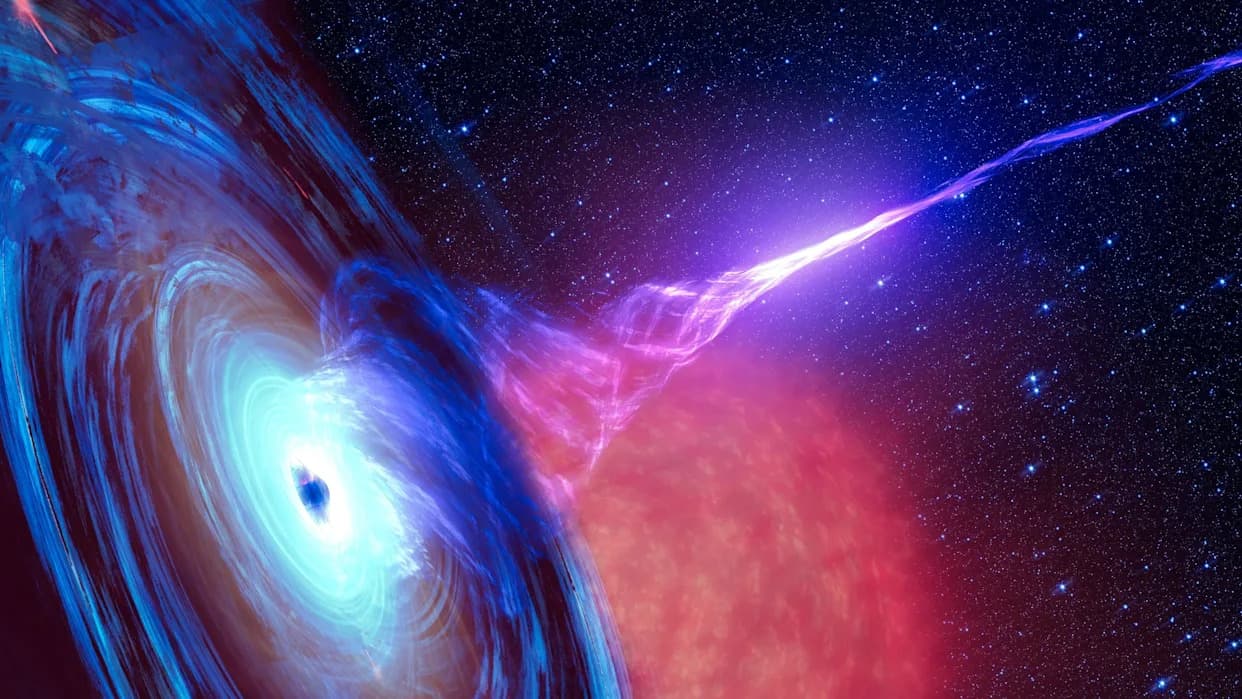
When very massive stars exhaust the fuel that powers nuclear fusion, their cores collapse and drive spectacular explosions known as supernovae. Such cataclysms can leave behind a compact remnant: a neutron star, an ultradense object made mostly of neutrons. If two neutron stars later merge, they produce a kilonova — a rare, heavy-element–producing explosion; to date only one kilonova has been firmly confirmed.
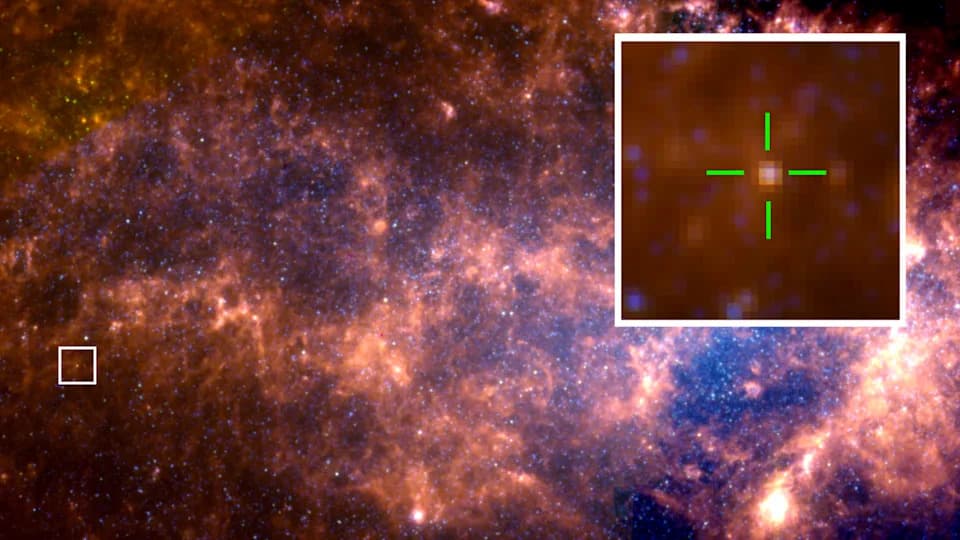
California Institute of Technology astronomer Mansi Kasliwal, a co-author of the new paper, says combined observations from gravitational-wave detectors and telescopes around the globe point to a single interpretation: the data are best explained by a supernova that unusually created two neutron-star remnants which later collided, producing a kilonova. Together, these stages would form what the team calls a superkilonova.
“We could rule out all other candidates except this one,” Kasliwal says, underscoring the rarity and significance of the putative event.
The researchers propose a possible mechanism for this sequence: a rapidly rotating, massive stellar core might fragment or undergo a fission-like process during collapse, producing two compact cores instead of the usual single remnant. Those two neutron stars would then spiral together and merge, generating the kilonova component.
If confirmed, this would be the first recorded observation of a superkilonova and would offer new insights into how massive, fast-spinning stars die and how heavy elements are forged and distributed. The study was published in The Astrophysical Journal Letters.
Help us improve.