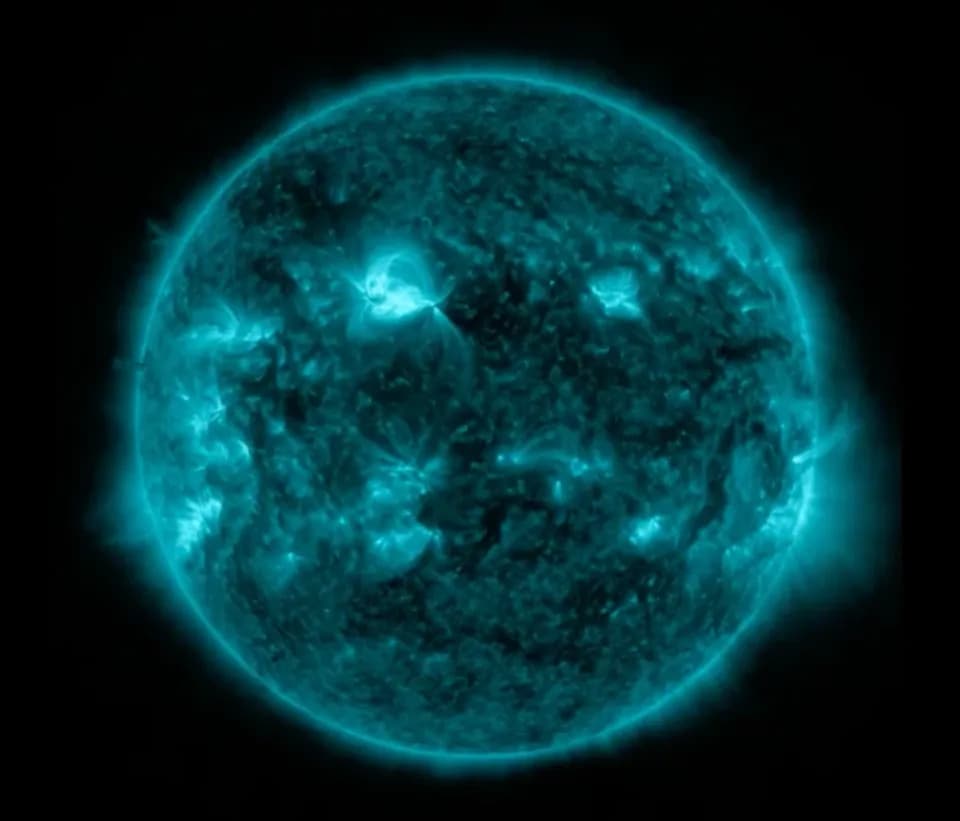
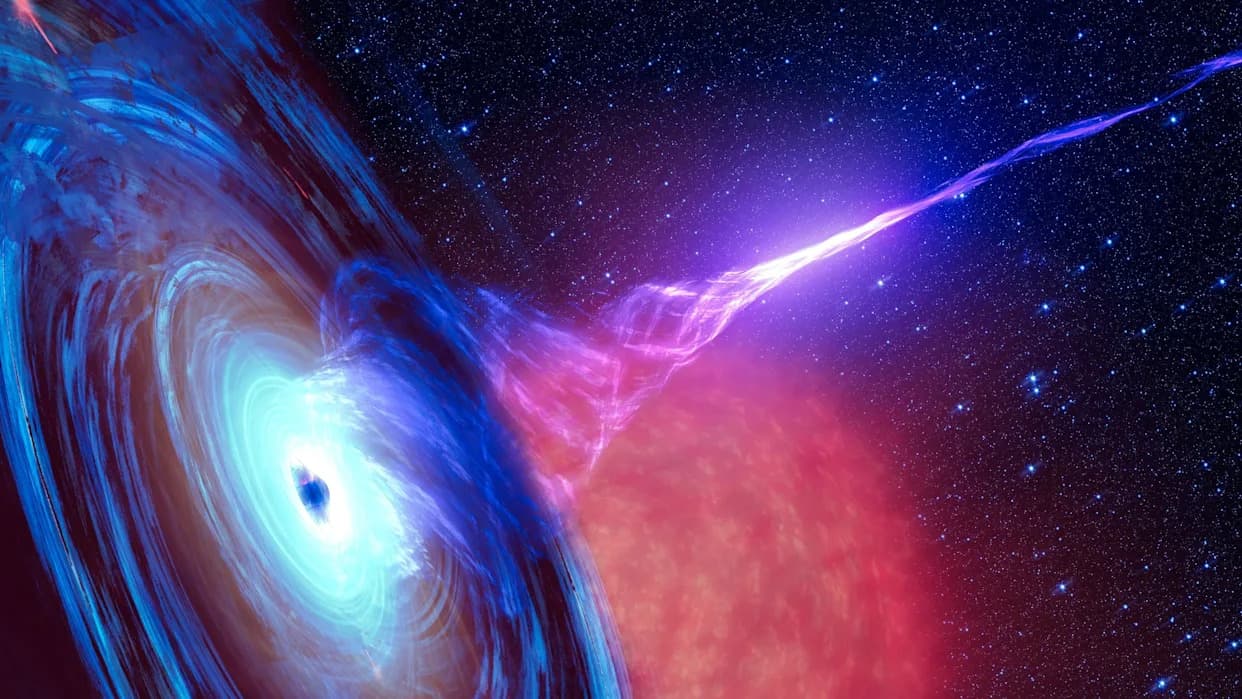
In November 2024 the SVOM/GRM instrument detected a superflare from the RS CVn–type star HD 22468, the first such event from this class to be captured by a hard X‑ray trigger. The eruption released energy comparable to several months of the Sun's output in minutes, heating plasma to roughly 10 million–100 million kelvin. Multiwavelength timing showed an initial hard X‑ray spike followed by longer soft X‑ray and optical emission, supporting magnetic reconnection and particle acceleration as the main drivers. The results, posted to ArXiv and accepted by The Astrophysical Journal, give researchers data to refine models of stellar flares and assess impacts on planetary habitability.
Nearby Star's Giant Superflare Caught in Hard X‑Rays — New Clues to Stellar Explosions
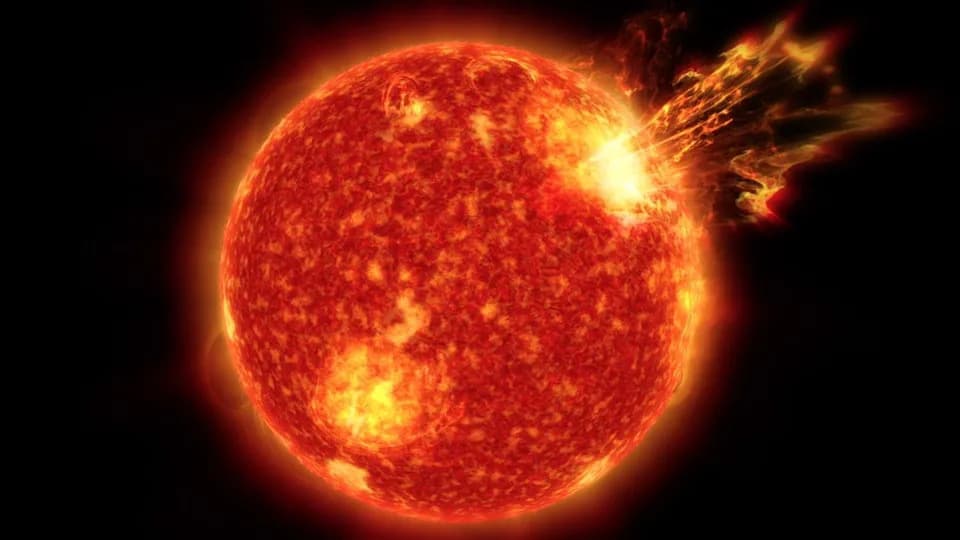
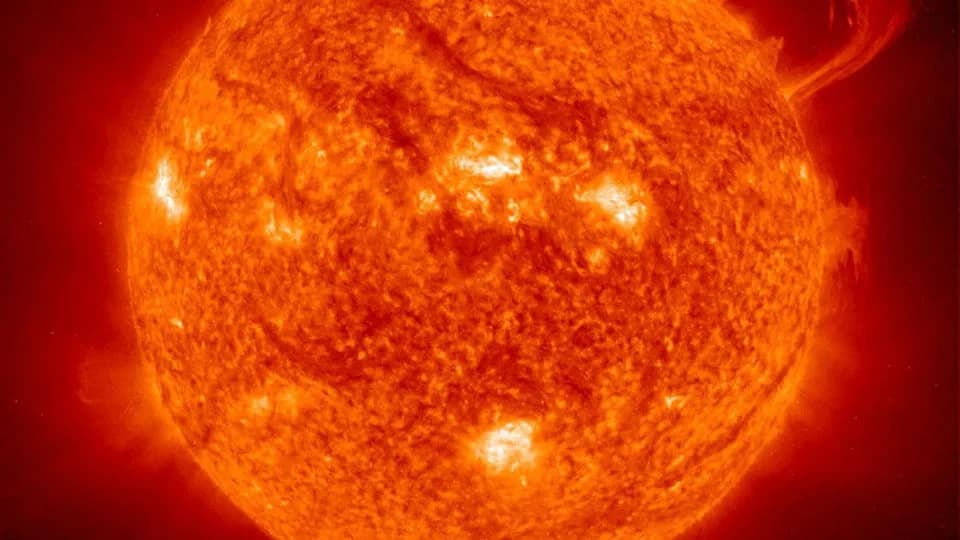
Artist's illustration of a superstorm erupting from the sun. | Credit: NASA's Goddard Space Flight Center/Genna Duberstein
It's notoriously difficult to catch a cosmic outburst the instant it ignites — but when it happens, the payoff is huge. In November 2024 the space-borne SVOM/GRM instrument triggered on an enormous stellar eruption from the RS CVn–type star HD 22468, recording the event in hard X‑rays at its most energetic moment.
What Happened
The detection marked the first hard X‑ray triggered superflare ever observed from an RS CVn system. In a matter of moments the star released an amount of energy comparable to several months of the Sun's total output. That brief, concentrated burst gave astronomers a rare, direct view of the processes powering the most extreme stellar flares.
Why It Matters
Superflares are sudden, massive releases of magnetic energy from a star's corona. While our Sun produces flares, superflares can be thousands to millions of times more energetic and — at close range — capable of stripping atmospheres or irradiating surfaces, so understanding them is important for assessing exoplanet habitability.
Multiwavelength Timeline
Using a coordinated, multiwavelength dataset, researchers reconstructed the flare's physical timeline: a sharp, intense hard X‑ray peak arrived first, followed by prolonged soft X‑ray and optical emission. That sequence is a key diagnostic of how energy is partitioned and transported during the event.
Temperatures and Mechanisms
Analysis indicates plasma temperatures of roughly 10 million to 100 million kelvin, produced by a combination of thermal heating and acceleration of high‑energy particles. The observations strongly support magnetic reconnection — the rapid snapping and rejoining of twisted magnetic field lines — as the primary mechanism converting stored magnetic energy into heat, particles and radiation.
"Catching the initial hard X‑ray spike provided a direct probe of the flare’s trigger and early energy release," the authors note in the paper posted to ArXiv and accepted by The Astrophysical Journal.
Broader Impact
Detailed timing and temperature measurements from this event let theorists refine numerical simulations of reconnection and particle acceleration. Improved models help predict how active stars lose mass, how their magnetic behavior evolves, and what radiation environments orbiting planets might face.
In short, persistent monitoring paid off: by watching a large sample of stars continuously, astronomers sometimes catch a rare event that significantly advances our understanding of how stellar fireworks begin and affect their surroundings.
Help us improve.