ENEA's Nutri3D project in Italy combines lab‑grown plant cells with fruit residues to create 3D‑printable food "inks" that can be formed into nutrient‑dense snacks such as bars and glossy "honey pearls." The research, in partnership with EltHub and Rigoni di Asiago, aims to boost sustainability by reusing by‑products and enabling tailored nutrition. An ENEA survey found 59% of people would try these foods, and developers highlight potential uses from personalised diets on Earth to food production in space and resource‑scarce zones.
Italy Develops 3D‑Printed 'Pastries' From Lab‑Grown Plant Cells and Fruit Residues

Machine irrigates microgreens inside ENEA's Inflatable cultivation module simulating space conditions in Rome, Italy November 4, 2025. REUTERS/Remo Casilli
ROME, Dec 15 (Reuters) - Italian scientists are creating sweet, nutrient-rich snacks by combining lab‑grown plant cells with fruit residues to produce printable food "inks" that a 3D printer can shape into finished products.
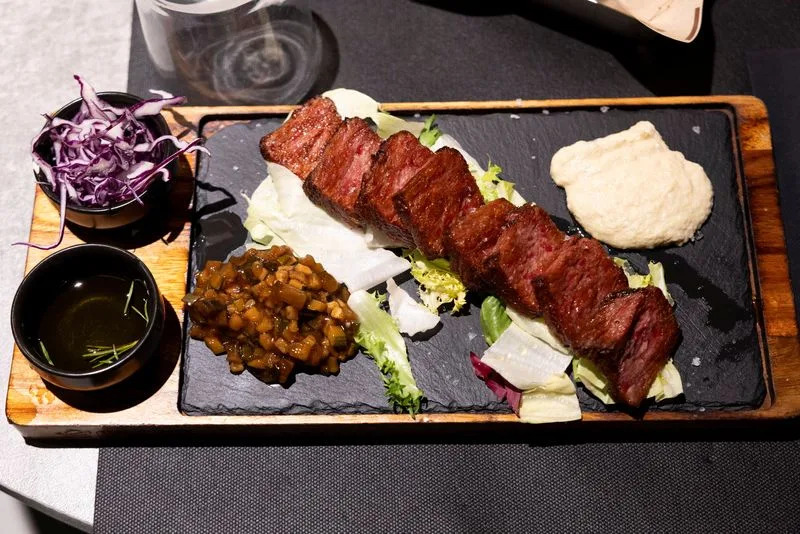
Plant-based 3D-printed sliced meat are served at Impact Food restaurant in Rome, Italy, December 1, 2025. REUTERS/Remo Casilli
How The Technology Works
The Nutri3D project, led by ENEA (Italy's public research agency), mixes cultured plant cells with by‑products such as fruit residues from jam production. The resulting paste-like material can be extruded and sculpted by 3D printers into items the team describes as snack bars and glossy "honey pearls" engineered to preserve both flavour and nutritional value.
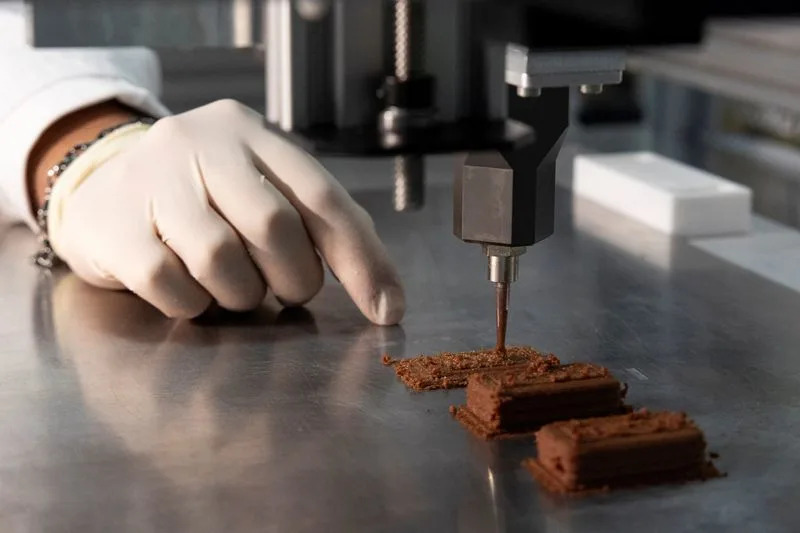
3D snack bars made from plant cell cultures and by-products from the agri-food industry are printed at the Elthub plant in Oricola, Italy, November 24, 2025. REUTERS/Remo Casilli
Prototypes And Partners
Prototypes include compact snack bars and delicate pearl-shaped confections designed to retain texture and nutrients. The project is a collaboration with EltHub — a private R&D firm in the ELT Group — and Rigoni di Asiago, a family-owned organic food company. At EltHub’s centre in Abruzzo, ENEA researchers have been refining plant-based "inks" for printing.
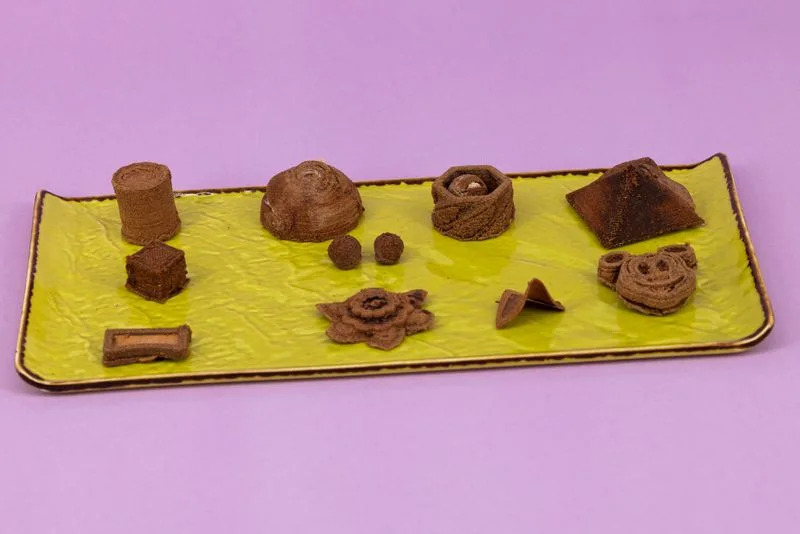
3D snack bars made from plant cell cultures and by-products from the agri-food industry are on display at the Elthub plant in Oricola, Italy, November 24, 2025. REUTERS/Remo Casilli
"In a world where arable land is shrinking and climate change forces us to rethink food production, the goal is to keep making what we are used to eating," said Silvia Massa, head of ENEA's Agriculture 4.0 lab. "The aim is not to grow the plant itself, but its cells."
Acceptance And Applications
An ENEA survey reported that 59% of respondents would be willing to try foods made from cellular plant material. EltHub director Ermanno Petricca highlighted potential uses in resource‑scarce settings, saying the technology could be useful on space missions or in conflict zones — dubbing the products "fruit for astronauts." ENEA is also testing microgreens and experimental "nano‑tomatoes" for space cultivation.
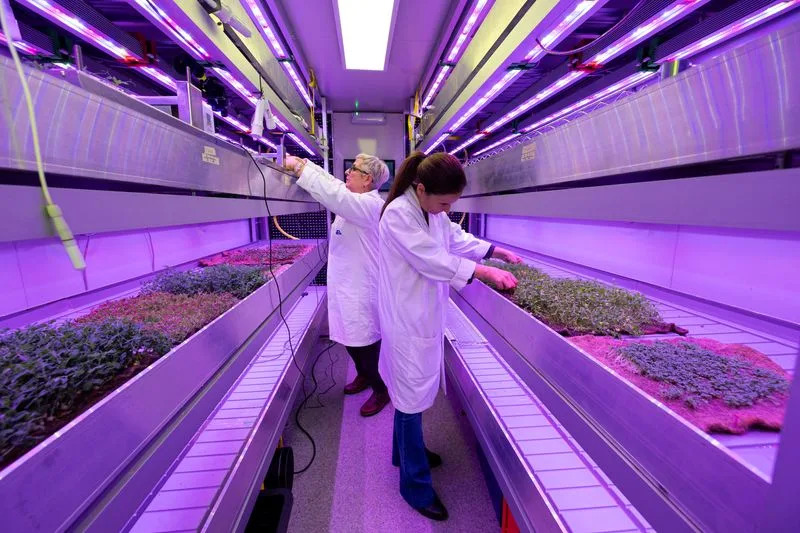
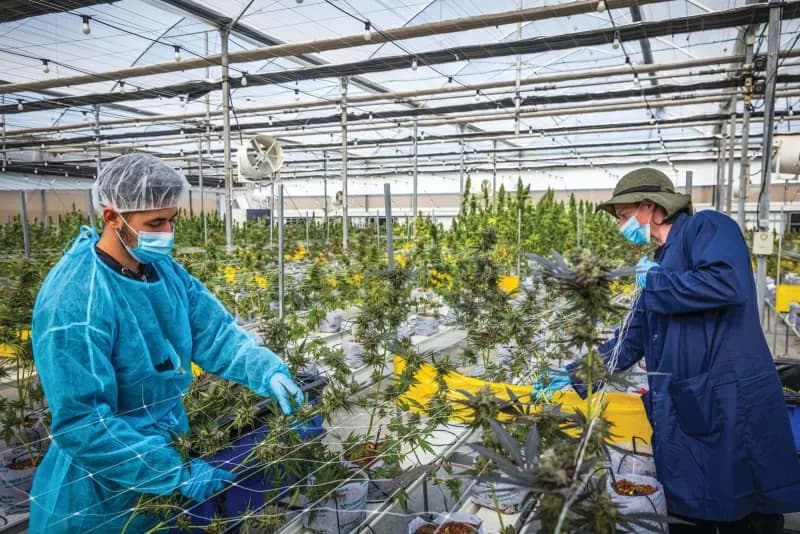
Silvia Massa, head of ENEA’s Agriculture 4.0 laboratory, and technician Elisabetta Bennici work on microgreens in a container farm in Rome, Italy, November 4, 2025. REUTERS/Remo Casilli
Back on Earth, 3D food printing could enable personalised nutrition for people with specific dietary needs. A plant‑based steakhouse in Rome, Impact Food, already offers 3D‑printed sliced meat on its menu, illustrating how printed foods are beginning to enter commercial dining.
Context And Outlook
Researchers in Northern Europe have independently explored cellular food: Finnish teams have produced fruit compotes from cell cultures, and scientists near Zurich are developing cocoa‑like flavourings from cultured material. ENEA’s approach adds an Italian twist by combining cultured cells with recovered food by‑products to boost sustainability and reduce waste. While still at the prototype stage, Nutri3D is part of a broader trend that could reshape how we source and customise food as environmental pressures increase.
(Reporting by Matteo Negri; editing by Giselda Vagnoni and Alexandra Hudson)
Help us improve.