Penn State researchers created a 3D‑printed hydrogel "4D" skin that hides images in its structure and reveals them when heated or when the surrounding solvent changes. Using halftone binary encoding and UV programming, the team embedded a black-and-white image of the Mona Lisa that is invisible at room temperature but resolves as contrast increases. The approach could enable adaptive camouflage, soft-robotic skins, and reconfigurable displays; the results appear in Nature Communications.
Penn State's '4D' Hydrogel Skin Reveals a Hidden Mona Lisa When Heated
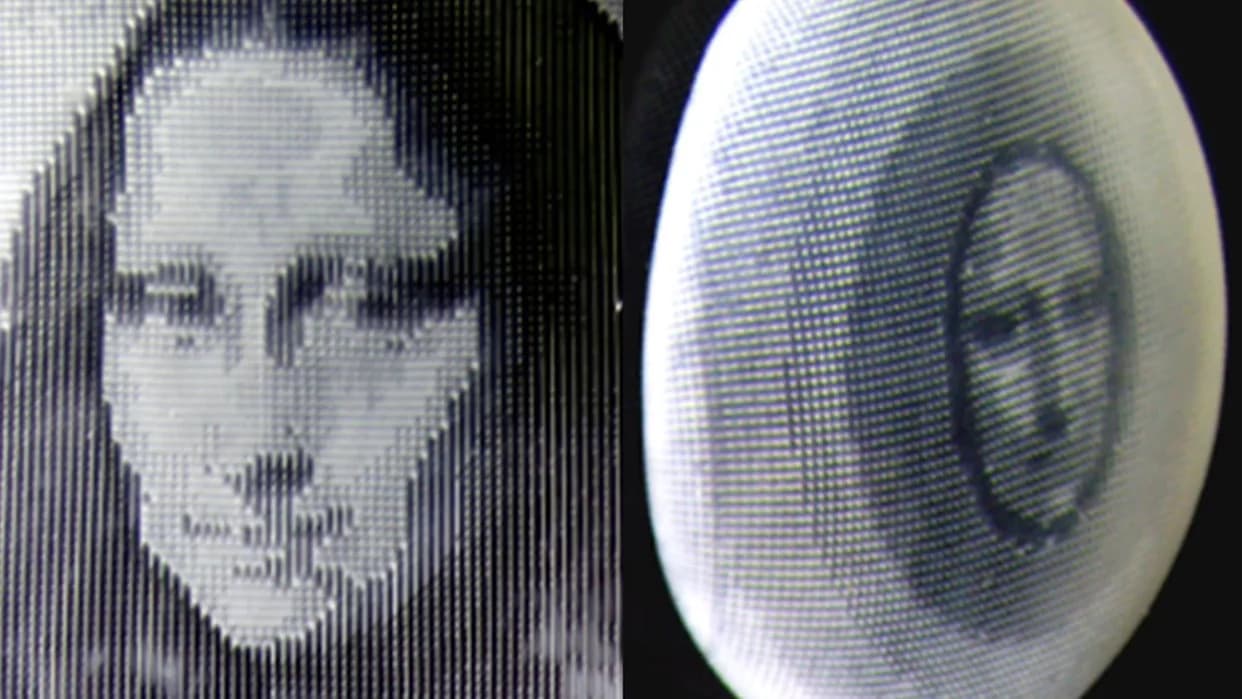
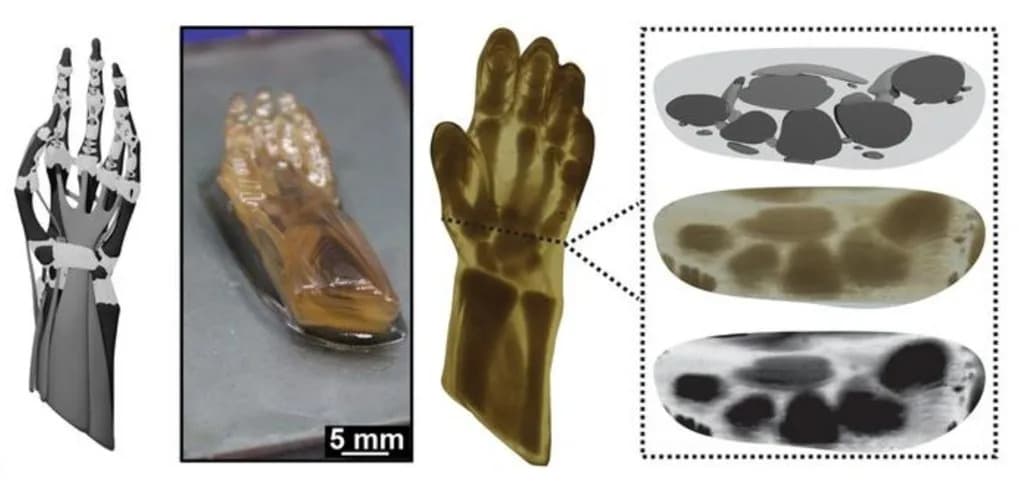
The team used their new printing method to encode a photo of the Mona Lisa onto their smart skin material (left). The photo, which can initially appear hidden in the material, can be revealed by stretching, exposure to heat, exposure to liquid or by adjusting the material from a 2D to a 3D shape (right).
Researchers at Penn State have developed a soft, 3D‑printed hydrogel that can hide and reveal images in response to small environmental changes — a material the team describes as a "4D" synthetic skin. The imprinted patterns are invisible at room temperature but become visible when the material is warmed or when the surrounding solvent is changed. The team demonstrated the technique by encoding a halftone, black-and-white rendition of Leonardo da Vinci’s Mona Lisa into the gel.
How The Material Works
The researchers used a halftone-encoded printing approach to convert an image into a binary grid of 1s and 0s. During 3D printing they applied controlled UV exposure to program tiny structural differences into regions of the hydrogel rather than adding ink or pigment. Under normal conditions those differences are essentially invisible.
Encoding Images
Halftone encoding translates gray tones into patterns of binary pixels — much like newspaper printing — so denser patterns appear darker to the eye. In the hydrogel, the two binary states respond differently to external stimuli because UV exposure changes local material properties at the microscopic level.
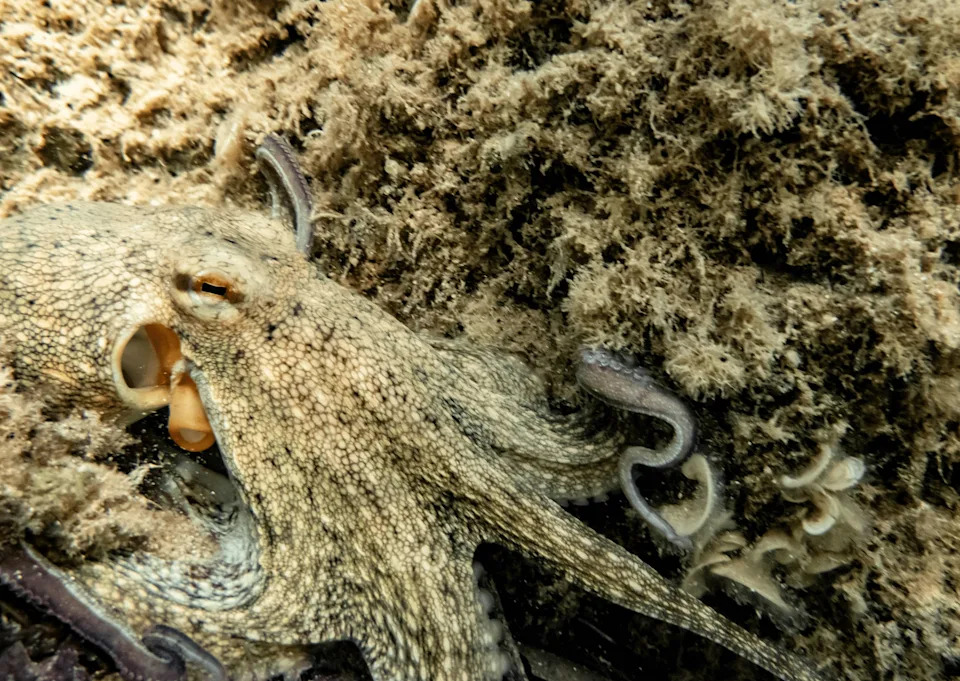
A common octopus (Octopus vulgaris) in the waters of San Giovanni di Sinis, Sardinia, Italy.Image: Emmanuele Contini/NurPhoto via Getty Images.
Revealing The Image
When the hydrogel is heated slightly, or when its solvent environment is altered, the regions corresponding to the two binary states swell or change optical properties at different rates. That differential response increases visual contrast and causes the previously hidden image to emerge. The authors call this a form of 4D printing because the object's visible appearance changes over time in response to external cues.
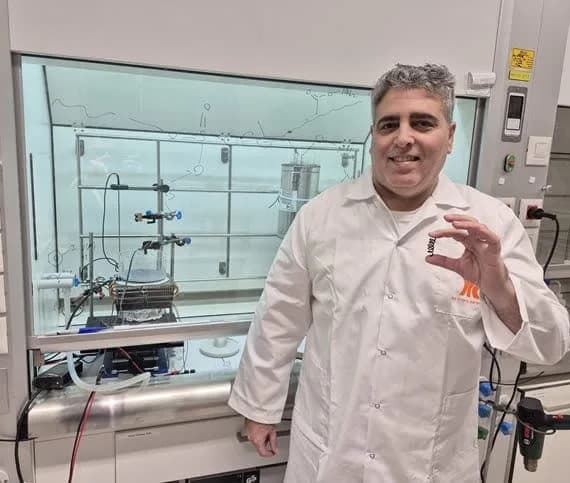
"We’re printing instructions into the material," said Hongtao Sun, a Penn State industrial engineer and co-author. "Those instructions tell the skin how to react when something changes around it."
Demonstrations And Potential Applications
As a proof of concept, the team first revealed the letters "PSU" in a hydrogel film by changing temperature and then encoded a grayscaled Mona Lisa image that became visible under the same stimuli. While still early-stage, this approach could inform adaptive synthetic camouflage, soft robotics, reconfigurable displays, and other technologies where appearance and form need to change on demand. The work is published in Nature Communications.
Context And Related Work
This work builds on a growing body of bioinspired research into octopus skin and soft materials. Previous efforts include 3D‑printed synthetic muscles that change shape under light and flexible materials that swell under targeted stimulation. Roboticists have also developed octopus-like manipulators to exploit the locomotion and grasping advantages of soft-bodied designs.
The Penn State hydrogel stands out because it programs information directly into the material's structure, enabling appearance changes without surface coatings or added pigments. Future challenges include improving durability, control precision, and scaling the technique for larger or more complex patterns.
Help us improve.