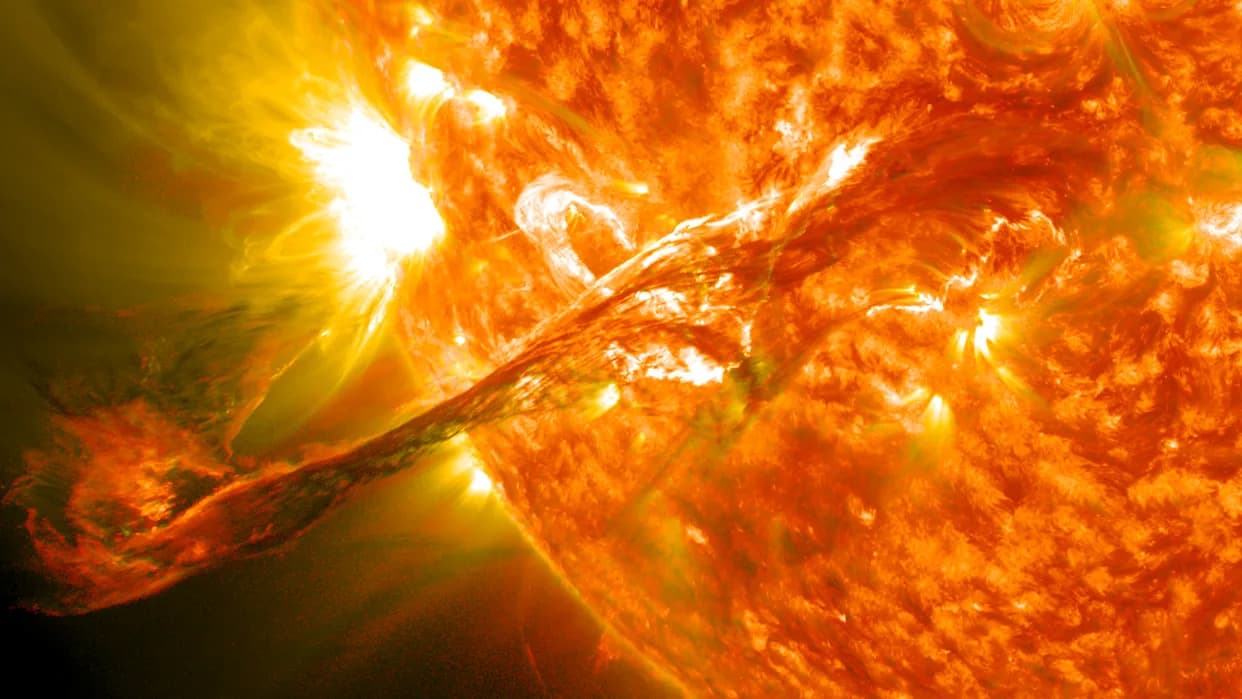
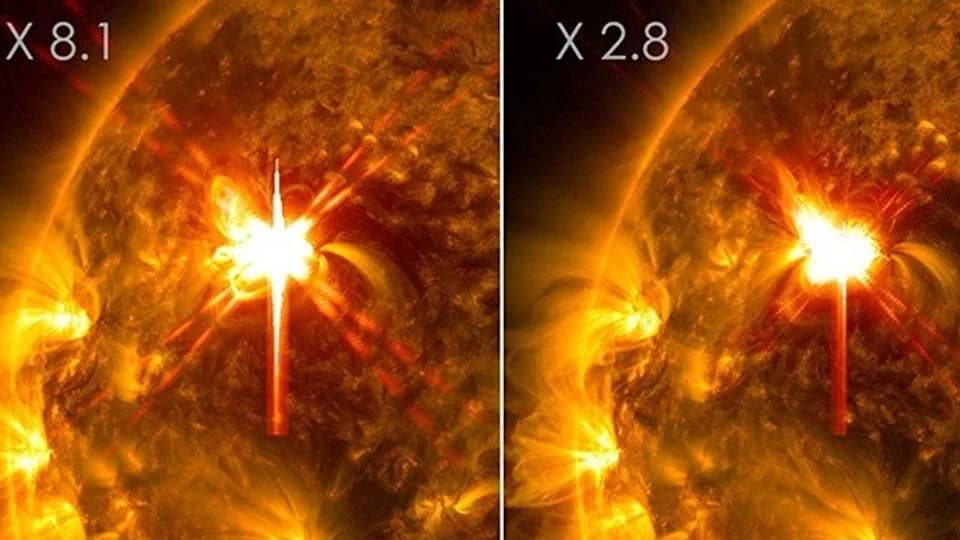
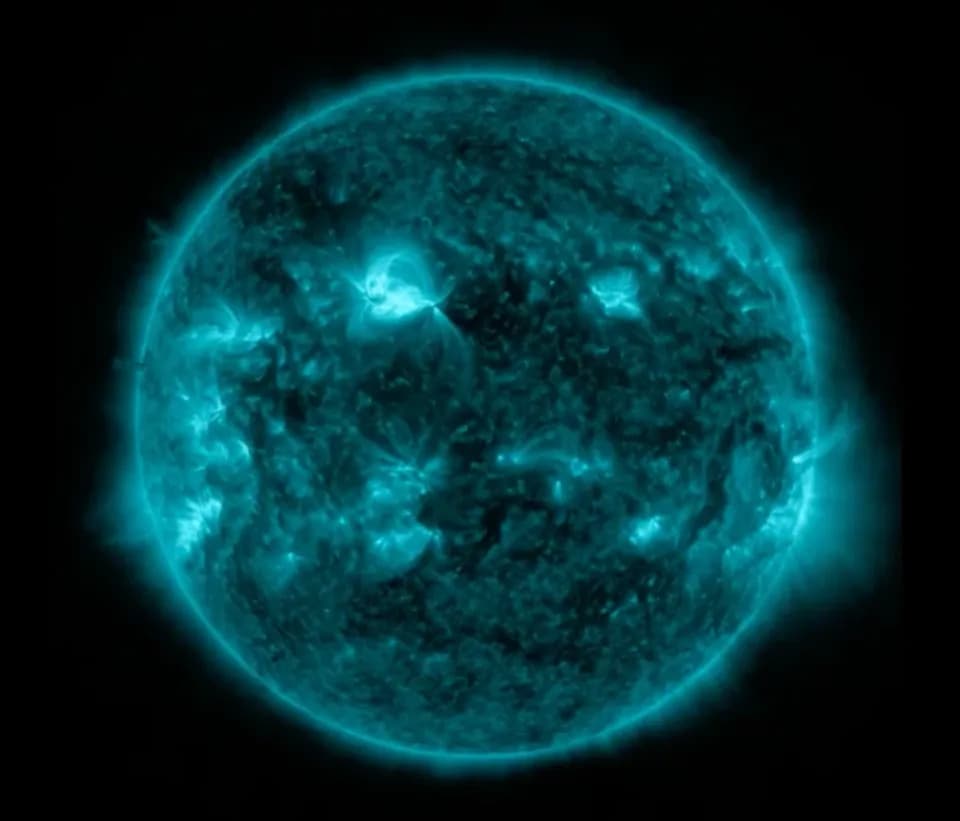
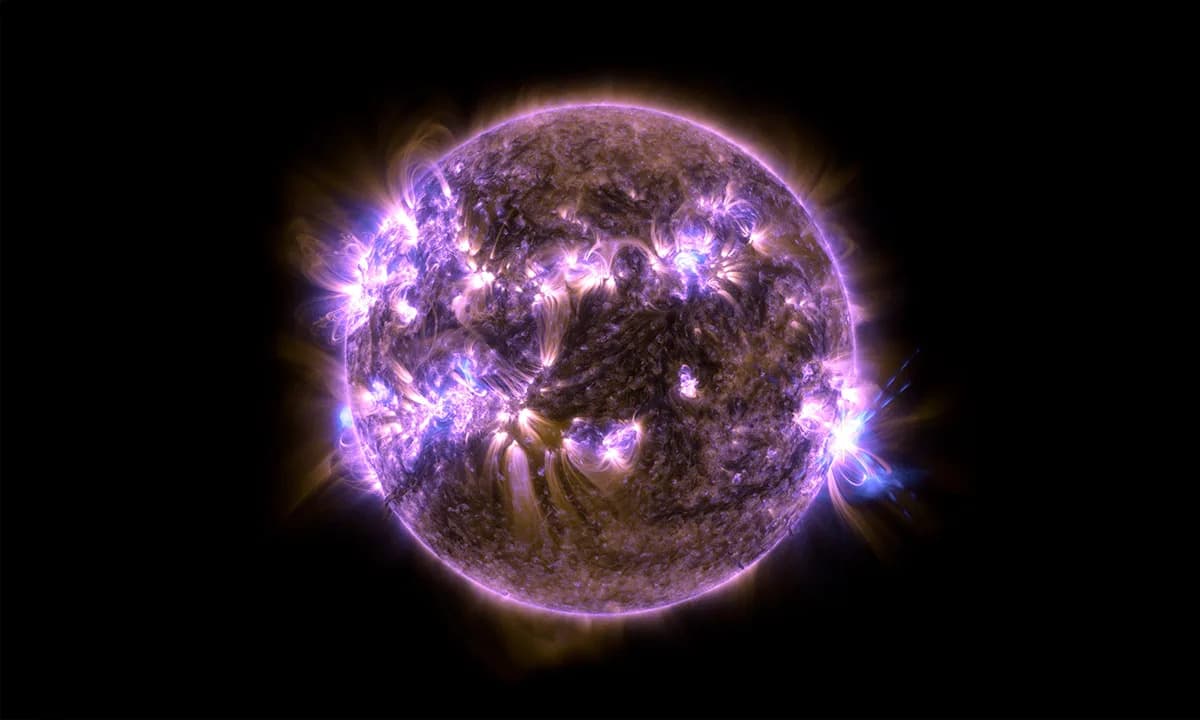
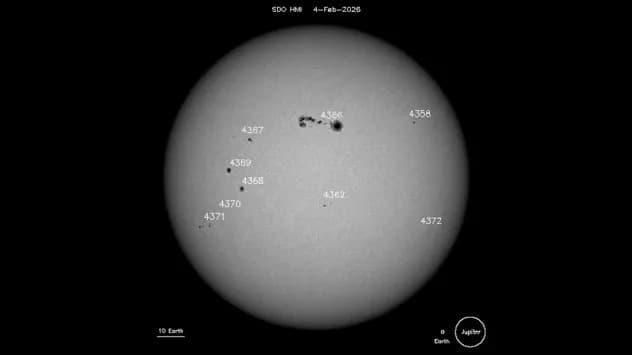
The Sun produced an X1.1-class solar flare that peaked at 12:01 a.m. EST (0501 GMT) on Dec. 8, briefly knocking out shortwave radio across Australia and parts of Southeast Asia. The eruption came from sunspot region AR4298 and launched a coronal mass ejection that early analysis suggests is not Earth-directed. NOAA and the U.K. Met Office have issued geomagnetic storm watches for Dec. 8–9, warning of possible G2–G3 storming and auroras at high to mid-latitudes. Strong flares ionize lower ionospheric layers, causing HF radio signals to fade, distort, or disappear.
Sun Emits X1.1 Solar Flare, Causing Shortwave Radio Blackouts Across Australia

The Sun erupted with a powerful X1.1-class solar flare in the early hours of Dec. 8, briefly disrupting shortwave radio communications across Australia and parts of Southeast Asia. The flare peaked at 12:01 a.m. EST (0501 GMT) and originated from sunspot region AR4298 as the region moved toward the Sun's western limb.
What Happened
The impulsive eruption produced a coronal mass ejection (CME) that was observed in satellite coronagraph imagery. Preliminary analysis indicates this CME is unlikely to be Earth-directed, but several earlier CMEs are forecast to interact with Earth's space environment between Dec. 8 and Dec. 9.
Space Weather Alerts
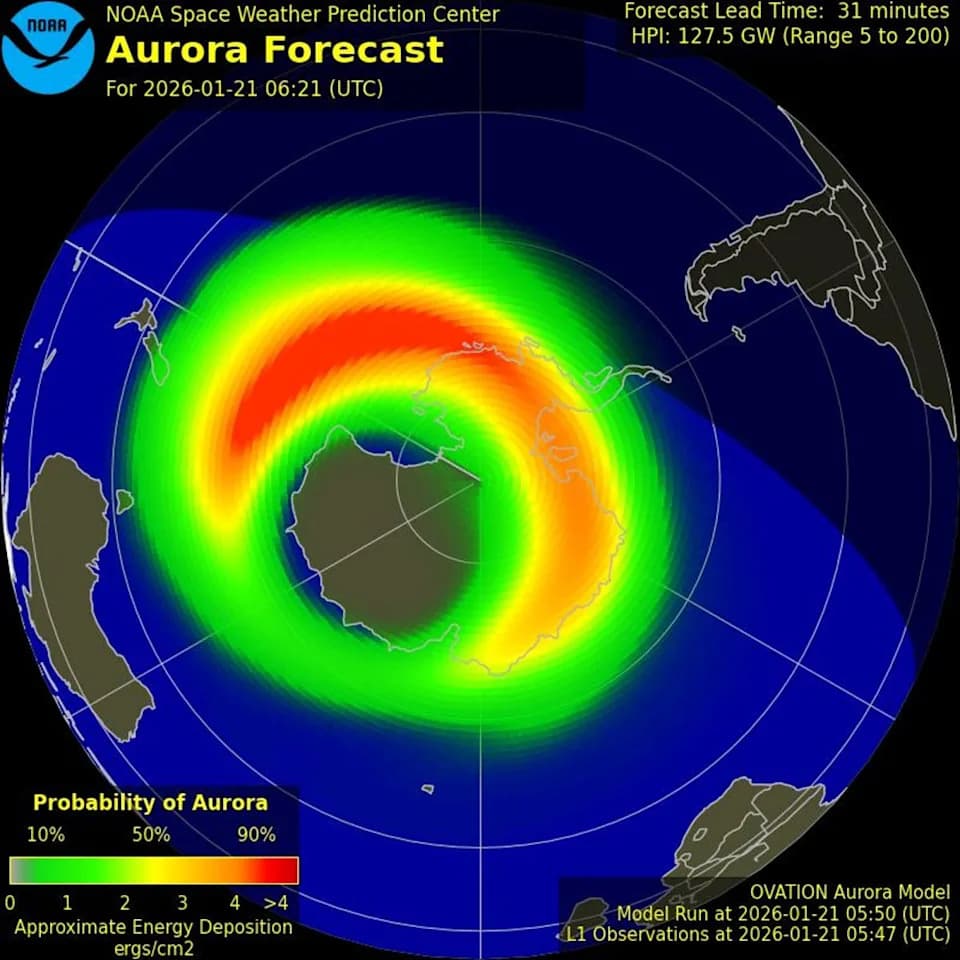
NOAA's Space Weather Prediction Center and the U.K. Met Office have issued geomagnetic storm watches for Dec. 8–9. Forecasters have noted a chance of strong-to-moderate (G2–G3) geomagnetic storming, which could make auroras visible at high to mid-latitudes.
Why Radio Blackouts Occurred
Solar flares release intense bursts of electromagnetic radiation. When that radiation reaches Earth it increases ionization in the upper atmosphere. During strong flares, the lower, denser layers of the ionosphere become highly ionized, absorbing and scattering high-frequency (HF) radio waves. The result can be sudden HF signal fading, distortion, or total loss of reception on the sunlit side of the planet — the type of brief radio blackouts reported across parts of Australia and nearby regions.
What To Expect
- Shortwave radio and some HF communications may experience intermittent outages while ionization effects persist.
- Most modern satellites and power systems are unlikely to see serious impacts from this specific eruption, since the recorded CME does not appear Earth-directed; however, additional CMEs arriving Dec. 8–9 could raise geomagnetic activity.
- Observers at high to mid-latitudes should watch for increased auroral activity if G2–G3 storming occurs.
Stay Informed
Monitor official updates from NOAA SWPC and the U.K. Met Office for the latest alerts and forecasts. Amateur radio operators, aviators, and infrastructure managers should follow operational advisories in case conditions change.
Help us improve.