The article contrasts China’s capacity to execute massive engineering projects quickly with the argument that sustained, disruptive innovation emerges from freedom rather than control. Citing Jensen Huang’s warning that China could win the AI race, it traces China’s strategy of absorbing and indigenizing foreign technology and highlights how surveillance and political risks can suppress originality. The piece argues the U.S. should preserve open inquiry while implementing targeted safeguards—vetting, disclosure, IP protection and sustained AI funding—to protect sensitive research without stifling creativity.
Speed vs. Spark: Why Freedom — Not Control — Produces Real Innovation

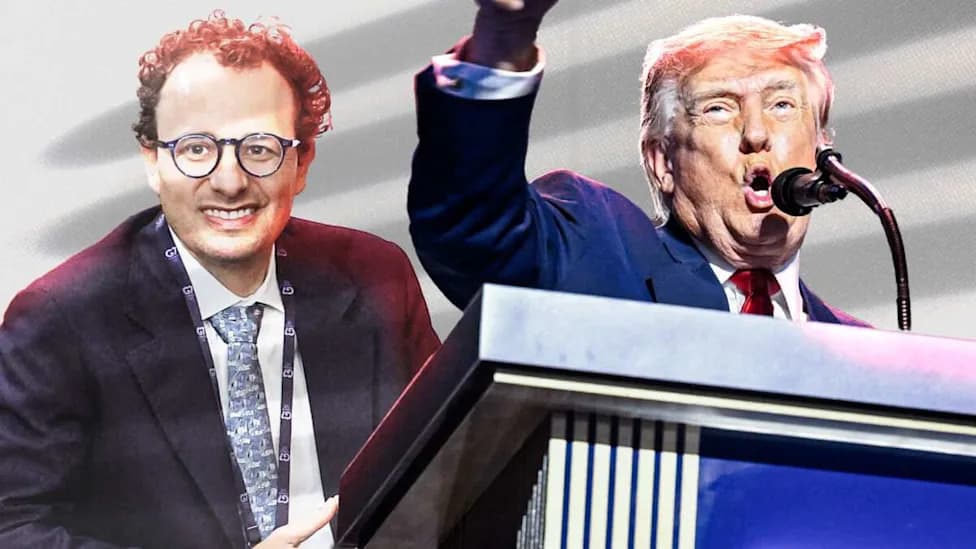
When Nvidia CEO Jensen Huang warned at the Financial Times Future of AI Summit, "China is going to win the AI race," his words carried unusual urgency. He pointed to Beijing’s subsidies for cheap energy and to a more permissive regulatory environment as competitive advantages, and he acknowledged that U.S. export controls have effectively shut Nvidia out of China: "Our share there has fallen to zero."
At first glance Huang’s argument is practical: preserving U.S. technological leadership depends partly on keeping global developers tied to American chips. But beyond that corporate concern lies a deeper question: which political and social system best nurtures sustained, disruptive innovation — centralized control or individual freedom?
From Importing Technology to Building at Scale
China’s technological ascent has deep historical roots. In the 1950s Beijing leaned on Soviet assistance to modernize its industry and military. Dr. Baichun Zhang of the Chinese Academy of Sciences recalled that Moscow supplied advisers and blueprints, but not the full underlying expertise. When the Sino‑Soviet split erupted in 1962 and Soviet experts departed almost overnight, factories stalled and aviation projects were halted. The takeaway was stark: dependence creates vulnerability.
Mao Zedong emphasized self‑reliance; Deng Xiaoping later urged pragmatism — "learn from the West, catch up, compete and eventually surpass." That strategy — absorb foreign know‑how, replicate it, then indigenize capability — has powered rapid progress. Partnerships with companies such as Japan’s Kawasaki helped China build high‑speed rail. After Chinese engineers internalized the technology, that partnership waned and China went on to construct the world’s largest high‑speed rail network. Similarly, Western suppliers still provide components for new Chinese aircraft today, even as Beijing invests to substitute foreign parts with domestic designs once performance parity is reached.
As Dan Wang observes in Breakneck, China has evolved into an "engineering state" that can execute massive projects with centralized precision: skylines rise, entire urban districts are built, ports expand and rail corridors are completed on an impressive timetable. Execution at scale is a clear Chinese strength.
Execution Isn’t the Same as Originality
But delivering planned projects is not the same as producing original breakthroughs. Authoritarian efficiency works until it collides with the limits of centralized control. Incentives often favor obedience over experimentation, and many scientists, entrepreneurs and artists learn early that deviation from accepted norms carries risk.
“Self‑censorship becomes second nature,” wrote observers of China’s surveillance state, which includes hundreds of millions of cameras, widespread facial recognition systems and a social‑credit framework that encourages predictable compliance.
No episode captures the tension between control and transparency more painfully than the case of Dr. Li Wenliang. In late 2019, the Wuhan ophthalmologist warned colleagues about a SARS‑like illness and was accused of "spreading rumors" and forced to retract. Research into the outbreak’s origins was centralized under state authority. The implicit lesson: preserving political stability or the ruling party’s image can trump openness, even when transparency matters for global public health.
Other figures who raised concerns — from economists like Zhu Hengpeng to tech leaders such as Jack Ma — have also faced repercussions. In a climate where questioning carries professional or personal danger, innovation tends to become careful and brittle rather than bold and resilient. Fear replaces curiosity; genius hides.
Why Freedom Fosters Breakthroughs
By contrast, U.S. innovation culture tolerates failure and often celebrates it. Entrepreneurs such as Elon Musk repeatedly risked personal fortunes; Steve Jobs’s ouster and return to Apple became part of a narrative about creative rebirth. In many hierarchical systems, similar setbacks would end careers; in the United States they often become part of the mythos that encourages repetition and risk‑taking.
That moral permission to defy authority — to fail, to recover and to try again — operates as democracy’s creative engine. Universities, startups and open forums form ecosystems in which dissent is treated as productive friction rather than existential threat. Thousands of improbable ideas compete, and a few transform entire industries.
Policy: Openness Paired with Targeted Safeguards
Huang’s warning that America might "lose the AI race" highlights a real economic concern, but it misses a broader point. The competition isn’t only about chip speed or energy costs; it’s about which society best nurtures human imagination. China can deploy AI quickly at scale, but it often does so within politically safe boundaries. The U.S., for all its flaws and volatility, allows innovators to break norms — a volatility that supports long‑term creative resilience.
At the same time, Beijing’s pursuit of parity reaches into global academia. Programs such as the China Scholarship Council’s overseas fellowships and the Thousand Talents Plan incentivize students and researchers to return with skills that serve national objectives. Partnerships between elite universities and institutions tied to China’s civil‑military fusion strategies create two‑way knowledge flows that present both opportunity and security risk.
To protect its edge, the United States should pair openness with targeted safeguards: strengthen vetting for sensitive collaborations, tighten disclosure requirements, bolster intellectual‑property protections and increase sustained funding for foundational AI research. These measures can reduce the risk that openness will be exploited while preserving the freedom that fuels breakthrough innovation.
Breakthroughs rarely come from obedience; they come from friction, debate and the willingness to try what others label impossible. By combining openness with prudent protections, democracies can remain both generous with ideas and careful with critical technologies. Speed matters in the AI era — but freedom is the engine that produces true genius.
Derek Levine, Ph.D., is a professor at Monroe University and King Graduate School and the author of China’s Path to Dominance: Preparing for Confrontation with the United States.
Help us improve.