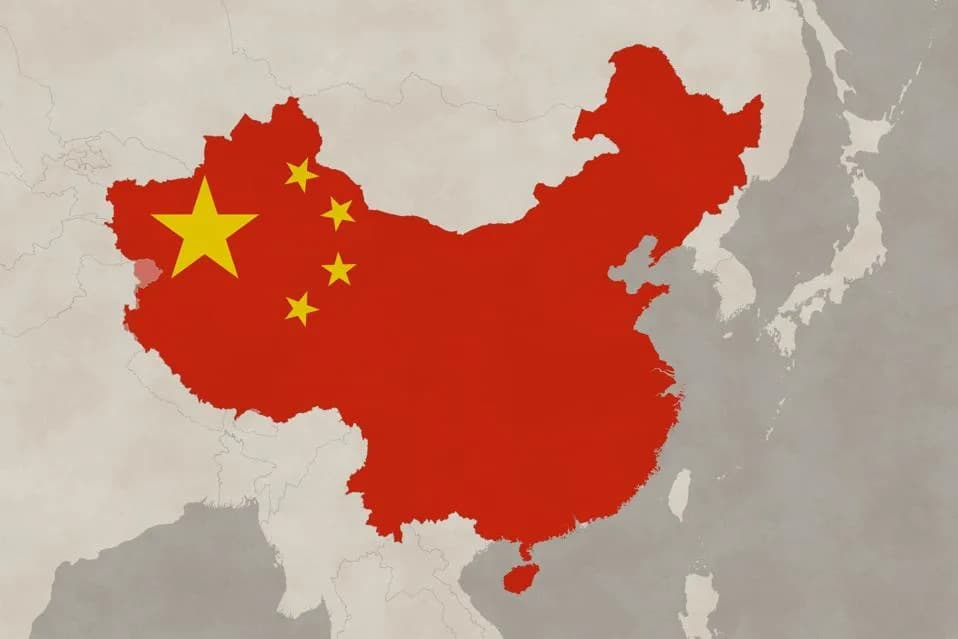
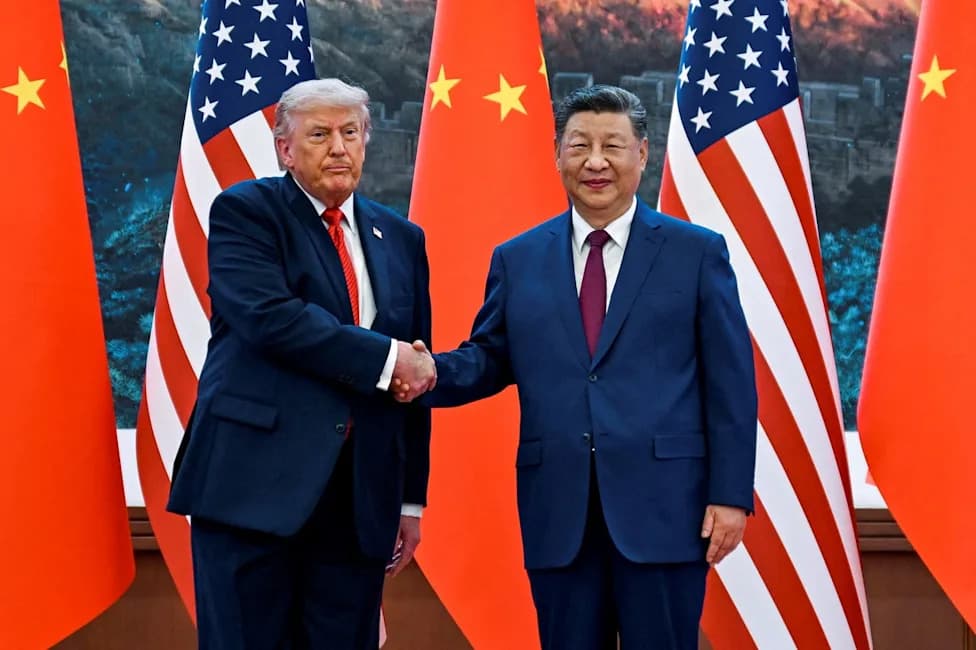
The Trump administration’s approach to China is sending mixed signals: while tightening in some areas, it is reportedly considering easing export controls on advanced Nvidia chips. Lawmakers in both chambers have proposed bills to block such relaxations, warning that chips like the H200/H20 could enable China to build frontier-scale AI systems and threaten U.S. economic and national security. The author urges a clear, consistent export-control strategy similar to Cold War-era policies.
Mixed Signals on China: Why Relaxing Chip Controls Threatens U.S. National Security

When Ronald Reagan was president, he quipped that sometimes "the right hand doesn’t know what the far-right hand is doing." That line captures the dissonance in the Trump administration’s approach to China: one strand of policy seeks to constrain Beijing’s technological rise while another appears poised to ease restrictions that limit China’s access to advanced chips.
On the one hand, the administration has taken steps to counter Chinese ambitions for global leadership. On the other, it has signaled a willingness to loosen export controls that prevent the sale of high-end artificial-intelligence chips to China. That split has unnerved lawmakers across the political spectrum.
Congress Pushes Back
This month, Republicans in both the House and Senate introduced legislation to bar the administration from rolling back current rules that restrict China’s access to advanced Nvidia chips. As a former Democratic member of Congress who began my career by narrowly defeating a long-serving Republican in a conservative California district, I understand and share the concerns driving this effort.
Why The Chips Matter
U.S. companies are currently prohibited from selling the most powerful AI-capable chips to China because of the clear risk that Beijing could use them to outpace the United States in AI development. Dominance in AI carries broad implications for economic competitiveness and national security, and China is a formidable and determined competitor.
The Information Technology and Innovation Foundation notes that "China is the global leader in AI research publications and is neck and neck with the United States on generative AI." Against that backdrop, reports that the administration is considering allowing Nvidia to export its higher-powered H200 chip to China are alarming: the H200 is significantly more capable than the chips currently authorized for sale to Chinese customers, and uncapped access could materially accelerate China’s ability to build frontier-scale AI systems.
"Unfettered access to the H200 would allow China to build frontier-scale AI supercomputers to develop the most powerful AI systems, just at a moderately higher cost relative to cutting-edge Blackwell chips," a former White House and Commerce Department official told the Financial Times. "It would also arm Chinese cloud providers to compete globally with US hyperscalers."
Earlier this year the administration reversed a ban on certain chips and allowed Nvidia to sell H20 chips to China. Media reports then indicated Nvidia would remit about 15 percent of revenue from those China sales to the U.S. government — a development that helped spur the new Republican legislative effort.
Huawei And The Wider Context
One possible rationale for easing chip restrictions could be to pressure Huawei, which has announced plans to develop its own chips and expand compute capacity. But Huawei’s public statements should be viewed with caution: in 2020 the U.S. Justice Department indicted Huawei and several subsidiaries on charges related to alleged theft of trade secrets from American firms.
Huawei remains the world’s largest maker of telecommunications equipment, and U.S. authorities have acted to limit its influence in networking. For example, the Justice Department approved a deal involving Hewlett Packard Enterprise and Juniper Networks after U.S. intelligence agencies urged the merger because it could help counter China’s telecom dominance.
A Strategic Inconsistency
Policymakers arguing for a steady, clear approach point to Cold War precedent. During the rivalry with the Soviet Union, U.S. export controls on sensitive technologies were a deliberate element of national strategy. That steadiness helped shape outcomes in that era.
Today’s strategic competition with China likewise calls for clarity and consistency. Relaxing semiconductor export controls while otherwise pursuing a tougher posture toward China risks undercutting broader national-security objectives and handing Beijing tools that could erode American advantages in AI.
About the author: Loretta Sanchez represented a California district in Congress from 1997 to 2017. She served on the House Armed Services Committee, including as Ranking Member of the Subcommittee on Strategic Forces and on the Subcommittee on Emergency Threats and Capabilities.
Help us improve.