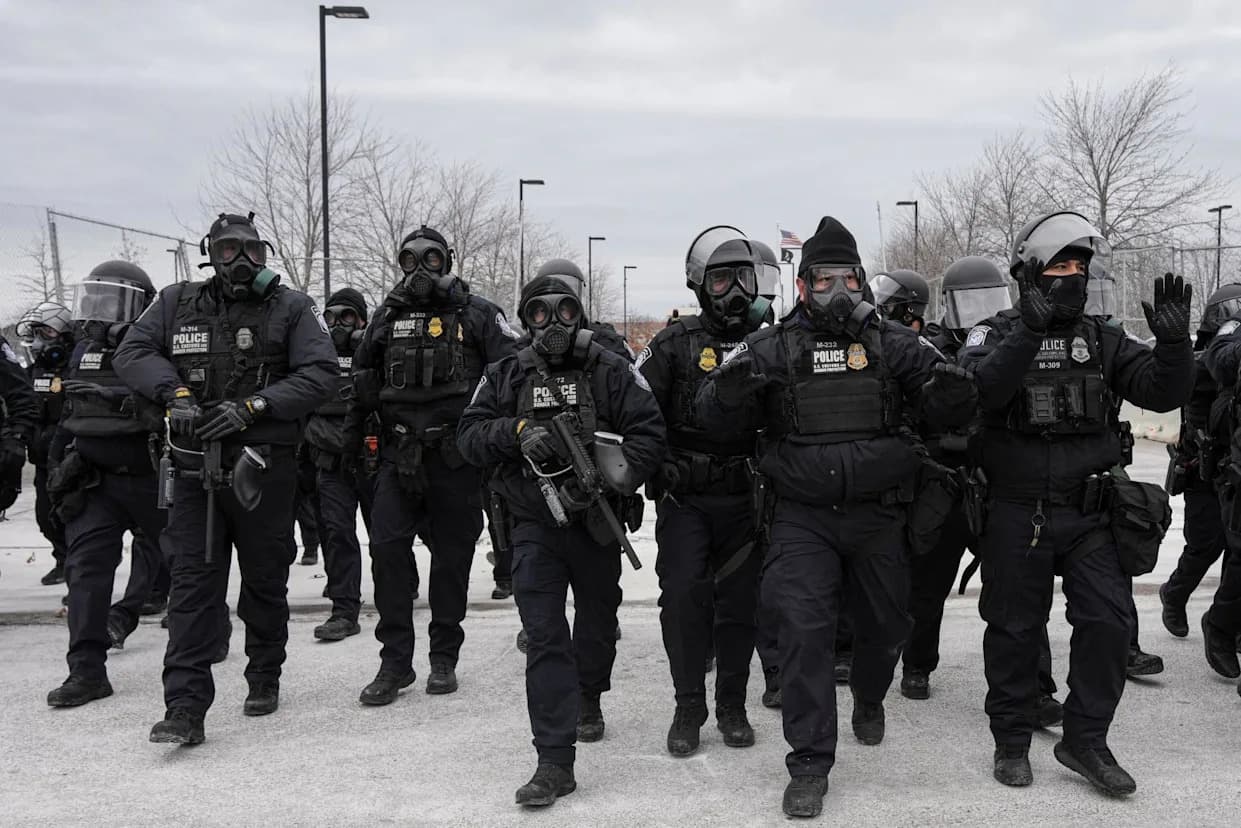
U.S. District Judge Beryl Howell issued a preliminary injunction blocking broad, warrantless civil immigration arrests in Washington, D.C., unless officers have an administrative warrant or particularized probable cause that a person is an imminent flight risk. Plaintiffs, led by the ACLU, presented sworn statements alleging indiscriminate stops and arrests in predominantly Latino neighborhoods. The judge ordered agents to document the specific facts supporting any warrantless arrest and to provide that documentation to plaintiffs' counsel. The decision parallels similar rulings in other federal cases and applies while the lawsuit moves forward.
Federal Judge Blocks Warrantless Civil Immigration Arrests Across Washington, D.C.

A federal judge late Tuesday issued a preliminary injunction that prevents the federal government from conducting broad, warrantless civil immigration arrests in Washington, D.C., unless officers have an administrative warrant or particularized probable cause that a person poses an imminent risk of flight.
U.S. District Judge Beryl Howell granted the injunction after civil liberties and immigrant-rights groups — including the ACLU — sued the Department of Homeland Security. Plaintiffs submitted sworn declarations alleging that federal officers were patrolling and establishing checkpoints in predominantly Latino neighborhoods and detaining people without warrants or an assessment of escape risk.
Howell underscored the legal standard in the Immigration and Nationality Act: warrantless civil arrests are permitted only when officers have probable cause to believe a person is unlawfully in the United States and likely to escape before a warrant can be obtained. The judge found the plaintiffs had "established a substantial likelihood of an unlawful policy and practice by defendants of conducting warrantless civil immigration arrests without probable cause."
New documentation requirement. The injunction requires any agent who conducts a warrantless civil immigration arrest in Washington to record "the specific, particularized facts that supported the agent's pre-arrest probable cause to believe that the person is likely to escape before a warrant can be obtained," and to provide that documentation to plaintiffs' attorneys.
Government lawyers have denied that a policy authorizing indiscriminate warrantless arrests exists. Howell noted the ruling is consistent with other federal decisions involving similar challenges in Colorado and California. Separately, a Los Angeles restraining order that had barred stops based on race, language, occupation or location was previously lifted by the Supreme Court in September.
This is a preliminary ruling: it limits how federal agents may carry out civil immigration enforcement in the District while the litigation proceeds but does not permanently resolve the underlying legal issues.
Help us improve.