Emmanuel Villermaux has derived an equation—published in Physical Review Letters—that predicts how fragments are distributed when objects break by combining a principle of "maximal randomness" (maximizing entropy) with a 2015 conservation law on fragment density. The prediction matches data from many materials including glass, droplets, bubbles, spaghetti, ocean plastics and ancient stone flakes. The law excludes essentially deterministic breakups and cases where fragments interact strongly, and it could help in mining, rockfall assessment and further studies of fragment shapes and minimal sizes.
New “Maximal Randomness” Law Explains Why Objects Shatter So Messily

A French physicist has derived a compact equation that predicts how fragments are distributed when objects break, showing why breakups—from smashed glass to exploding bubbles—often produce the same uneven mix of big and small pieces.
Maximal randomness lies at the heart of the result. Instead of modelling the detailed paths of cracks or ruptures, Emmanuel Villermaux of Aix‑Marseille University asked which arrangement of fragments is statistically most likely. He proposes that fragmentation selects the configuration that maximizes entropy—the messiest arrangement consistent with the system's physical constraints.
To make that idea physically meaningful Villermaux combined it with a conservation law his group identified in 2015. That law constrains how fragment density can be distributed in space as a body disintegrates. Using both principles he derived an equation that predicts the size distribution of fragments after shattering.
Wide-ranging validation
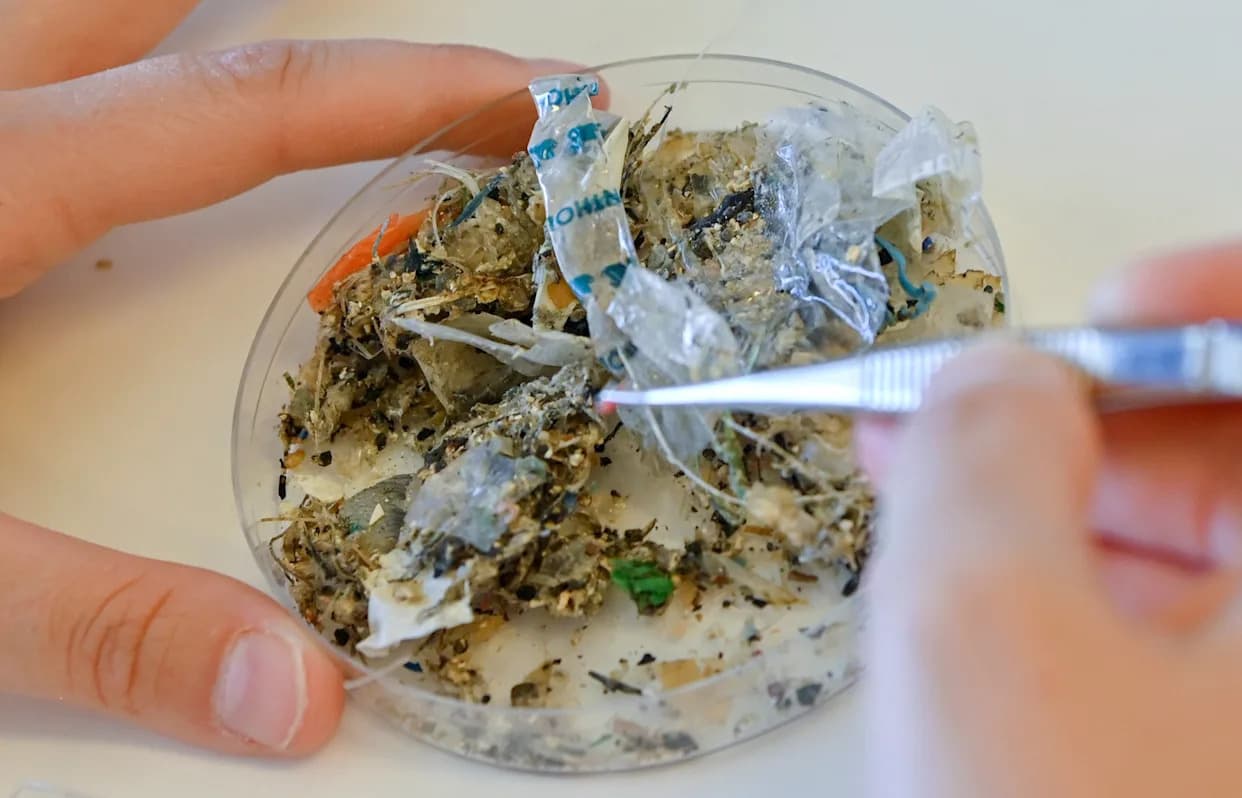
The equation was tested against years of experimental and observational data across many materials and situations: shattered glass, snapped spaghetti, liquid droplets, exploding gas bubbles, plastic fragments collected from the ocean and even flakes from early stone tools. In each case the measured size distributions matched the model's prediction, suggesting a broadly applicable statistical rule for fragmentation.
Villermaux also illustrated the idea with simple laboratory trials—dropping heavy weights onto sugar cubes—and found the breakup statistics supported his argument. As he put it, the experiments started as a summer project with his daughters and later helped confirm the theory.
Limitations and practical value
The law is not universal. It does not apply in nearly deterministic breakups—such as a smooth liquid jet that breaks into nearly equal droplets—nor does it capture situations where fragments strongly interact after formation, which can occur with some plastics and other sticky materials.
Understanding fragmentation has practical applications: it can improve estimates of energy use when ore is crushed in mining, inform risk assessments for rockfalls, and guide designs that either resist or encourage breakup. Researchers also suggest the same statistical ideas might describe fragment shapes as well as sizes.
Next steps
Future work will investigate the smallest possible fragment size allowed by the theory and whether analogous laws govern fragment shapes. The framework of maximal randomness plus conservation constraints offers a simple, testable foundation for many such studies.
Help us improve.