The study published in Science Advances finds that tiny microbubbles that form on plastic debris in rivers and oceans can speed up fragmentation, releasing microplastics and nanoplastics into water. These particles can enter food chains and reach humans. Researchers estimate about 130 million metric tons of plastic waste enter the environment and bodies each year, a figure expected to more than double by 2040. The findings point to new avenues for research and strategies to limit plastic degradation and spread.
Microbubbles Help Break Down Plastics — Releasing Microplastics and Nanoplastics Into Water, Study Finds
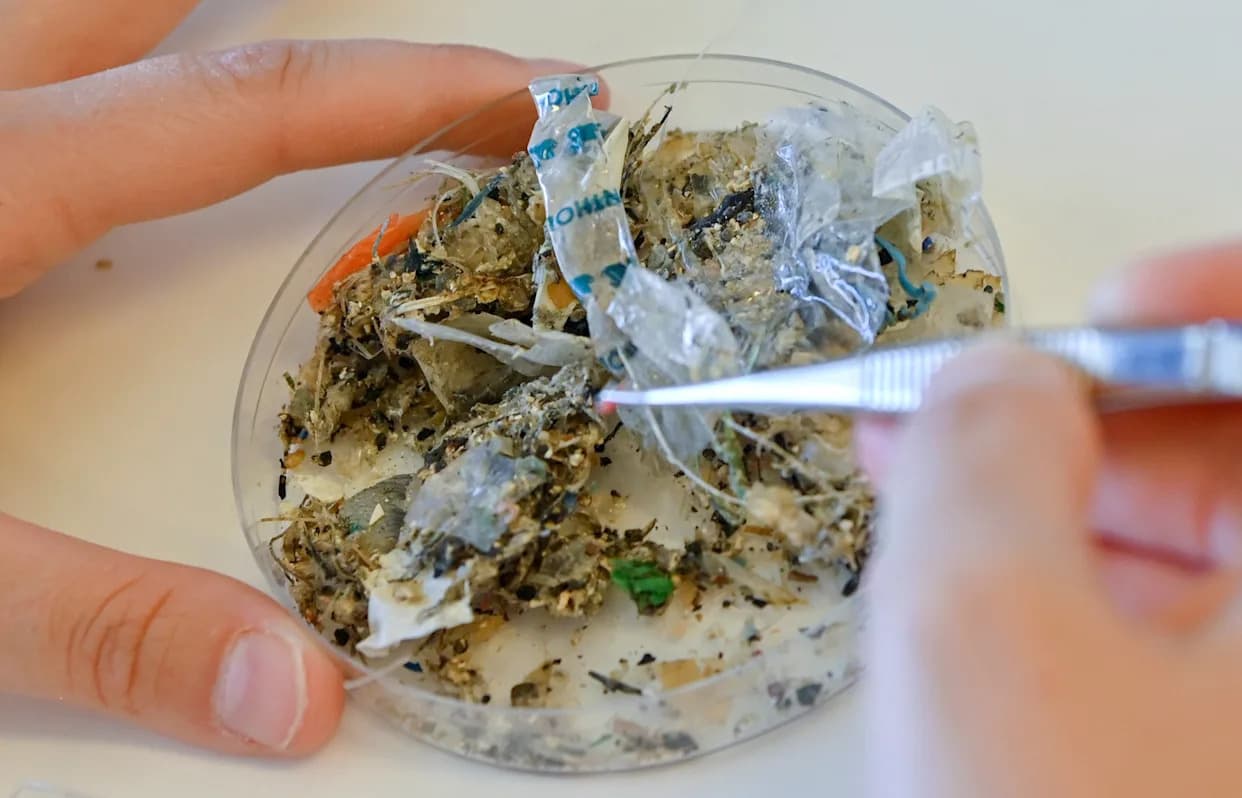
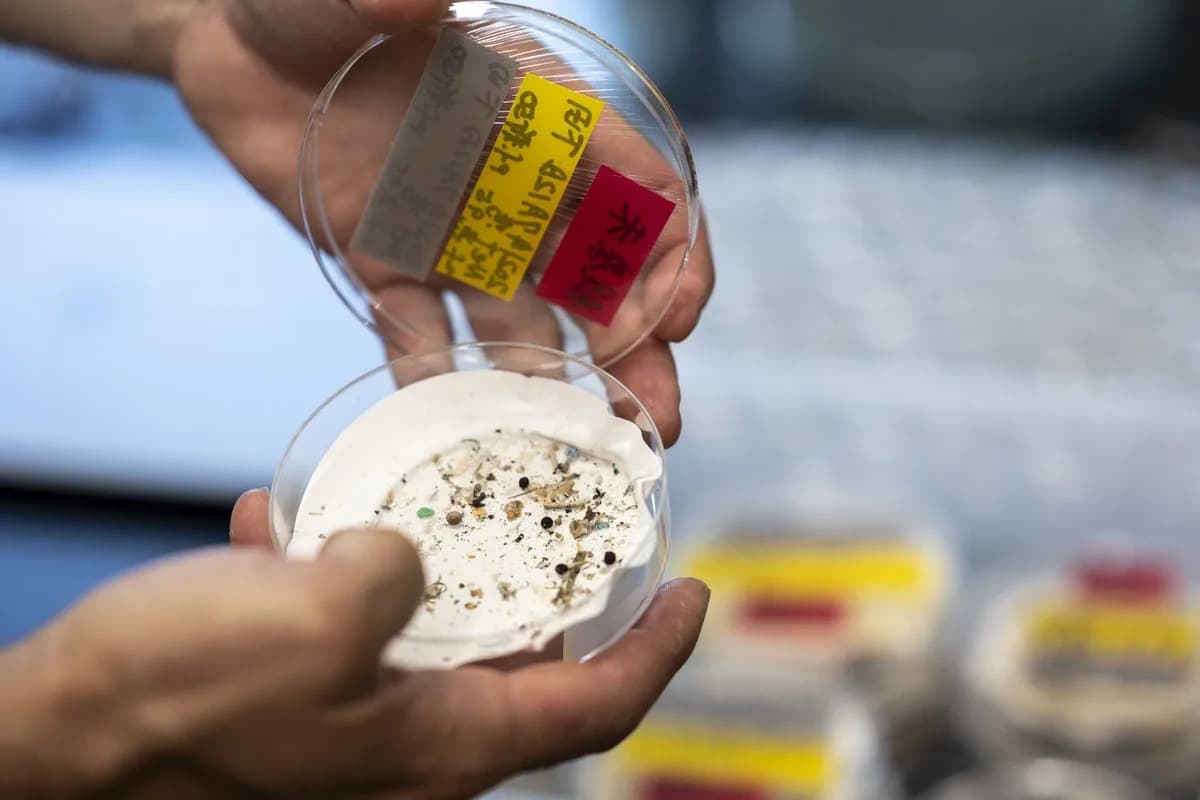
A researcher selects microplastics found in sea species at the Hellenic Center for Marine Research in Anávissos, Greece, near Athens, on July 15, 2025.
New research in Science Advances reveals a previously underappreciated mechanism that helps spread microplastics through aquatic environments: tiny bubbles that form on plastic surfaces can accelerate fragmentation, peeling off microscopic particles into surrounding water.
What the study found
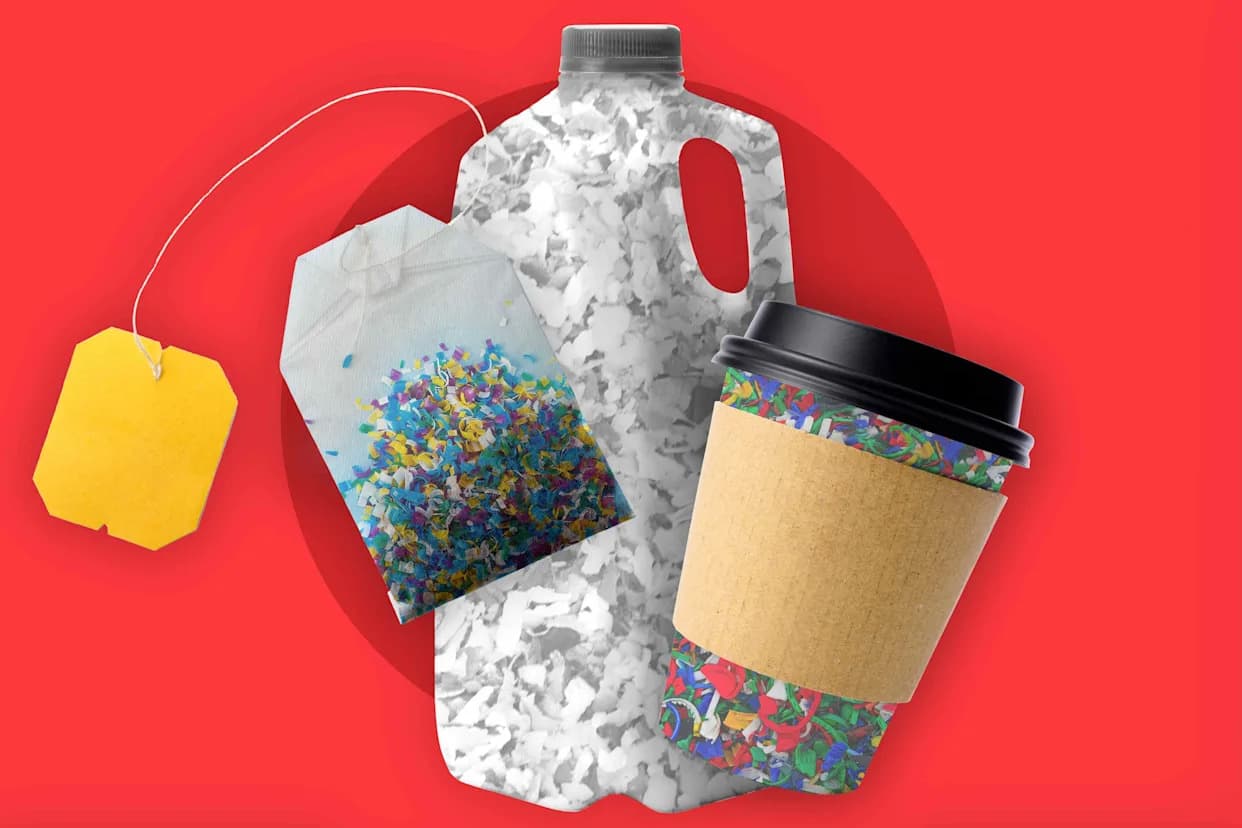
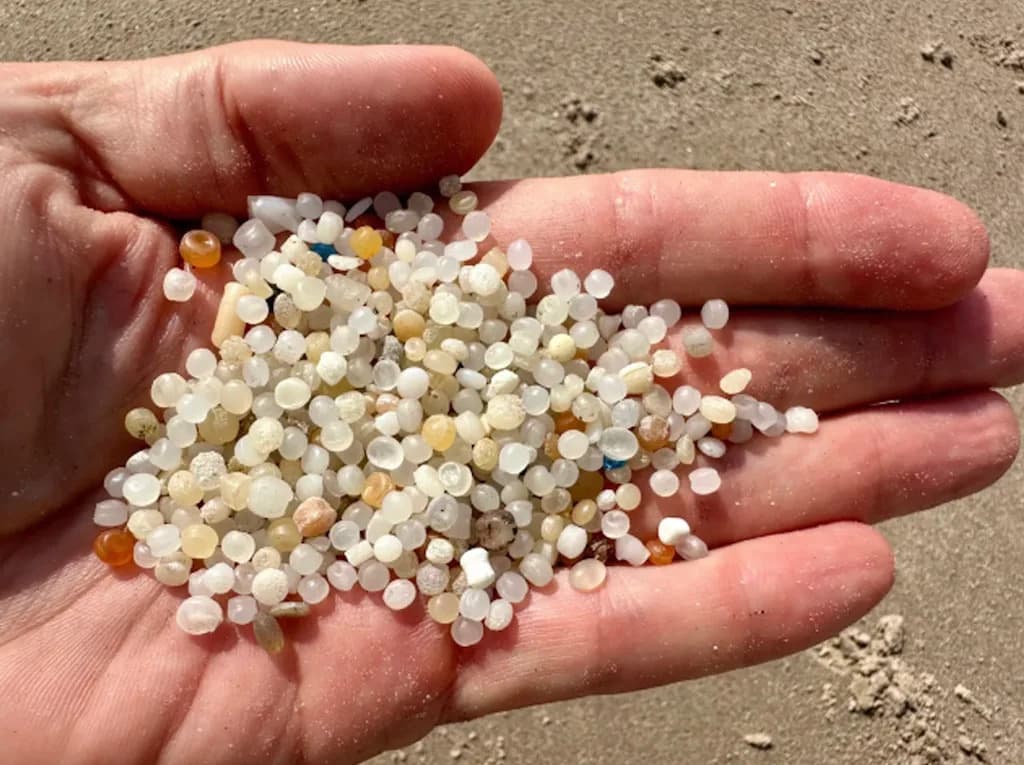
Researchers working in both river and marine settings observed that microbubbles form on the surface of plastic debris. These bubbles promote mechanical stresses and surface peeling that release very small plastic fragments — microplastics and nanoplastics — that are difficult to see but readily disperse in water.
Why this matters
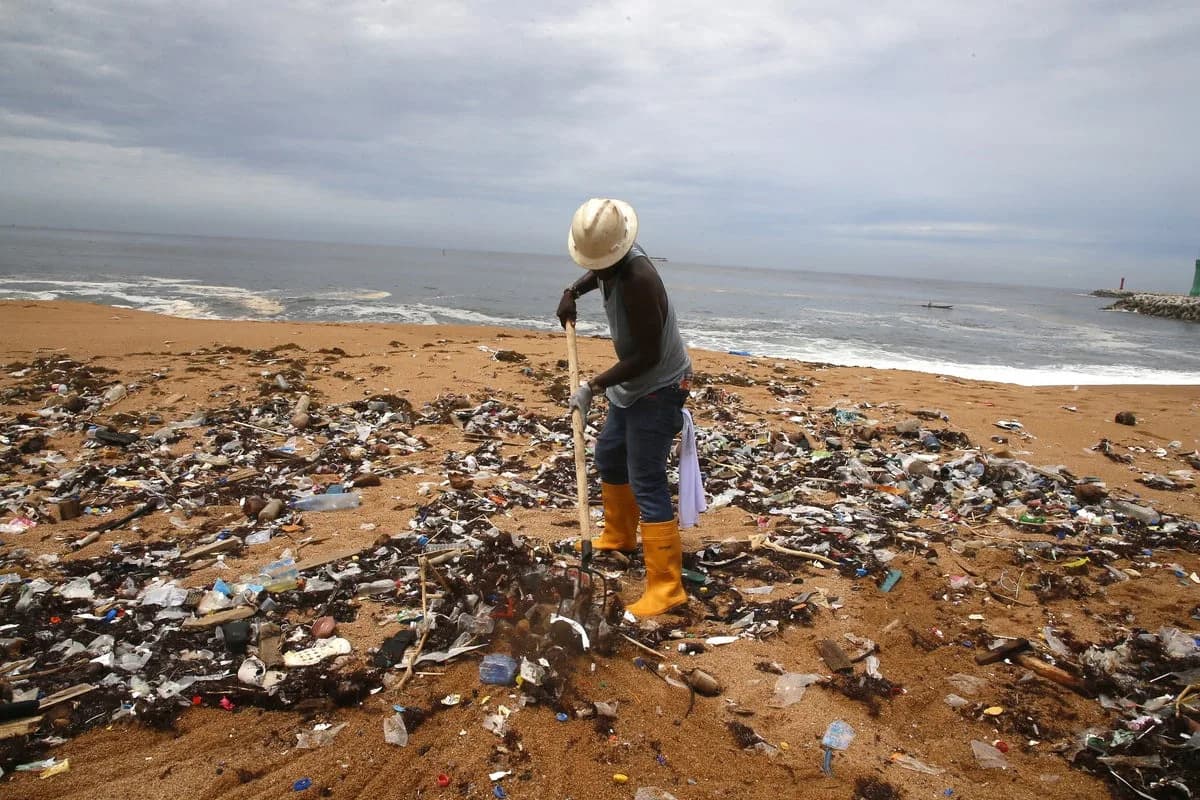
Once released, these smallest particles can be taken up by aquatic organisms and move through food chains, eventually reaching humans. The paper cites an estimated 130 million metric tons of plastic waste entering the environment and human bodies each year, a volume projected to more than double by 2040 if trends continue.
“Plastic degradation is an invisible threat to the environment and human health,” said John Boland, professor in the School of Chemistry at Trinity College Dublin and the study’s senior author. “Society urgently needs to come to grips with the enormity of the challenge posed by our ubiquitous use of plastics.”
Implications and next steps
The discovery that contact with water and microbubble formation can actively drive plastic fragmentation suggests new directions for research and mitigation. Potential responses include designing materials less prone to bubble-driven breakdown, improving waste-capture systems in rivers and coasts, and studying how microbubble dynamics vary with water chemistry, temperature and flow.
Although links between microplastics and health problems — from respiratory and cardiovascular effects to reproductive issues — remain an active area of research, the study underscores the urgency of limiting plastic pollution at the source and improving our understanding of how plastics fragment and spread.
Bottom line
Microbubbles on plastic surfaces are a newly identified pathway for creating and dispersing micro- and nanoplastics in aquatic environments. The finding strengthens the case for accelerating efforts to reduce plastic waste, improve materials, and fund research into how tiny particles move through ecosystems and impact health.
Help us improve.