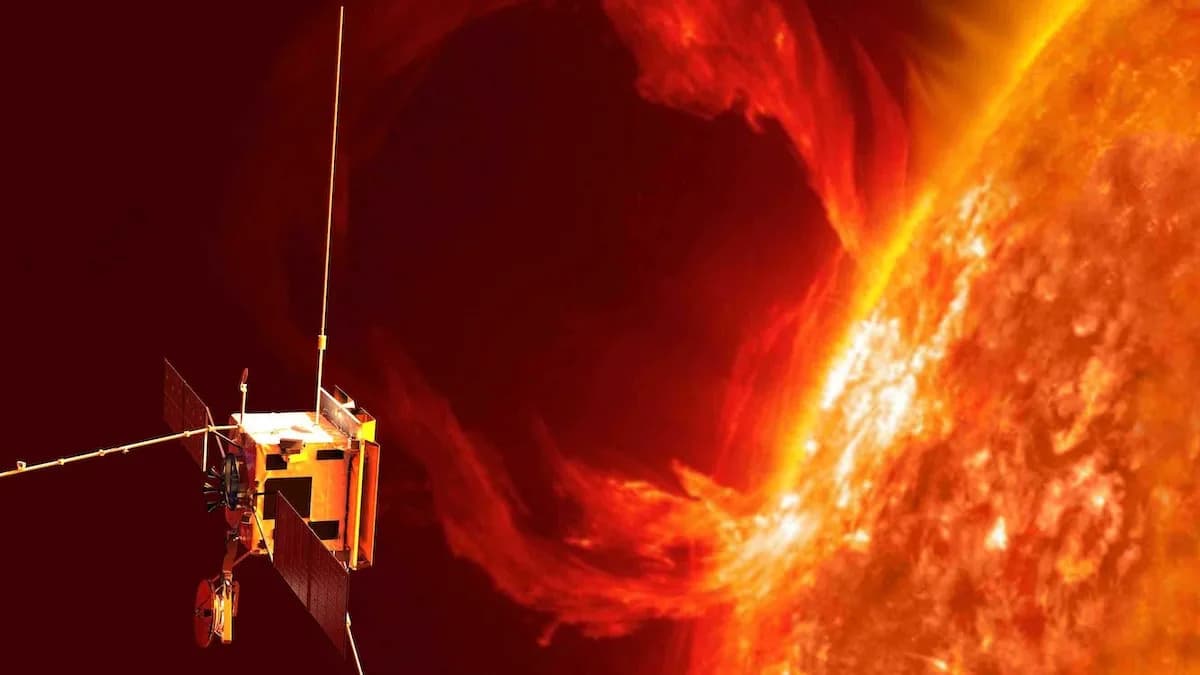
Launched in December 1995, SOHO has spent 30 years at the Sun–Earth L1 point observing the Sun with 12 instruments. It revolutionized helioseismology, provided detailed views of the corona, and tracked nearly three 11-year solar cycles. SOHO survived a near-catastrophic anomaly in 1998, remains active today, and — thanks to its LASCO coronagraph — has discovered over 5,000 comets.
SOHO at 30: Three Decades of Uninterrupted Sun-Watching

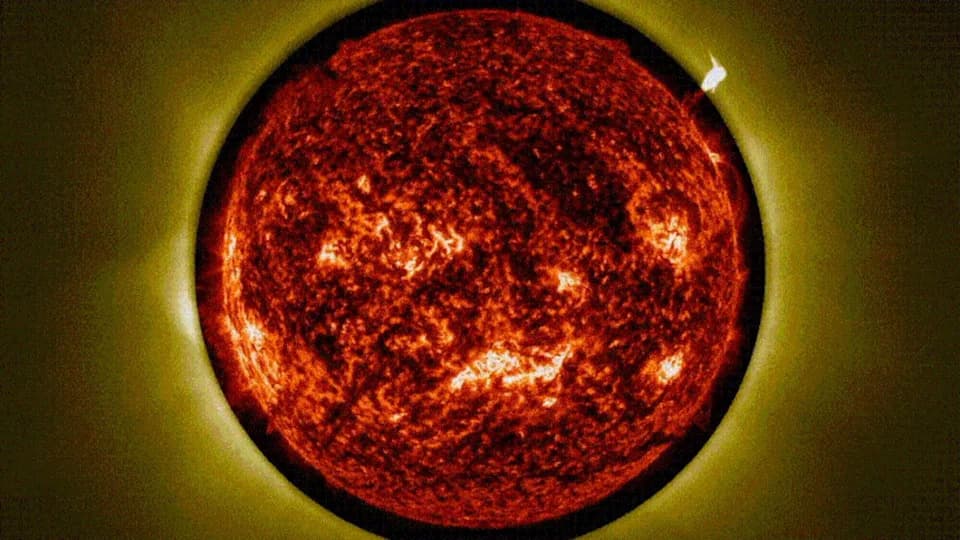
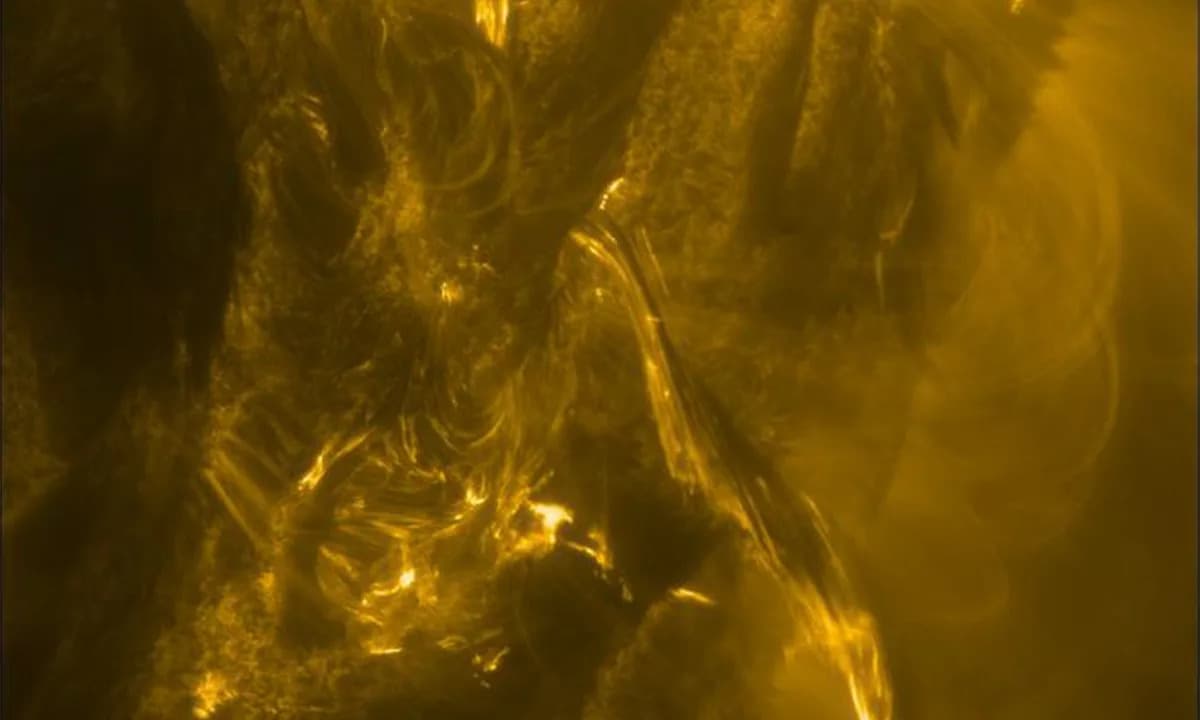
Launched on Dec. 2, 1995, the Solar and Heliospheric Observatory (SOHO) has spent 30 years at the Sun–Earth L1 Lagrange point, about 932,000 miles (1.5 million km) sunward of Earth, giving it an almost continuous view of our star. This composite image brings together snapshots taken across three decades of observations.
Equipped with 12 instruments, SOHO was built to probe the Sun "from the inside out." Its helioseismology instruments listen to sound waves traveling through the solar interior to reveal the Sun’s structure and dynamics. At the same time, SOHO studies the solar corona — the Sun’s outer atmosphere that, mysteriously, is far hotter than the visible surface.
Over nearly three full 11-year solar cycles, SOHO has recorded countless solar flares and coronal mass ejections (CMEs) — explosive events that drive space weather and create spectacular auroras on Earth. From its vantage point at L1, the spacecraft provides critical, early observations of solar activity that help scientists understand the Sun and forecast space weather impacts.
The mission’s story includes a dramatic rescue. In 1998, SOHO suffered a series of faults that caused it to lose contact, tumble out of attitude control and begin to cool. Ground teams eventually found the probe using radar tracking and painstakingly restored its operations, allowing the mission to continue.
SOHO’s scientific legacy is substantial. It revolutionized helioseismology, provided some of the first detailed views of the corona, and produced continuous datasets that span multiple solar cycles. Although designed for roughly three years of operation, SOHO has been extended many times and remains active today.
Unexpectedly, SOHO became the most prolific comet hunter in history. Its LASCO coronagraph blocks the Sun’s bright disk so the faint corona (and objects near the Sun) can be seen — by early 2025 the observatory had discovered over 5,000 comets, more than any other observatory.
"SOHO has overcome nail-biting challenges to become one of the longest-operating space missions of all time," said Prof. Carole Mundell, ESA Director of Science, when the 30-year milestone was announced.
SOHO continues to deliver invaluable observations that help scientists study solar behavior, protect space infrastructure, and deepen our understanding of the star that sustains life on Earth.
Help us improve.