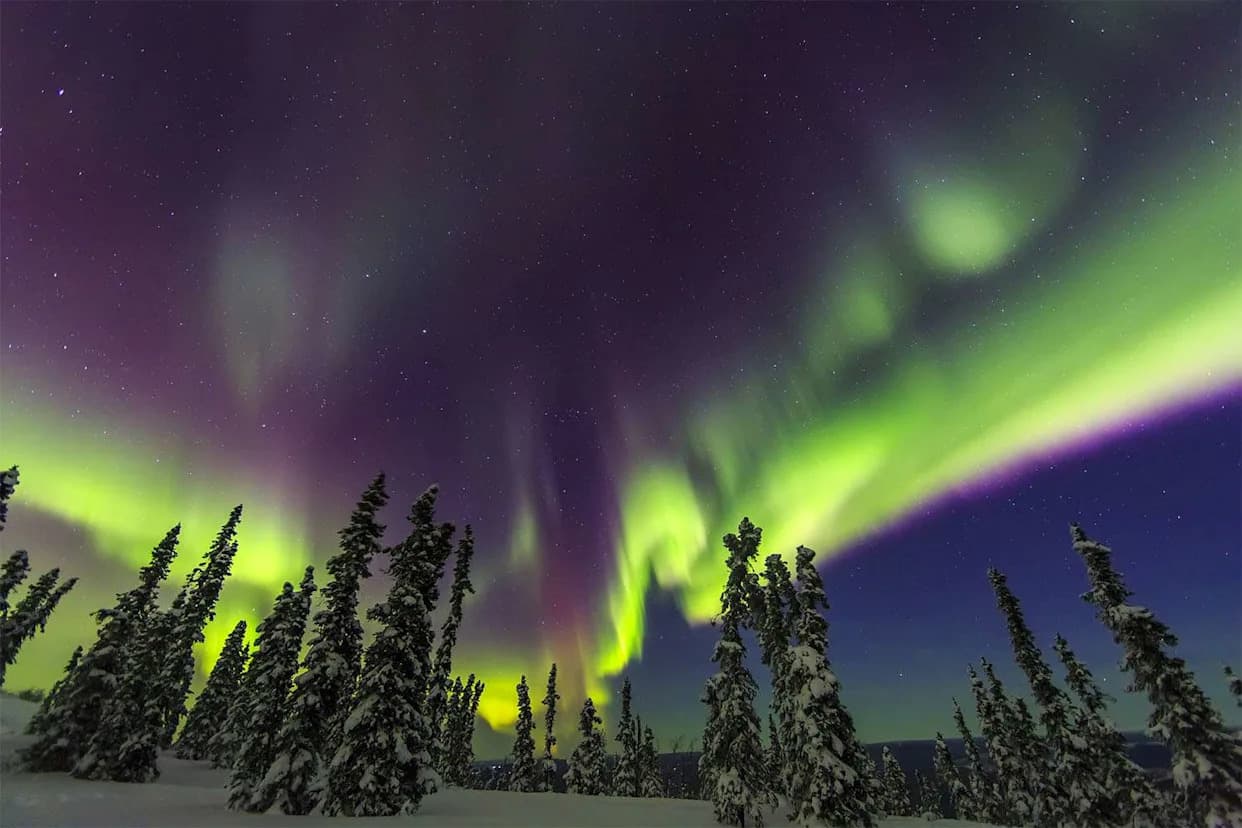
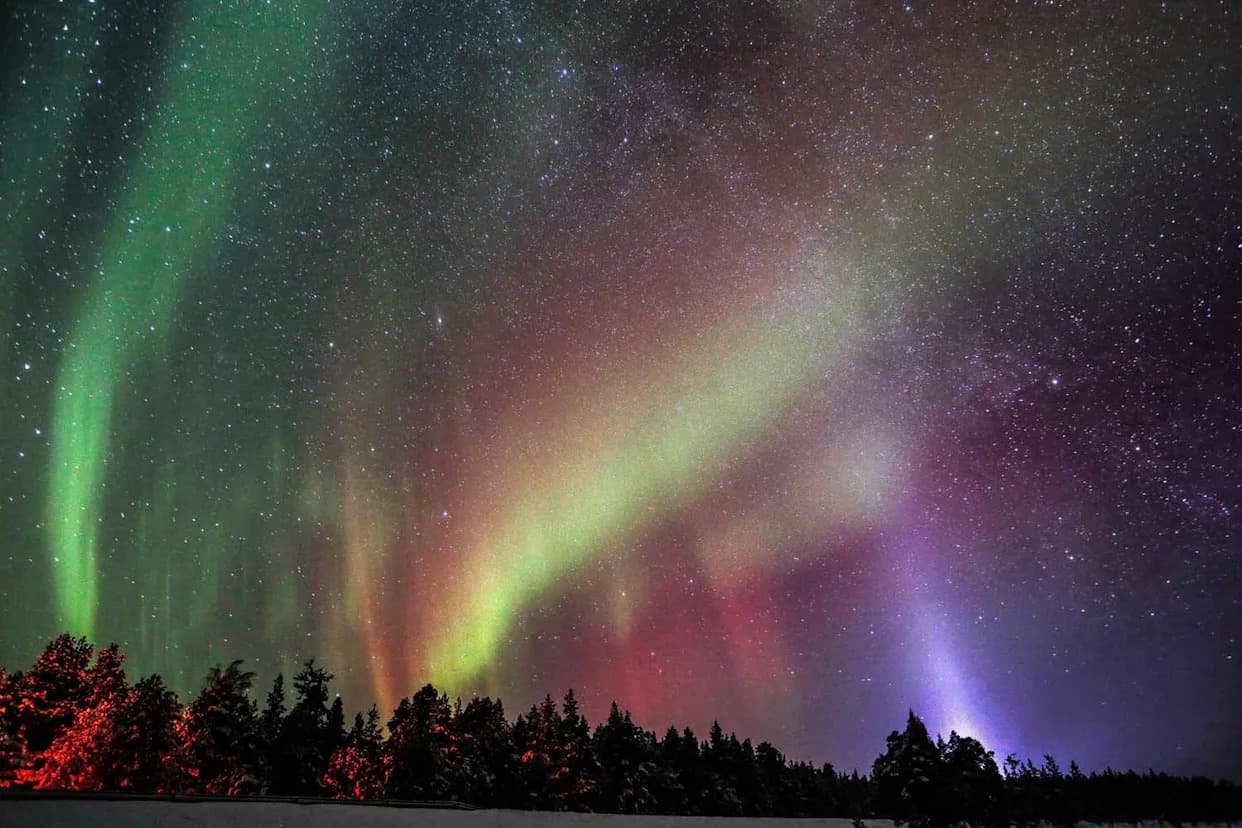
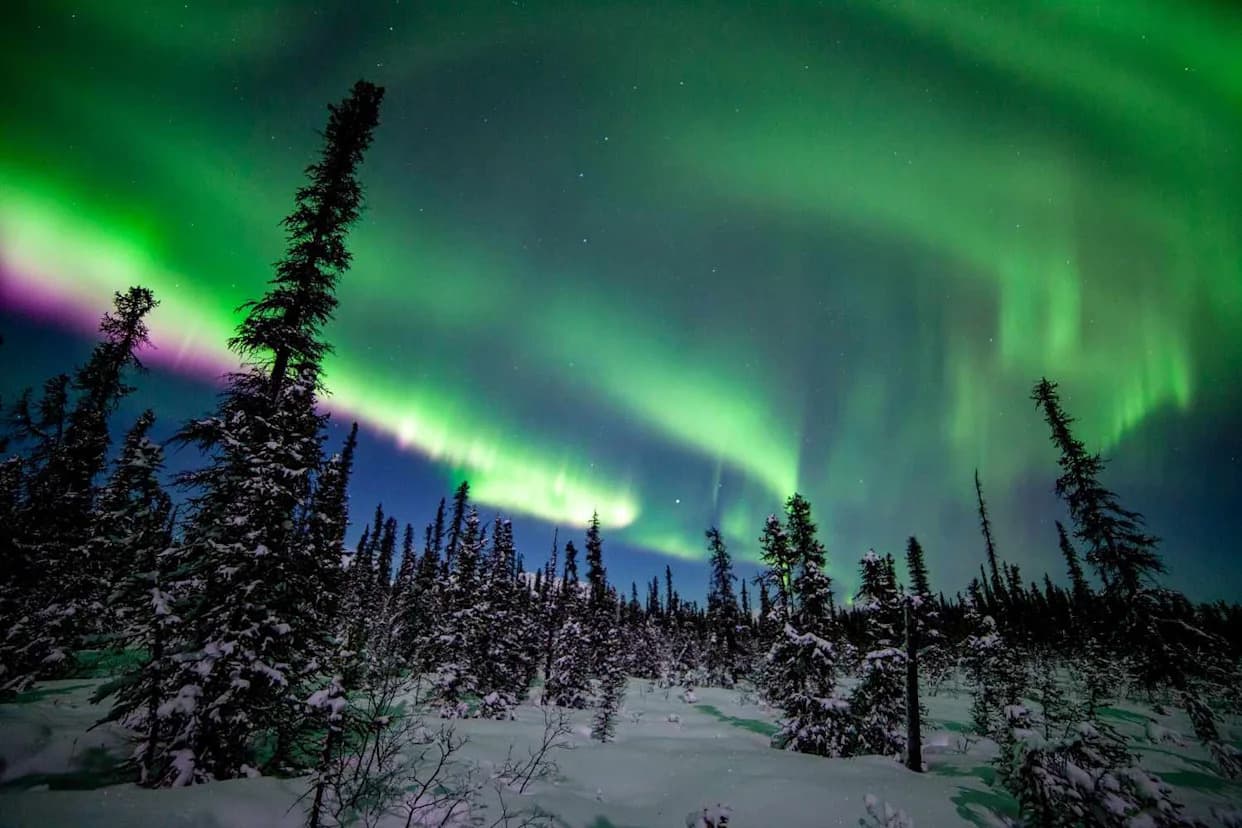
The sun produced an X2-class flare and a coronal mass ejection that could trigger G2 — possibly brief G3 — geomagnetic storms, creating back-to-back chances to see the northern lights after dark on Dec. 3 and into the pre-dawn hours of Dec. 4. NOAA forecasts moderate storming across northern U.S. states, with visibility possibly extending farther south if conditions strengthen. For best results, find a very dark northern horizon, monitor NOAA’s 30-minute aurora forecast or aurora apps, and use Night/Pro Mode on phones or long exposures on a DSLR to photograph the display.
Back-to-Back Northern Lights Possible Dec. 3–4 — Where to Watch and How to Photograph Them

Skywatchers may get two consecutive nights to see the aurora borealis: forecasts point to activity after dark on Wednesday, Dec. 3, and into the pre-dawn hours of Thursday, Dec. 4, following a series of solar eruptions.
What's happening
On Dec. 1 the sun produced a powerful X2-class solar flare and an associated coronal mass ejection (CME). As that cloud of charged particles approaches Earth, forecasters expect a moderate geomagnetic storm (G2), with a chance the CME and an enhanced solar wind could briefly push conditions to strong (G3) levels.
“The storm cloud could graze our planet on Dec. 2,” SpaceWeather.com reports, adding that the CME may pick up a solar wind stream ahead of it to increase the impact.
Where the lights may be visible
NOAA’s near-term outlook favors G2 activity after dark on Dec. 3, with possible continuation into the early hours of Dec. 4. If the forecast holds, auroras could be visible across northern U.S. states such as Alaska, Washington, Idaho, Montana, Wyoming, the Dakotas, Minnesota, Wisconsin, Michigan, New York and Maine. If conditions intensify, visibility may extend farther south and east into states including Oregon, Nebraska, Iowa, Illinois, Indiana, Ohio, Pennsylvania, Massachusetts, Vermont and New Hampshire.
How to maximize your chances
Pick the right site: Choose a very dark location well away from city lights with a clear view toward the northern horizon. Use light-pollution maps or tools like Dark Sky Place Finder to identify good viewing spots.
Watch the forecasts: Monitor NOAA’s 30-minute aurora forecast and real-time alerts, or use aurora-tracking apps such as Aurora Now, My Aurora Forecast or Glendale Aurora to catch spikes in activity.
Check weather and timing: Cloud cover and local weather determine whether you’ll actually see anything — clear skies are essential. Dress warmly and be prepared to wait; auroras can appear intermittently.
Photography tips
Smartphones: Use Night Mode on iPhone or Pro Mode on many Android phones. Disable the flash, keep the phone steady (use a tripod or stable surface), and try exposure times of several seconds if your device permits.
DSLRs and mirrorless cameras: Use a wide-angle lens, open the aperture as wide as practical, and experiment with exposures between about 5–20 seconds. Start with ISO 800–3200 depending on your camera’s noise performance and adjust from there. A sturdy tripod and a remote or self-timer will reduce blur.
Above all, be patient and flexible — geomagnetic activity can spike quickly, so monitoring real-time alerts and being in the right place at the right time will give you the best chance to see (and photograph) the show.
Help us improve.