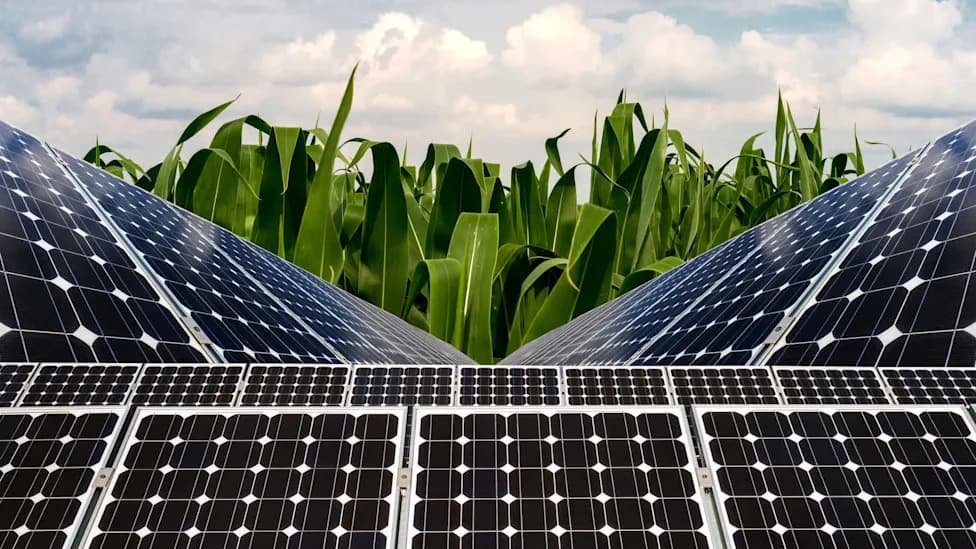
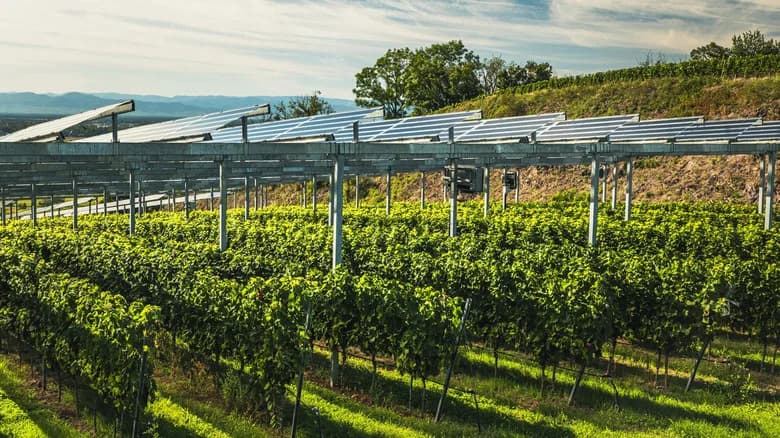
A Grand Junction pilot installs sun-tracking solar arrays above Chardonnay vines to produce roughly 155 MWh/year — about 40% of the campus's energy — while reducing heat, water demand and frost risk for crops. More than 20 agrivoltaic sites now operate in Colorado, and farms are adopting the approach to diversify income, protect harvests and improve worker safety. State grants are helping expansion as advocates say agrivoltaics can boost agricultural resilience and local energy security.
Colorado Pilot Puts Solar Panels Over Vineyards to Power Farms and Protect Crops
A pilot agrivoltaic project at Colorado State University's Western Campus in Grand Junction pairs sun-tracking solar arrays with rows of Chardonnay vines to generate electricity while shielding crops from hail, frost, heat and drought. Project lead Horst Caspari designed the overhead system to deliver power and crop protection on the same acreage.
The partial shade from the panels lowers plant temperatures and reduces irrigation needs, while the arrays' structure can trap heat and cut frost risk that otherwise can destroy whole harvests. After a severe hailstorm last summer wiped out peaches, apples and grapes across the region, Caspari says the overhead arrays could help preserve future harvests.
"We can do both — install solar panels to create energy, and protect crops and land at the same time," Caspari says.
Collectively, the site’s sun-tracking arrays produce roughly 155 megawatt-hours (MWh) per year — about 40% of the Western Campus's annual energy use, according to the project team. Nearby Talbott Farms is adopting a similar agrivoltaic system to power packing and storage facilities while sheltering peach trees from cold snaps.
Agrivoltaics is expanding across Colorado, with more than 20 active sites and nonprofit demonstrations such as Jack's Solar Garden serving as national models. "Colorado is a hot spot for agrivoltaics, thanks to our innovative farmers and our frequent sunshine," says Kristen Boysen of the state's Drought and Climate Resilience Office.
Farm resilience and worker safety
Beyond electricity, the dual-use approach helps diversify farm income, keeps land in agricultural production rather than development, and improves worker safety. Research cited by the project found that skin temperatures beneath solar arrays can fall by as much as 18°F, reducing heat stress for laborers.
The state agriculture department continues to offer grants to expand agrivoltaic systems even as federal funding tightens. Advocates argue that combining food and energy on the same land can strengthen local food supplies and community power resilience as climate extremes intensify.
As Caspari observes, "A few degrees Fahrenheit can make the difference between a full crop or no crop." Agrivoltaics may deliver that margin for farmers, communities and the climate.
Help us improve.