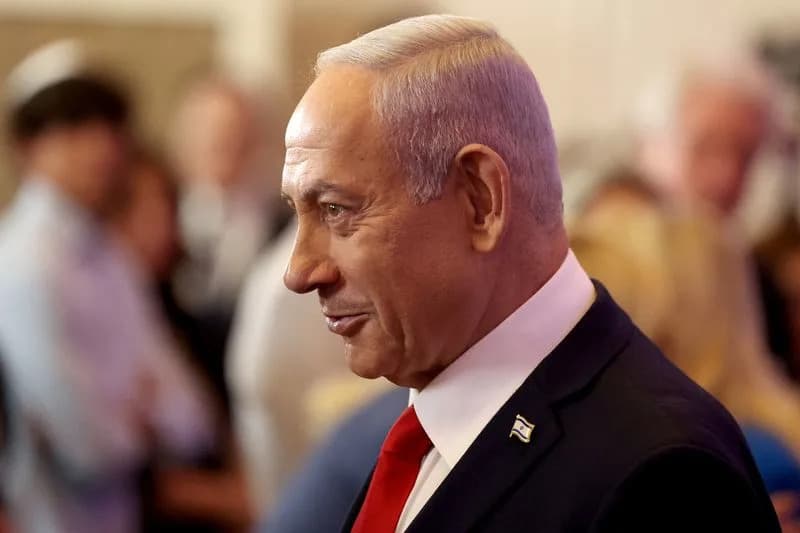
Israeli Prime Minister Benjamin Netanyahu has asked President Isaac Herzog for a presidential pardon in his long-running corruption trial, saying clemency would serve the public interest and help restore national unity. The one-page request contains no admission of guilt and reverses Netanyahu's earlier insistence that he would be vindicated in court. The plea has sharply divided Israeli politics: opposition figures demand remorse and withdrawal from politics, allies argue it is necessary for security, and legal experts warn pardons are normally issued only after conviction. Herzog said he will review the request carefully; there is no deadline for a decision.
Netanyahu Asks President Herzog for Pardon in Corruption Trial, Deepening Political Divide

Israeli Prime Minister Benjamin Netanyahu has formally asked President Isaac Herzog to grant him a presidential pardon in his long-running corruption trial, saying the clemency would serve the public interest and help heal national divisions.
The one-page letter, dated Thursday and publicly submitted on Sunday, does not include an admission of guilt or any commitment to withdraw from politics. Netanyahu acknowledged that, while he personally wants to prove his innocence in court, current security and diplomatic challenges argue for prioritizing national unity and restoring public trust in state institutions.
Official response
President Herzog's office confirmed receipt of the request and said the president will "consider it with great care and responsibility." Herzog said he would review the petition "in the most correct and precise manner," while acknowledging the move is provoking intense debate and deep unease across different communities in Israel.
Political reactions
The pardon plea exposed sharp divisions. Opposition leaders criticized the request as inappropriate without an admission of guilt and a sincere expression of remorse. Yair Lapid, leader of the opposition, urged Herzog to reject the plea unless Netanyahu accepted responsibility and withdrew from political life. Yair Golan, head of the left-leaning Democrats party, wrote that "only someone guilty asks for a pardon," noting that years of legal proceedings have not produced a collapse of the cases against Netanyahu.
Netanyahu's political allies defended the move. Far-right National Security Minister Itamar Ben-Gvir called the request "critical for the security of the state," arguing that it would allow the government to focus on pressing security matters.
International attention
The request also drew international attention: former U.S. President Donald Trump sent a letter to President Herzog earlier this month asking that Netanyahu be fully pardoned and praising Netanyahu's wartime leadership.
Legal context and implications
Legal experts say presidential pardons in Israel are typically granted only after conviction. The Israel Democracy Institute notes the president's clemency power is broad but conventionally exercised as a "compassionate authority" after judicial and law-enforcement processes conclude. Dana Blander, a research fellow at the institute, warned that pardoning before or during trial risks turning the president into an authority that could bypass the legal system.
Netanyahu is the first sitting Israeli prime minister to face criminal prosecution. His trial began in May 2020 and comprises three separate cases. The most serious charges—bribery, fraud and breach of trust—allege that Netanyahu advanced regulatory benefits worth the equivalent of more than $250 million to Shaul Elovitch, the former controlling shareholder of telecommunications company Bezeq, in exchange for favorable coverage on the Walla! News site. Elovitch denies the allegations.
Netanyahu's testimony began in December 2024 but has been repeatedly delayed and sometimes canceled, largely at his request. With further testimony, a final judgment and potential appeals remaining, observers expect the legal proceedings to continue for several years.
What comes next
There is no statutory deadline for President Herzog to decide on the pardon. The request has intensified a national debate about the balance between political stability and the integrity of the rule of law.
Correction: The letter was dated Thursday but submitted and publicized on Sunday.
Help us improve.