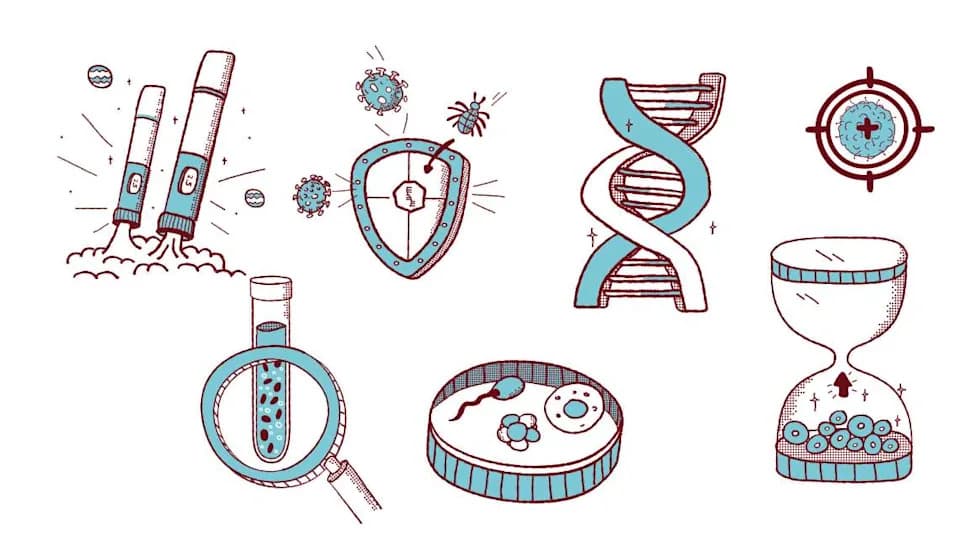
Silicon Valley is expanding reproductive choices. Startups offer IVF plus advanced embryo screening that can estimate inherited disease risk and, in some cases, probabilistic information about traits like height and small IQ changes. While screening can prevent serious conditions and reduce miscarriage risk, scientific limits, weak predictive power for behavioral traits, and lagging regulation raise ethical and social concerns.
Silicon Valley’s New Frontier: IVF, Embryo Screening and the Ethics of Designing Babies

Imagine choosing traits for your future child: a calm sleeper, a strong math aptitude, or a shorter stature to avoid cramped airplane seats. For founders and customers of fertility‑tech firms such as Herasight and Orchid Health, those hypothetical questions are becoming practical decisions enabled by IVF plus advanced genetic screening.
What parents are choosing — and why
Some prospective parents now begin with in vitro fertilization (IVF) even if they are not infertile, creating embryos that can be sequenced and screened. Firms offer analyses that estimate risks for inherited diseases, childhood cancers, schizophrenia, autism, Type 1 and Type 2 diabetes, and other health conditions. A subset of companies also uses polygenic scores to provide probabilistic information about nonmedical traits such as height, body mass index, musical aptitude, and small gains in IQ.
Founders and early adopters often have deeply personal motivations. Herasight co‑founder Michael Christensen says his own extreme height motivates him to screen for shorter stature in future children. Herasight’s chief science officer Tobias Wolfram, who has family longevity and mental‑health histories he wants to avoid passing on, has already cryopreserved embryos. Orchid Health CEO Noor Siddiqui was driven by a family history of retinitis pigmentosa and emphasizes disease prevention as the company’s core focus.
Technology, validation and limits
Companies use different technical approaches: Orchid offers whole‑genome sequencing and claims panels that screen for thousands of single‑gene conditions, while Herasight uses polygenic screening compatible with many IVF clinics and even publishes its methods and datasets for review. Herasight reports that selecting among five embryos can reduce certain disease risks by roughly 20%–44%, but these figures come from the company’s own analyses rather than independent clinical trials.
Experts caution about current scientific limits. Polygenic predictions require massive datasets to become more reliable — estimates suggest models would benefit from genome sequences on the order of hundreds of millions to a billion people to improve accuracy across diverse populations. For behavioral traits like intelligence, personality, musical or athletic ability, most researchers say the ability to predict or meaningfully select remains weak and modest at best.
“For parents who have seen loved ones suffer, the impulse to avoid similar outcomes is powerful,” said Barry Behr, director of an IVF lab. “But there are tradeoffs and limits to what current science can tell us about future behavior or abilities.”
Ethics, regulation and social consequences
Investment in fertility tech has surged, drawing billionaires and venture capital to both screening and embryo‑editing ventures. That influx accelerates innovation but also raises complex legal and ethical questions. Embryo editing — altering an embryo's DNA before implantation — remains controversial and is restricted or banned in many countries. Some investors are nonetheless backing startups that aim to develop gene‑correction approaches, while others focus on screening rather than editing.
Bioethicists warn of social harms if selection becomes normalized: intense parental expectations, increased inequality in who can access screening, and a shift toward viewing children as products or projects. Arthur Caplan, a bioethicist, cautions that imposing predetermined outcomes can limit a child's freedom and place unfair burdens on them to meet parental expectations.
Practical benefits and unanswered questions
For many families, screening already provides tangible benefits. Couples who share mutations for severe inherited conditions have used screening to avoid those outcomes. Screening may also lower pregnancy loss by identifying embryos with chromosomal abnormalities, which are a major cause of early miscarriage.
Still, the line between preventing serious disease and selecting nonmedical traits will continue to shift as technology, investment, law, and public opinion evolve. Transparency about validation, independent review of claims, and stronger regulatory frameworks will be crucial as more parents consider these options.
Key facts: the global IVF industry is valued at roughly $28 billion, investment in women’s health and related startups increased markedly in 2024 (about $2 billion, a reported 55% rise over 2023), and certain surgical and reproductive experiments — from uterus transplants to rare transplant surgeries — illustrate how reproductive medicine is advancing on multiple fronts.
As these technologies scale, prospective parents, clinicians, regulators, and society must weigh the promise of reducing inherited suffering against the ethical and social risks of designing future generations.
Help us improve.