The discovery of DNA turned heredity into a molecular science by revealing the double helix and its code. Key contributors—Mendel, Miescher, Watson, Crick and Rosalind Franklin—helped build our understanding, though recognition was uneven. DNA knowledge underpins advances in medicine, biotechnology, agriculture and forensics while raising ethical and privacy concerns. Ongoing research promises more breakthroughs that society must guide responsibly.
How the Discovery of DNA Transformed Science, Medicine and Everyday Life

Most people remember high school biology as a blur of diagrams and exams, not as a first encounter with the molecule that shapes so much of daily life. Those spiraling diagrams represent the chemical code behind traits like eye color and why some people taste cilantro as soap. The double helix inside nearly every cell quietly governs information that determines what we are.
A turning point in biology
The proposal of the double-helix structure by James Watson and Francis Crick in 1953 shifted biology from observation to mechanism. Before that insight, scientists recognized that traits passed between generations but lacked a clear molecular explanation. The double helix revealed how genetic information is encoded, copied and transmitted.
That discovery was like finding the source code for a complex program: it showed that living systems follow chemical rules that can be read, analyzed and manipulated. For the first time researchers could study the molecular parts that make a human different from a mushroom, replacing mystical explanations with testable mechanisms.
Credit and context
Scientific progress is often collaborative, and the story of DNA illustrates that clearly. Rosalind Franklin's X-ray diffraction images—especially the famous "Photo 51"—provided critical empirical evidence supporting the double-helix model, yet her contribution was overlooked for years. Correcting the record emphasizes that breakthroughs usually rest on the work of many people.
Franklin’s data helped confirm the double helix; acknowledging her role highlights how recognition in science can be uneven.
Even earlier work set the foundation: Gregor Mendel’s experiments with pea plants established basic inheritance patterns, and Friedrich Miescher first isolated "nuclein" (now called DNA) in the late 1800s. The acceptance of DNA as the carrier of genetic information connected these early observations to a molecular reality.
Medicine: from symptoms to precision
Understanding DNA transformed medicine. Genetic screening can reveal predispositions to disease long before symptoms appear, and precision medicine uses a patient’s genetic profile to choose the most effective therapies. Gene therapies and targeted treatments are already changing outcomes for some cancers and inherited disorders.
Tools such as PCR (polymerase chain reaction) enable detection of tiny amounts of genetic material, powering diagnostics and infectious disease surveillance. These advances shift health care toward prevention and tailored interventions instead of one-size-fits-all treatments.
Biotechnology: editing and producing life’s parts
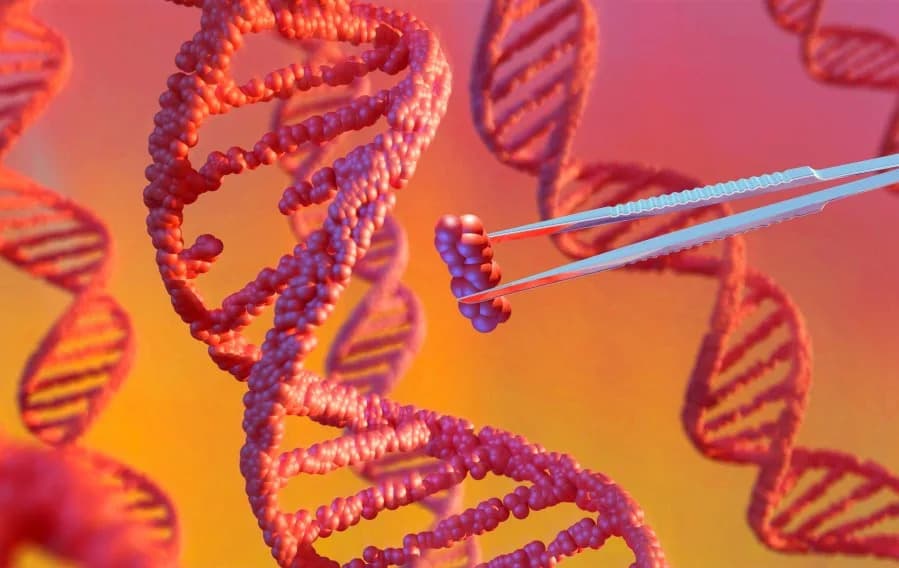
Techniques born from DNA research—recombinant DNA methods and gene editing tools like CRISPR—let scientists cut, paste and modify genetic sequences with unprecedented precision. We now produce human insulin in bacteria, ensuring reliable supply for people with diabetes, and develop vaccines and therapeutics more quickly than ever before.
Agriculture and biodiversity
Genetic understanding has modernized farming. Where selective breeding once relied on trial and error, genomic tools identify genes for drought tolerance, pest resistance and longer shelf life. These advances can increase yields, reduce pesticide use and help sustain food supplies under climate stress. Genetic techniques also support conservation efforts by preserving genetic diversity of threatened species.
Forensics and personal identity
DNA profiling revolutionized forensic science: a single hair or trace of blood can link a person to a location, solve cold cases and exonerate the wrongly convicted. The same technologies powered the rise of consumer genetic testing and genetic genealogy, enabling people to explore ancestry and find relatives.
Ethics, privacy and social impact
Powerful genetic tools raise urgent ethical and legal questions. Who owns genetic data submitted to testing companies? Could insurers or employers misuse information about predispositions? The prospect of genetic enhancement—so-called "designer babies"—forces society to decide where to draw the line between preventing disease and pursuing enhancement.
Equitable access is another critical concern: unequal availability of genetic technologies risks widening social divides. These are not merely technical problems but questions about privacy, fairness and the values that should guide scientific progress.
Everyday influence and future directions
Genetics now informs public policy, nutrition research, mental health studies and legal decisions. It shapes how medicines are prescribed, how diets are personalized and how we approach conservation. Research moves quickly—often faster than textbooks—so each year brings discoveries that alter our understanding of biology and medicine.
In short, DNA gave us the manual for life. The challenge ahead is to use that knowledge responsibly: to balance innovation with ethics, protect privacy, ensure broad access, and apply genetic tools in ways that benefit society as a whole.
Help us improve.