The US State Department has expressed support for a proposal to build "alternative safe communities" (ASCs) in Gaza, which would concentrate reconstruction and services in Israeli‑controlled "green" zones while leaving other areas under different control. Critics — including humanitarian agencies and diplomats — warn this approach risks de facto partition, restricted access, and exclusion of large groups. Gaza faces massive needs: reported casualties exceed 69,700, about 1.9 million people are displaced, and roughly 92% of housing is damaged; funding and logistics for reconstruction remain unresolved.
US Backs 'Alternative Safe Communities' in Gaza — Critics Warn of De Facto Division

The United States State Department has signalled support for a proposal to establish so-called "alternative safe communities" (ASCs) inside Gaza — a plan that critics say would effectively split the territory into Israeli‑controlled "green" zones and areas under Hamas control.
A State Department spokesperson said the ASC approach is "seen as the most effective way to achieve" the goal of moving people into safer accommodations quickly. Details remain fluid, and officials have not published a full operational plan.
Under the broad outlines reported in recent coverage, reconstruction would be concentrated in areas under Israeli authority while other districts where Hamas operates would see little or no rebuilding. If implemented that way, much of Gaza — including Gaza City and central districts such as Deir el‑Balah, where large numbers of residents still live — could be excluded from reconstruction efforts.
Some descriptions of the ASC model envision large compounds built from container‑style housing and temporary units, each designed to hold tens of thousands of people. Planners cited in media accounts have estimated an initial compound could house 20,000–25,000 people and cost tens of millions of dollars. How such sites could scale to meet the needs of Gaza's entire population is unclear.
"If they could establish a proper situation, people might move there, but it’s not feasible," said Hussein, a resident of Gaza City. "What are they going to establish, with what infrastructure? It would need water, electricity. It would take years."
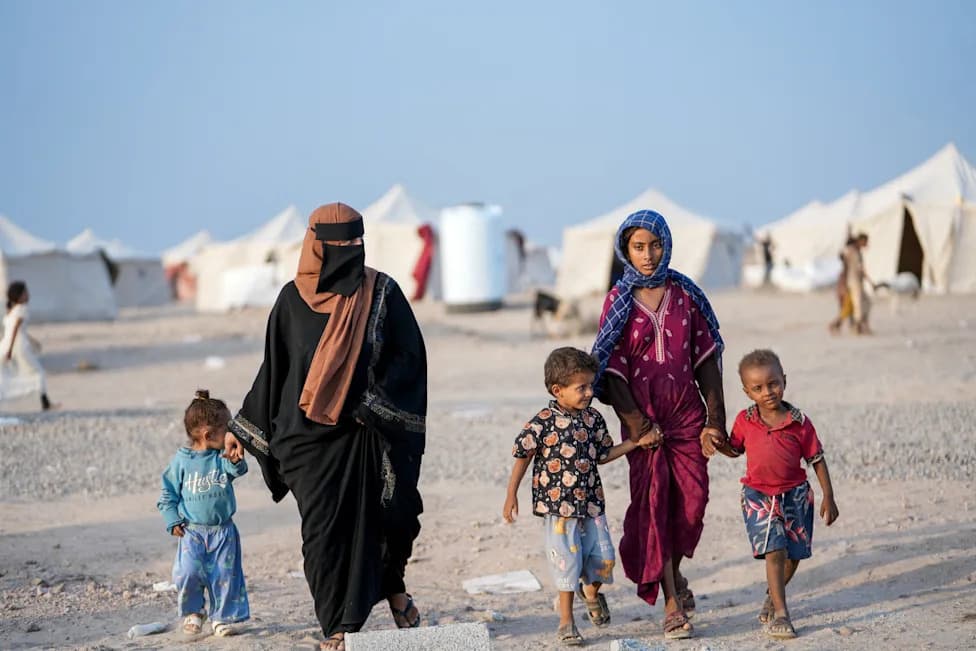
Gaza has suffered catastrophic losses: reported counts put the death toll at more than 69,700 Palestinians, with at least 1.9 million people displaced and an estimated 92% of housing stock damaged or destroyed. Although a ceasefire took effect on October 10, attacks have reportedly continued intermittently and urgent humanitarian needs remain acute.
Officials involved in planning say the first ASC compound could be months from completion. Preparatory work — including clearing ground and addressing hazards such as tunnels, unexploded ordnance and human remains — could delay construction. Rebuilding Gaza more broadly is estimated to cost tens of billions of dollars; some estimates suggest at least $70 billion and decades of work, but plans for funding have not been finalised.
Who would pay for the ASCs is unsettled. Some reports indicate the US administration has not committed to financing construction, and Israeli political leaders had not confirmed a final funding position at the time of reporting. The State Department declined to comment on financing details.
Planners appear to hope that enhanced services, security and access to medical care in Israeli‑controlled areas would draw displaced Gazans into the new compounds. But access to those zones would be tightly controlled: security screening and background checks reported in some accounts suggest Israel would have significant discretion over who is admitted. Diplomats have warned selection criteria could exclude large groups, including civil servants and others who served under the previous local administration.
Humanitarian agencies have criticised any approach that conditions aid on relocation. "We deliver aid where people are. We don't provide services where we'd like people to be," said Tamara Alrifai, director of external relations at UNRWA. "Humanitarian assistance should follow populations, not funnel them into artificial settlements to receive services."
Regional and international officials, as well as advocacy groups, fear a red/green division could entrench a permanent partition of Gaza. Comparisons have been drawn to past "green zone" arrangements in other conflict zones that became isolated enclaves with limited integration into surrounding society.
Plans to rearrange Gaza's geography are not new: senior Israeli figures have previously discussed proposals to create security corridors and other changes to the enclave's administration. Some political voices have also argued for settlement and development projects that critics say would displace Palestinians.
"How can you divide it? You can't squeeze two million people into an even smaller space than they already occupy," said Yossi Mekelberg of Chatham House. "Any durable solution must start with an understanding of Gaza's history, culture and trauma. Palestinians need to be part of any settlement, or it will not be stable."
For many Gazans, plans for ASCs offer little reassurance. Survivors who have lost homes, land and family members say they were not consulted and fear their needs will be overlooked.
"No one has talked to us. No one has thought about what people here need," Hussein said. "What about people's homes and land? Do they just give them up to go and live in a container?"
Help us improve.