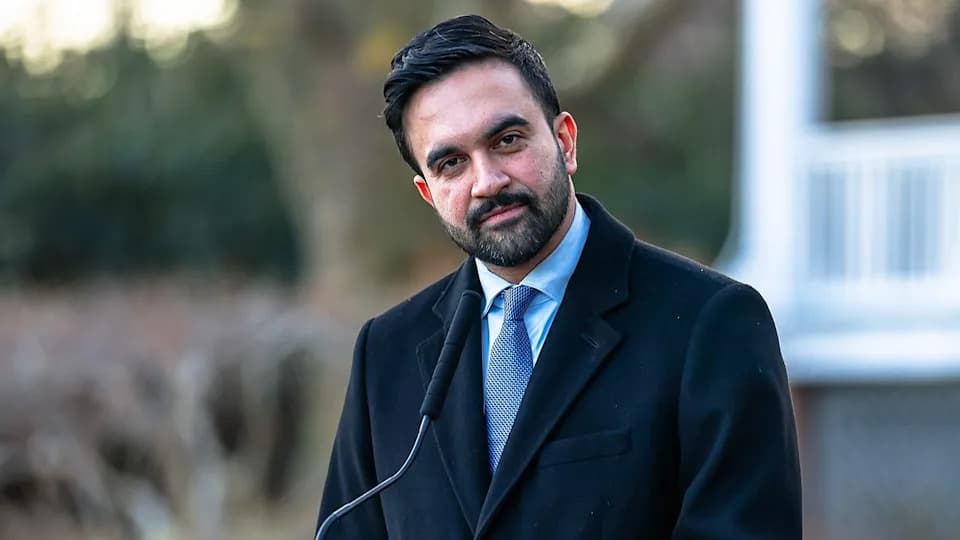
The Nov. 19 protest outside Park East Synagogue, aimed at a Nefesh B’Nefesh event, included slogans some Jewish leaders called threatening. Mayor‑elect Zohran Mamdani condemned the protesters’ language but also criticized the synagogue for hosting the event, drawing sharp criticism from several Jewish organizations. Police Commissioner Jessica Tisch’s decision to remain in post and attend services was presented as a reassurance. The incident spotlights the challenge Mamdani faces in balancing free speech with community safety as he prepares to take office on Jan. 1.
Synagogue Protest Deepens Concerns Over Mayor‑elect Zohran Mamdani’s Approach to Israel and Jewish Safety

Last week’s pro‑Palestinian demonstration outside Park East Synagogue on Manhattan’s Upper East Side has intensified debate over Mayor‑elect Zohran Mamdani’s approach to issues involving Israel and the safety of New York City’s Jewish community.
The protest on November 19 targeted an event hosted by Nefesh B’Nefesh, a nonprofit that assists North American Jews relocating to Israel. The demonstration, organized by the Palestinian Assembly for Liberation‑AWDA NY/NJ, circulated a flyer reading “No settlers on stolen land” and called on supporters to “protest the settler recruiting fair.”
Dozens of demonstrators gathered just outside the modern Orthodox synagogue, many wearing keffiyehs and carrying Palestinian flags. Witnesses reported chants including “Death to the IDF” and “globalize the intifada,” slogans that some attendees and Jewish leaders described as threatening and inflammatory.
Mayor‑elect’s Response and Clarification
Mamdani released a brief statement saying he “discouraged the language used” by the protesters, but he also criticized the synagogue for hosting an event he suggested promoted activities he characterized as in violation of international law. His spokesperson clarified that remark referred to the promotion of settlements beyond the Green Line, the armistice boundary separating Israel from the West Bank.
“I care very deeply about Jewish safety, and I look forward to rooting out antisemitism across the five boroughs and protecting Jewish New Yorkers and every New Yorker who calls the city home,” Mamdani said when asked about the protest following a high‑profile meeting.
Reactions from Community Leaders
Rabbi Ari Berman, president of Yeshiva University, called Mamdani’s criticism of the Nefesh B’Nefesh event “irresponsible and inflammatory,” arguing that it appeared to move beyond municipal concerns into foreign policy territory. Other Jewish leaders and advocacy groups said the location and tone of the demonstration — immediately adjacent to a house of worship and school — heightened fear within the community.
The Anti‑Defamation League criticized the mayor‑elect’s response and launched a monitoring initiative to track his policies and appointments. The ADL said failing to explicitly and forcefully denounce the protest’s language risked contributing to a hostile environment for Jewish New Yorkers.
At the same time, progressive Jewish groups offered a more nuanced take: they defended the right to protest while condemning violent or threatening language. Jamie Beran, CEO of Bend the Arc, said protesting near a place of worship is not inherently wrong but that calls for violence and language that fuels antisemitism are unacceptable and damage the protest movement’s cause.
Security, Policing and Political Fallout
New York Police Commissioner Jessica Tisch, who will remain in her role under Mamdani, attended Shabbat services at Park East and addressed worshippers, stressing the NYPD’s commitment to protecting religious institutions while preserving the right to protest. Benny Rogosnitzky, the synagogue’s cantor, said many attendees felt intimidated by the demonstration and welcomed assurances that future protests would be managed to minimize disruptions to worshippers, students and passersby.
Several Democratic officials also denounced the protest. Gov. Kathy Hochul described the demonstration as “shameful,” and outgoing Mayor Eric Adams called it antisemitic. The incident has become an early test for Mamdani as he prepares to take office on January 1, illustrating the complex balance he must strike between free expression, community safety and deeply contested foreign‑policy issues that reverberate in New York City.
Context and Next Steps
Mamdani’s past comments about Israel — including his reluctance to endorse Israel’s right to exist specifically as a Jewish state and his harsh criticism of Israel’s actions in Gaza — contributed to existing unease among many Jewish voters and leaders. During the campaign he also met with Jewish groups to pledge security at synagogues and pro‑Israel events when requested, and some progressive Jewish organizations endorsed him on the basis of his municipal policy platform.
As mayor‑elect, Mamdani will be watched closely by city leaders, community organizations and religious institutions for how he balances protecting free speech with ensuring the safety and religious freedom of all New Yorkers. The Park East demonstration has made clear that those responsibilities will be scrutinized from the start of his administration.
Help us improve.