Camera traps in Haíɫzaq̓v Nation Territory captured a wolf swimming to a buoy, pulling a line and hauling a submerged crab trap ashore before opening it to eat the bait. The May 2024 footage, reported in a study published Nov. 17 in Ecology and Evolution, may represent the first recorded case of tool use by a wild canid. Researchers caution that the behavior could stem from observation or trial-and-error and note that definitions of "tool use" are debated.
Wolf Caught Hauling Up a Submerged Crab Trap — Possible First Tool Use by a Wild Canid

Footage from the central coast of British Columbia shows a wolf performing a complex sequence of actions to recover a submerged, baited crab trap — a behavior researchers say could represent the first documented instance of tool use by a wild canid.
The video, captured by Haíɫzaq̓v Guardians' camera traps in May 2024, shows the wolf swim out to a floating buoy attached to an underwater trap, retrieve the buoy, return to shore and then reel in the line. When the trap surfaced, the animal broke it open and ate the bait.
"This is a new dimension of wolf behaviour we had not seen before," said Kyle Artelle, lead author of the study and assistant professor at the State University of New York College of Environmental Science and Forestry. "It shows how much we still have to learn about the cognitive abilities of other species."
The traps were deployed as part of an effort to remove invasive European green crabs (Carcinus maenas), which threaten native crab populations and disrupt coastal ecosystems. Haíɫzaq̓v Guardians had repeatedly found damaged traps or missing bait and installed cameras to identify the culprit. Within a day the team captured the wolf on video.
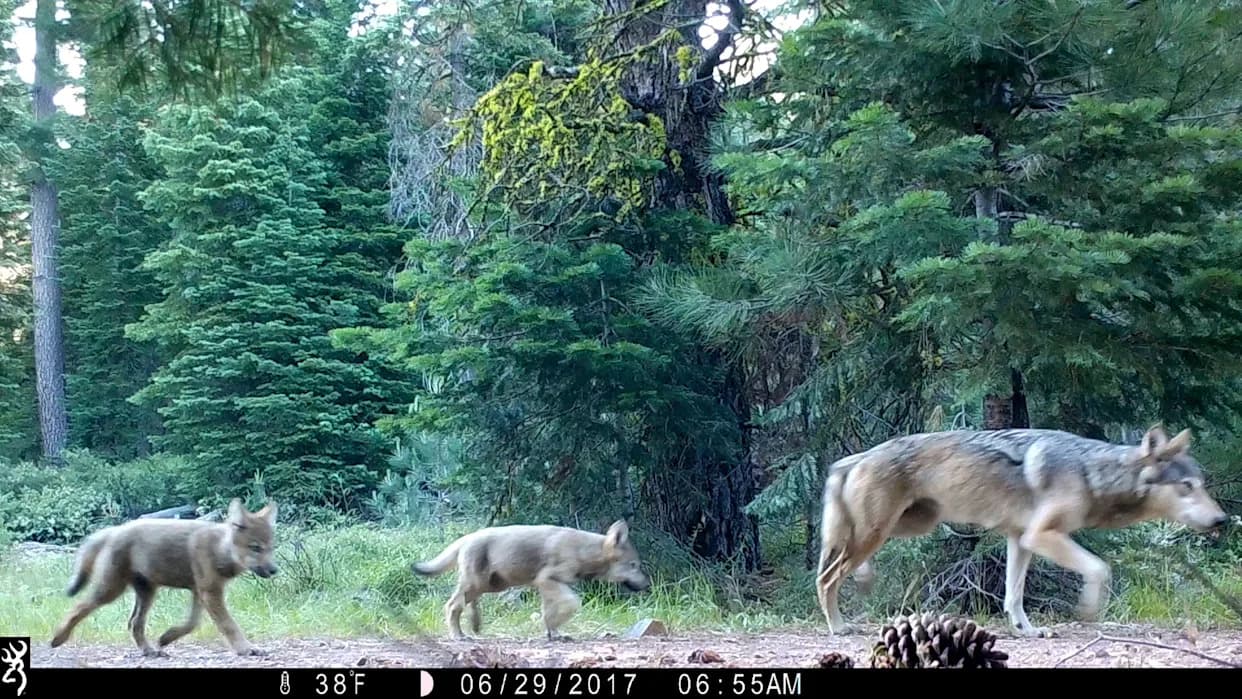
Wolves (Canis lupus) have been observed interacting with human-made objects before, but researchers describe this episode as more sophisticated than previously documented wild-wolf behaviors. While domestic dogs and captive canids have shown complex actions — including moving objects to access food — documented tool use by wild canids is scarce or nonexistent, so this record is notable.
Defining "tool use" is debated. Most definitions require purposeful manipulation of an external object to achieve a goal, but some researchers exclude actions like pulling a rope if the animal is not seen as controlling its orientation. The wolf's use of a line to retrieve a submerged trap falls into a grey area: it may meet stricter criteria for tool use, yet the underlying cognitive mechanism is unclear.
Researchers propose two main explanations: the wolf may have learned by observing humans (Haíɫzaq̓v Guardians handling traps), or the behavior could have arisen through individual trial-and-error. The camera network, now permanently installed in the crab-removal areas, has not yet recorded a second clear instance of a wolf hauling a submerged trap to shore, though earlier clips hint at other interactions with lines and bait cups.
Beyond the immediate finding, the footage highlights the value of Indigenous monitoring programs and local knowledge in revealing unexpected animal behaviour. Whether this event represents true tool use or clever problem solving by a coastal wolf, it expands our understanding of canid cognition and the ways wildlife can adapt to human-made resources.
Help us improve.