Key point: Legal experts say President Trump's November 7 pardon for allies tied to the 2020 election may be written broadly enough to cover U.S. citizens accused of voting-related offenses in 2020. Defense lawyers for Matthew Alan Laiss have asked a federal court to dismiss double-voting charges on that basis. Scholars warn the pardon’s imprecise language could generate many legal challenges, though state prosecutions would remain possible. The courts will decide how far the pardon’s protections extend.
Experts: Trump's Broad 2020 Pardon Could Shield Citizens Accused of Voter Fraud

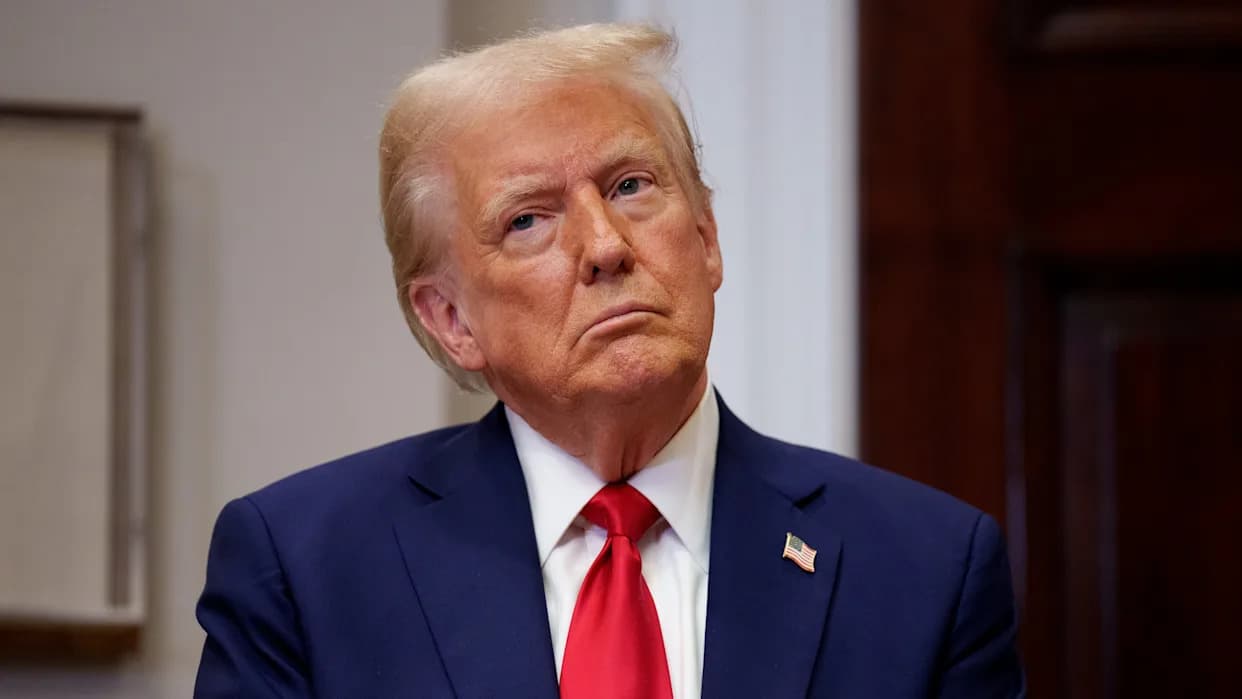
Legal scholars and defense attorneys warn that the language of President Donald Trump's November 7 pardon for allies tied to efforts to overturn the 2020 election may be broad enough to protect any U.S. citizen accused of election-related voting offenses in 2020.
Case at the center: Matthew Alan Laiss
At the center of the debate is a federal case against Matthew Alan Laiss, accused of voting by mail in Pennsylvania and then voting in person in Florida in the 2020 presidential election. A federal indictment filed in September alleges Laiss moved from Pennsylvania to Florida in August 2020, cast a mail ballot in Pennsylvania, and later voted in person in Florida; the ballot casts cited by defense counsel were for Donald Trump. Laiss has pleaded not guilty.
Defense argument: a sweeping pardon
Laiss's lawyers, public defenders Katrina Young and Elizabeth Toplin, moved to dismiss the charges, arguing that Trump's pardon applies broadly. They highlight language in the November 7 document that it "applies to any US citizen for conduct relating to the advice, creation, organization, execution, submission, support, voting, activities, participation in, or advocacy for or of any slate or proposed slate of presidential electors, whether or not recognized by any state or state official, in connection with the 2020 presidential election." The pardon lists specific individuals but also states it is not limited to those named.
“When Mr. Laiss cast two votes in the general election for President Trump for the office of president of the United States in Pennsylvania and Florida, he support[ed], vot[ed for] … [and] advoca[ted] for [a] slate or proposed slate of presidential electors … in connection with the 2020 presidential election,” the defense wrote. “By its plain language, the pardon extends to Mr. Laiss.”
Scholars: textual reading is plausible
Several legal scholars say the textual reading is plausible and could prompt courts to resolve many similar claims. Derek Muller, a law professor at the University of Notre Dame, called the pardon’s language "a broad set of conduct and an undefined group of individuals who are protected," adding that it is "quite plausible" to read the text as covering those who voted for or otherwise supported slates of presidential electors in 2020.
Liz Oyer, who formerly served as the Justice Department's pardon attorney, said the order’s imprecise drafting will likely produce numerous court disputes. "The language is not very precise, and so it's hard to parse what would fall within it and what would fall outside it without looking at each case individually," she said, suggesting the paperwork may not have been reviewed by the pardon attorney's office for clarity.
Justin Levitt, a professor at Loyola Law School, noted the pardon appears to apply only to U.S. citizens and therefore would not cover cases involving noncitizens prosecuted for false voter eligibility claims. He also observed that the language seems to extend protections to election officials who oversaw 2020 voting and faced intense scrutiny and pressure.
Limits and practical effects
Even if courts adopt the defense's reading, the federal pardon does not erase state-level authority. Legal experts emphasize that state prosecutors can still pursue charges under state law, and many alleged instances of voter fraud are prosecuted locally rather than federally. Historically, proven voter fraud in the U.S. has been rare.
If courts interpret the pardon as broadly as defense lawyers argue, the result could have awkward political and legal consequences for the administration, potentially curtailing some federal prosecutions tied to the 2020 election and prompting a wave of motions to dismiss in other cases.
What comes next
Federal prosecutors in the Eastern District of Pennsylvania, who are handling Laiss's case, have not publicly responded to the defense motion. How courts resolve the dispute—whether by narrowly interpreting the pardon or by granting broader effect—will determine whether similar federal charges can proceed or must be dismissed.
Help us improve.