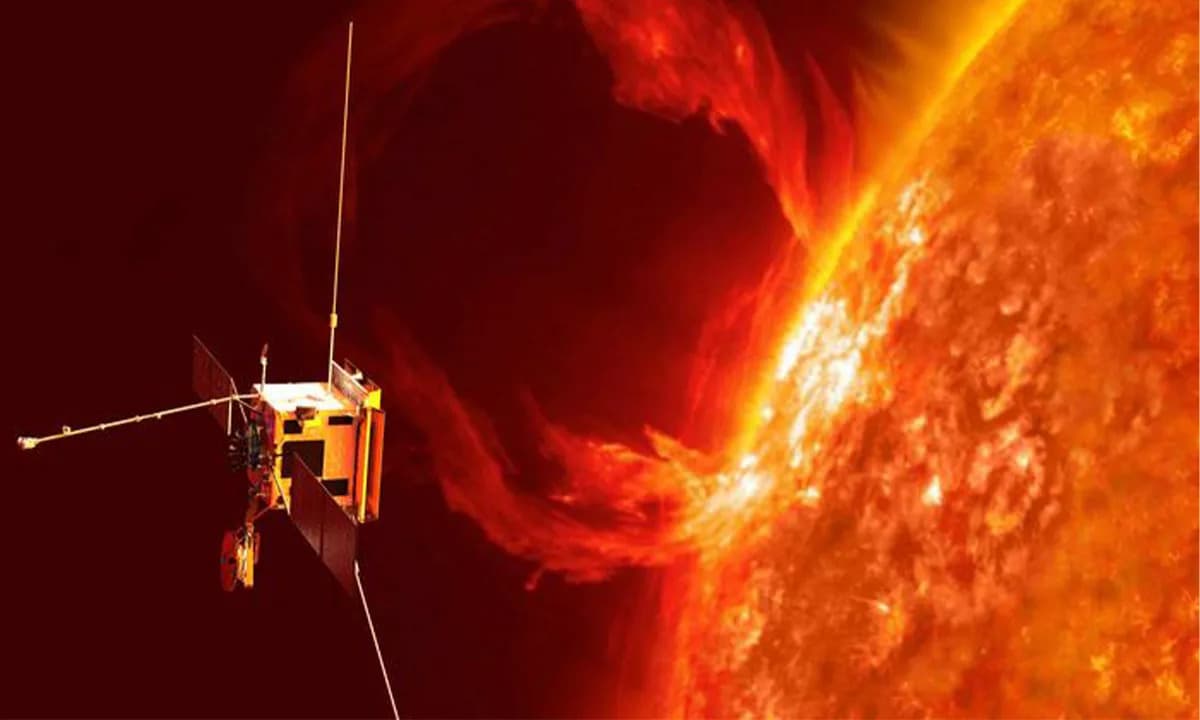
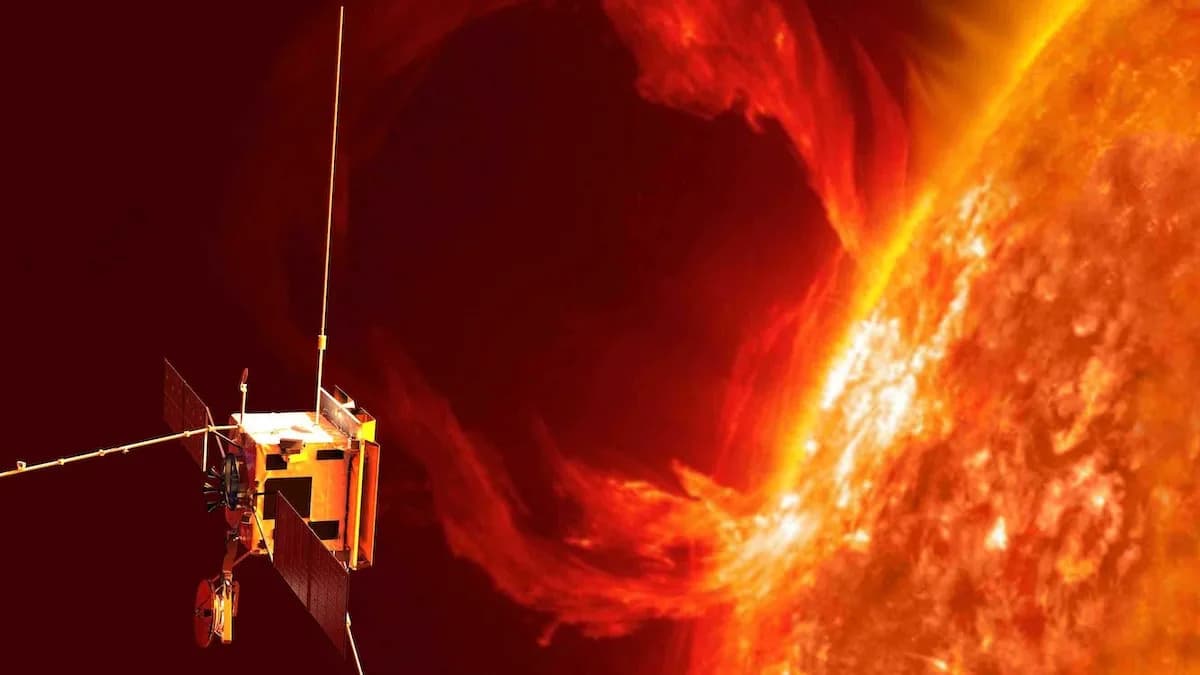
The JAXA Arase satellite recorded the most extreme plasmasphere collapse on May 10, 2024, when the 'Gannon' superstorm compressed Earth's plasmapause from about 27,340 miles (44,000 km) to roughly 5,965 miles (9,600 km) in nine hours. Nagoya University researchers report the region remained depleted for more than four days — the longest recovery Arase has observed — partly because a post-storm "negative storm" choked off particle replenishment from the ionosphere. The findings, published in Earth, Planets and Space, underscore risks to GPS, satellites and communications as solar activity increases.
‘Gannon’ Superstorm Compressed Earth’s Plasmasphere to One-Fifth, Arase Satellite Shows

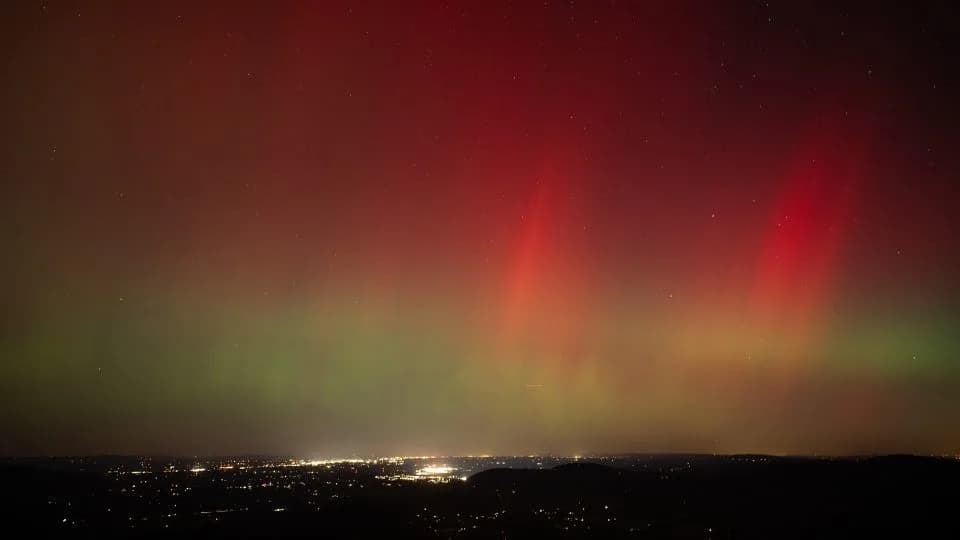
When the geomagnetic superstorm nicknamed “Gannon” struck Earth on May 10, 2024, it produced spectacular auroras — and, according to measurements from Japan Aerospace Exploration Agency (JAXA)’s Arase satellite, triggered the most dramatic collapse of the plasmasphere ever recorded.
What the data show
Researchers at Nagoya University analyzed Arase's in-situ observations and found the plasmasphere — a doughnut-shaped reservoir of cold, charged particles that co-rotates with Earth's magnetic field — contracted far faster and more deeply than expected after multiple coronal mass ejections (CMEs) hit the magnetosphere. Under quiet conditions the plasmapause (the plasmasphere's outer boundary) sits near 27,340 miles (44,000 km) altitude; during the peak of the Gannon storm it plunged to roughly 5,965 miles (9,600 km) in only nine hours, shrinking to about one-fifth of its usual extent.
Prolonged depletion and its cause
Arase recorded not only the rapid collapse but also an unusually long recovery: the plasmasphere remained significantly depleted for more than four days — the longest recovery observed by the Arase mission since its 2017 launch. The team attributes the delayed rebuild in part to a so-called "negative storm" in the ionosphere, a phenomenon where intense heating and altered currents reduce the outflow of charged particles that normally replenish the plasmasphere.
Atsuki Shinbori, lead author of the study at Nagoya University, said: "We found that the storm first caused intense heating near the poles, but later this led to a large drop in charged particles across the ionosphere, which slowed recovery. This prolonged disruption can affect GPS accuracy, interfere with satellite operations and complicate space-weather forecasting."
Why it matters
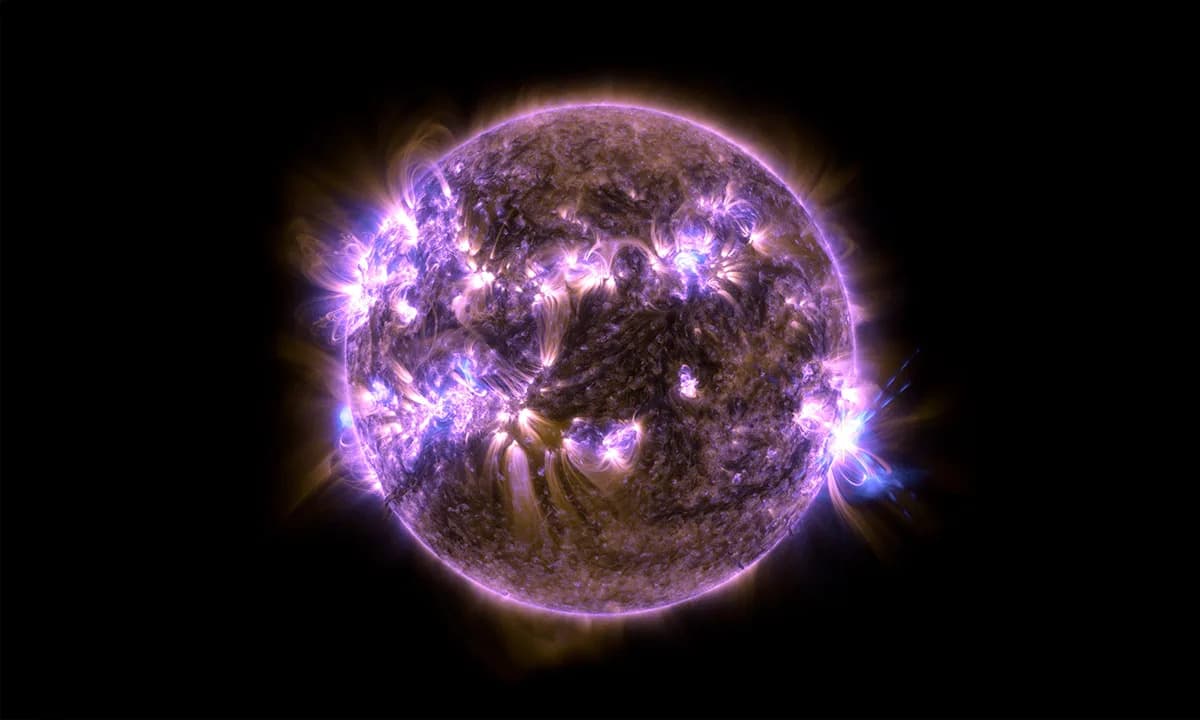
Although invisible to the eye, the plasmasphere helps shield satellites and radio signals from high-energy solar particles and shapes how solar disturbances propagate through near-Earth space. A rapid and deep erosion — followed by a slow recovery — increases the risk of satellite anomalies, navigation errors and degraded communications during and after extreme solar events. As solar activity rises toward the next peak, understanding how quickly the plasmasphere can erode and how slowly it may recover is increasingly important for protecting critical infrastructure.
The Nagoya University team's results were published on Nov. 20 in the journal Earth, Planets and Space. Data came from JAXA's Arase satellite and the analysis was led by researchers at Nagoya University, including Atsuki Shinbori.
Help us improve.