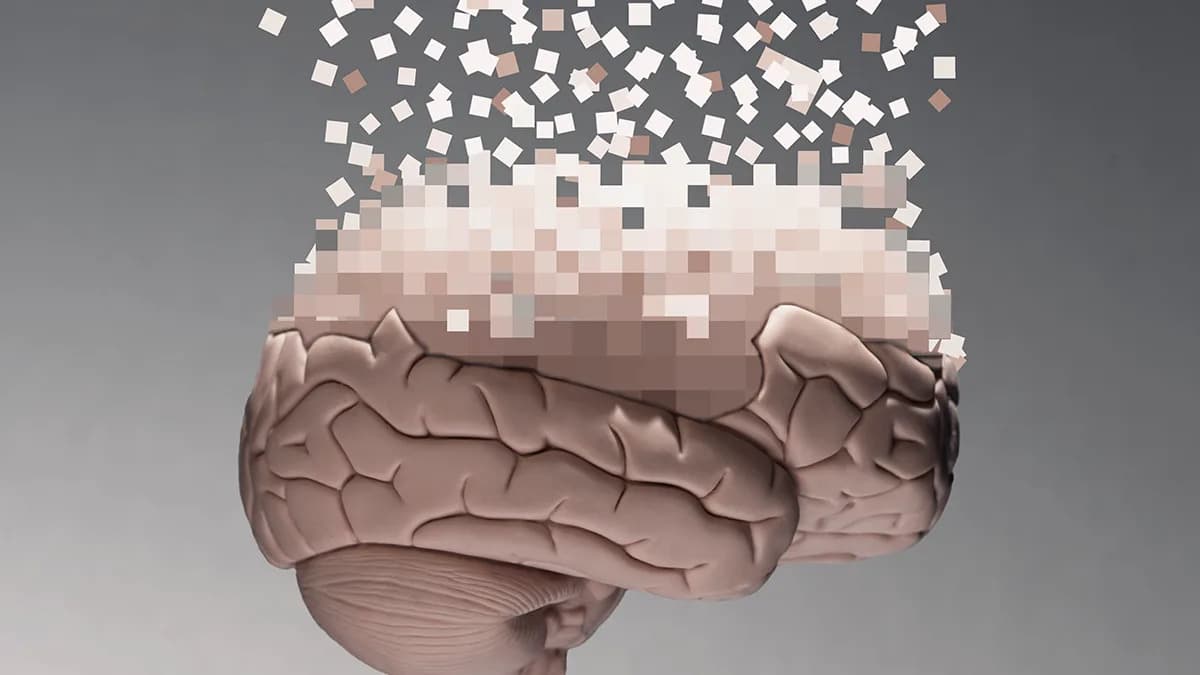
The human brain appears to reorganize in five distinct life "epochs," with turning points at about ages 9, 32, 66 and 83, according to a study in Nature Communications. Using diffusion MRI from roughly 3,800 people aged 0–90, researchers mapped changes in network architecture and found network efficiency rises mainly between ages 9–32, a plateau from 32–66, then increasing modularity and connectivity loss after 66. The pattern may help explain age-linked risks for mental health and neurological conditions, though experts caution the exact change points need further confirmation.
Study Maps Five Distinct ‘Epochs’ of the Human Brain — Turning Points at 9, 32, 66 and 83

New research suggests the human brain does not change in a single smooth arc across life but instead reorganizes in five distinct phases, or "epochs," separated by four key turning points at about ages 9, 32, 66 and 83. The findings — published in Nature Communications — are based on diffusion MRI scans and offer a lifespan map of how neural connections strengthen, reorganize or decline.
How the study was done
Researchers led by Alexa Mousley, a postdoctoral research associate at the University of Cambridge, analyzed roughly 3,800 diffusion MRI scans from people aged 0 to 90. Diffusion MRI tracks the movement of water molecules in tissue, which tends to follow the direction of myelinated fiber bundles in the brain. From these scans the team inferred major pathways of connectivity and how network architecture changes across ages.
Five life epochs
- 0–9 years: Rapid growth of gray and white matter, widespread synaptic pruning and large-scale structural reorganization.
- 9–32 years: Extended rewiring and increasing network efficiency — the only period the study reports a sustained rise in overall connectivity efficiency.
- 32–66 years: A plateau phase with slower, subtler reorganization and relatively stable architecture; the authors link this with a leveling of traits such as intelligence and personality.
- 66–83 years: A shift toward greater modularity, where tightly connected subnetworks become more distinct and global integration weakens.
- 83+ years: Further loss of inter-regional connectivity, with the brain relying more on individual regions as long-range connections decline.
“It’s not a linear progression,” Mousley said. “This is the first step of understanding the way the brain’s changing fluctuates based on age.”
Potential implications and cautions
The timing of these epochs could help explain why many psychiatric disorders first emerge during young adulthood: most diagnoses occur in the period the study identifies as intense rewiring (roughly ages 9–32). The authors suggest the brain’s changing wiring during that era may create windows of vulnerability for mental health conditions.
However, experts urge caution. Rick Betzel, a professor of neuroscience at the University of Minnesota who was not involved in the work, praised the study’s ambition but noted limitations. The analysis combines nine previously collected data sets that vary in scanning protocols and participant composition. The authors harmonized those data sets to create an average lifespan map, but harmonization can obscure real variability or introduce biases.
Betzel also highlighted that an ideal test of discrete change points would use longitudinal diffusion MRI — repeatedly scanning the same large group of people across their lives — which is not yet feasible. While the evidence supports age-related changes in brain networks, whether those changes occur at precisely five discrete ages remains to be confirmed.
Bottom line: The study offers an engaging new framework for thinking about how brain architecture evolves across life and proposes specific ages where major shifts occur. The result is an important step toward mapping brain development and aging, but the proposed change points should be treated as tentative until further longitudinal and harmonized studies replicate the pattern.
Help us improve.