The USS Arizona, sunk at Pearl Harbor on Dec. 7, 1941, remains the final resting place for more than 900 sailors; 277 are buried at Honolulu’s Punchbowl and 86 of those remain unidentified. Missing records and few family DNA references long stalled identification efforts. A grassroots group, Operation 85, has collected over 650 family DNA kits—surpassing the Pentagon’s threshold—which has enabled the Defense POW/MIA Accounting Agency to prepare for exhumations and possible identifications. The process will be scientifically and logistically complex, but it could bring closure to many families.
After 84 Years, DNA Effort Could Finally Identify USS Arizona’s Unknown Sailors

Since the Japanese attack on Pearl Harbor on Dec. 7, 1941, the battleship USS Arizona has remained submerged at its final berth. The wreck serves as the watery tomb for more than 900 sailors and Marines who went down with the ship.
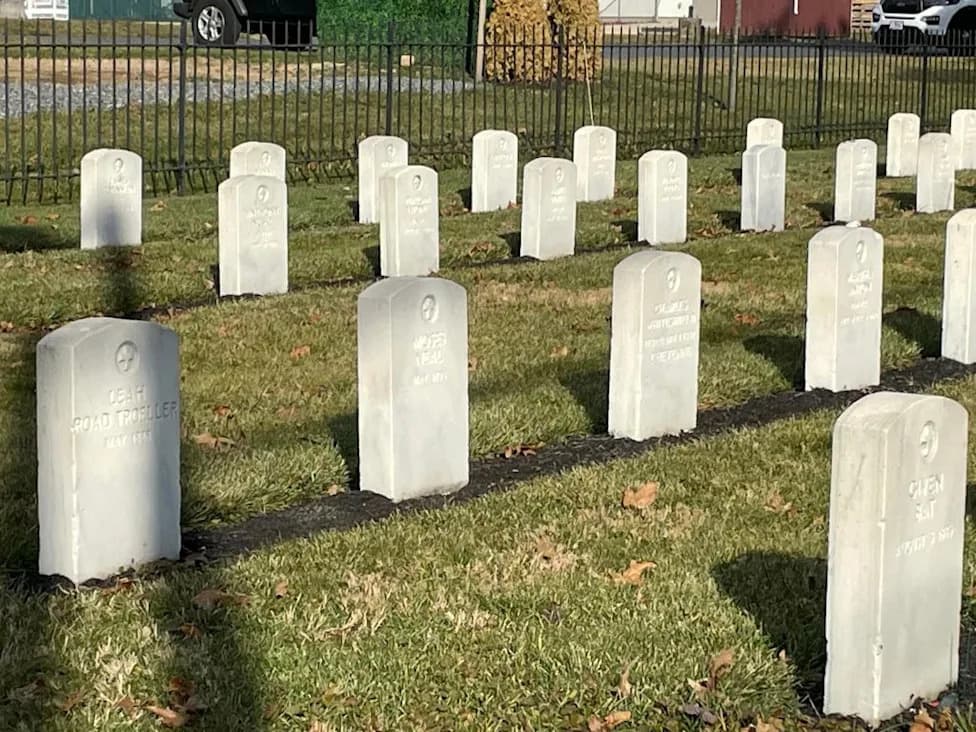
The Arizona suffered the heaviest loss of life of any U.S. vessel in the attack: 1,177 of her crew were killed, comprising nearly half of the 2,403 people who died that day. Of the ship’s dead, 277 are interred at Honolulu’s National Memorial of the Pacific (the Punchbowl), and 86 of those buried there are still officially unidentified.
Why identifications have been difficult
Efforts to identify remains have long been hampered by missing documentation and limited family DNA references. Officials say they have personnel files for roughly half of those lost aboard the Arizona, and dental records exist for only about 130 men. Some records were destroyed when the ship sank; others may have been lost later in a 1973 fire at a military records center.
In 2015 the Pentagon adopted a policy that allows disinterment of groups of unknown servicemembers only if authorities expect to identify at least 60% of the group. For earlier cases—most notably the USS Oklahoma—the military had a large percentage of family DNA references and was able to disinter and identify hundreds of service members. By contrast, in recent years there were few family reference samples available for the Arizona unknowns.
Grassroots effort changes the equation
An advocacy group, Operation 85, was formed in 2023 by Kevin Kline, a Virginia real-estate agent and the grandnephew of a sailor still listed among the missing. Frustrated by the slow pace of official outreach, Kline paused his work, invested personal funds, and recruited genealogists and researchers to locate next-of-kin and collect DNA reference samples.
The Defense POW/MIA Accounting Agency (DPAA) indicated it would seek exhumation of dozens of unknown burials once the required number of family DNA references was obtained. DPAA officials reported that the Armed Forces DNA Identification Laboratory had received dozens of family samples and was awaiting more test kits to approach the agency’s threshold.
"When the system said \"no,\" families stepped forward and made \"yes\" possible," said Kevin Kline.
Where things stand and what’s next
Operation 85 says it has now collected more than 650 family DNA kits—surpassing the government’s stated threshold for proceeding. With that milestone reached, DPAA is preparing to move forward with plans to disinter and attempt identifications, though officials caution that the process will be complex and may take considerable time and forensic work.
Even with family DNA, identifications require careful scientific analysis, cross-checking with surviving records, and legal and ethical coordination with families and memorial authorities. If successful, the effort could bring long-sought answers and closure for many relatives of those lost on the Arizona.
Help us improve.