Sen. Ron Johnson says the U.S. "can’t afford" President Trump’s plan to send $2,000 tariff "dividend" checks, citing a projected multi‑trillion‑dollar deficit. Budget analysts warn that tariff receipts — estimated at roughly $300 billion this year by the Treasury and about $2.8 trillion over 10 years by the CBO — would not fully cover annual $2,000 payments, which CRFB pegs at about $600 billion per year. The administration says payments would be income‑limited, and Congress must pass legislation to authorize any distribution.
Sen. Ron Johnson: U.S. 'Can’t Afford' $2,000 Tariff Dividend Checks; Budget Experts Flag Shortfall

Sen. Ron Johnson (R-Wis.), a prominent Senate fiscal hawk, told Fox Business that the United States cannot afford President Trump’s proposal to distribute $2,000 tariff "dividend" checks to working-class Americans as a cushion against higher living costs.
What the proposal would do
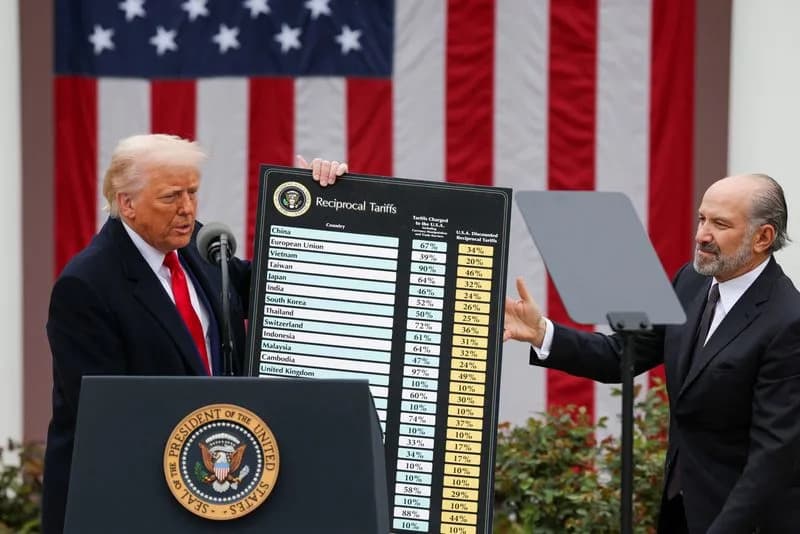
President Trump has proposed sending $2,000 checks to millions of Americans, saying the payments could be funded with additional revenue generated by higher tariffs. The administration has suggested payments would be targeted at households below a specified income threshold, described by the president as "individuals of moderate income." Any distribution would require congressional approval.
Sen. Johnson’s concerns
“Look, we can’t afford it. I wish we were in a position to return the American public their money, but we’re not,” Johnson told Maria Bartiromo. He warned the country faces a historically large shortfall, saying, “We’ll have at least a $2 trillion deficit this year.”
Johnson contrasted that figure with smaller annual deficits earlier this decade: roughly $800 billion during President Trump’s earlier term and about $550 billion per year in President Obama’s final years. The Congressional Budget Office (CBO) recently projected the federal deficit for 2025 at about $1.8 trillion.
How the math adds up — and where it doesn’t
Budget analysts say tariff receipts are unlikely to fully fund recurring $2,000 payments. Estimates cited by nonpartisan groups and federal agencies include:
- The Committee for a Responsible Federal Budget (CRFB) estimates annual costs of roughly $600 billion if $2,000 checks were sent each year, totaling about $6 trillion over 10 years.
- The Treasury Department estimated it could collect approximately $300 billion this year from higher tariffs.
- The Congressional Budget Office projects tariff-related receipts of about $2.8 trillion over 10 years.
Those figures suggest a gap between expected tariff revenue and the recurring cost of universal $2,000 rebates unless the program is limited in scope or duration.
Political reactions and next steps
Senate Majority Leader John Thune (R-S.D.) has suggested redirecting additional tariff revenue to reduce the national debt. “The amount of revenue coming in from the tariffs is considered to be substantial at this point and hopefully can be put to a useful purpose, in my view one of which would be repaying the debt,” he told reporters.
Treasury Secretary Scott Bessent said the administration plans to limit payments to households below a specified income threshold. The administration has indicated payments could begin "in the middle of next year," but Congress would need to pass legislation to authorize the program and specify eligibility, frequency and funding mechanisms.
Bottom line
The proposal to send recurring $2,000 tariff dividend checks has sparked debate between policymakers who want to return tariff revenue to households and fiscal watchdogs who say the projected tariff receipts are unlikely to cover a permanent, broad-based rebate. Key decisions — eligibility rules, whether payments are one-time or recurring, and how to account for deficit impact — will determine whether the program is financially viable.
Help us improve.