The House Republican Study Committee released an 11-page reconciliation framework it says could cut the federal deficit by more than $1 trillion. The plan focuses on affordability: rerouting Obamacare premium subsidies into Health Savings Accounts, codifying Trump-era drug-pricing and energy deregulation policies, creating Home Savings Accounts, and taxing certain litigation fees to raise roughly $27 billion. It would also limit some federal funds to jurisdictions that grant driver’s licenses to undocumented immigrants, a proposal projected to save about $76.3 billion.
House GOP Unveils 11-Page 'Big, Beautiful' Reconciliation Framework Aimed at $1T Deficit Cut

U.S. President Donald Trump speaks in the Oval Office on August 14, 2025 in Washington, D.C.
The House Republican Study Committee on Tuesday released an 11-page framework for a second reconciliation package the group says could reduce the federal deficit by more than $1 trillion. Republican Study Committee Chairman August Pfluger (R-Texas) announced the roadmap at a press briefing with House Budget Committee Chairman Jodey Arrington (R-Texas), whose committee would play a central role in drafting and advancing any reconciliation bill.
What Is Reconciliation?
Budget reconciliation is a special congressional process that allows the majority party in each chamber to pass major fiscal and policy changes with a simple majority in the Senate rather than the 60 votes normally required to overcome a filibuster, provided the measures comply with strict parliamentary rules.
Key Themes and Proposals
The framework centers on affordability and several conservative priorities designed to lower costs and raise revenue. Major elements highlighted by Republican leaders include:
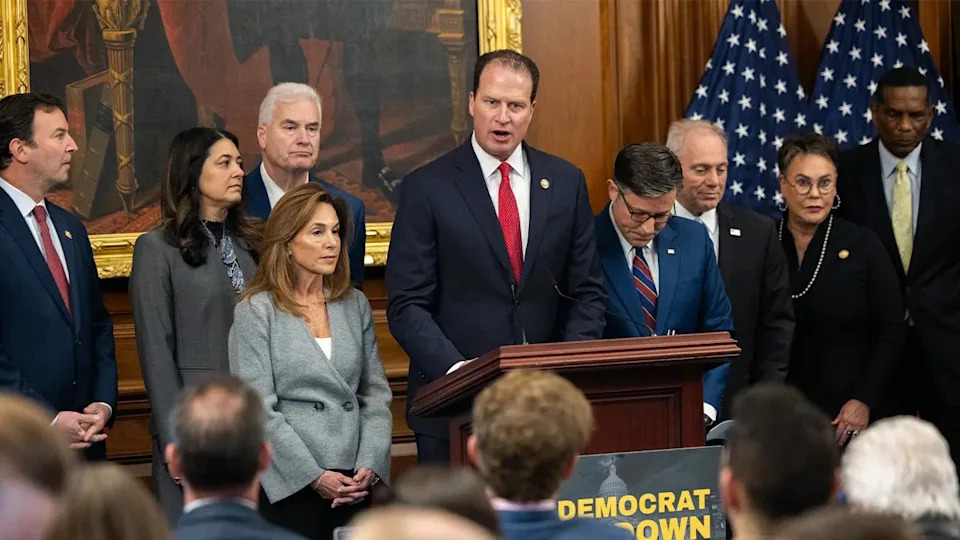
Republican Study Committee Chairman August Pfluger speaks during a press conference with other members of the Republican Study Committee, as well as members of House Republican leadership in Washington, Oct. 28, 2025.
- Health care: Redirecting existing Obamacare premium subsidies into Health Savings Accounts (HSAs) so funds flow directly to individuals rather than insurers, and codifying Trump-era executive actions on so-called most-favored-nation drug pricing to try to reduce prescription costs.
- Energy and deregulation: Codifying Trump administration energy deregulation policies intended to lower production costs for U.S. oil and natural gas and, Republican leaders say, translate into lower prices for consumers.
- Litigation fees: Imposing taxes or fees on certain third-party litigation and related lawsuit costs, which the committee estimates could raise at least $27 billion by discouraging what it calls frivolous suits that undermine economic growth.
- Immigration and federal funding limits: Restricting some federal transportation funding to states, cities, or jurisdictions that provide driver’s licenses to undocumented immigrants or that the framework labels as "sanctuary" jurisdictions — a policy the committee projects would save about $76.3 billion. It would also limit access for some noncitizens to certain federal programs, such as the Low-Income Housing Tax Credit and state-provided government health benefits.
- Homeownership incentives: Creating "Home Savings Accounts" to allow Americans to move funds from other tax-advantaged accounts toward a house purchase without penalty, with the goal of making buying a home more affordable.
Political Context
Republicans advanced a previous reconciliation bill that former President Donald Trump called a "big, beautiful bill"; that measure passed after months of intraparty negotiation and near-unanimous House GOP support. GOP leaders note that earlier legislation benefited from the looming expiration of tax provisions in the Tax Cuts and Jobs Act at the end of 2025, which helped unify the conference — a unifying external deadline the new package currently lacks.
"That's why this framework is so important," Pfluger said, noting that the conference spent significant time identifying overlapping themes that could attract broad support. "The details of exactly which bills will be included — that's the hard work that we now will embark upon."
Chairman Arrington echoed affordability as the top message: "I do think it's the most important issue for November," he said, arguing the package addresses the economic strain many families face from rising costs. Representative Stephanie Bice (R-Okla.) emphasized deregulation and energy policy as core to reducing prices.
Speaker Mike Johnson (R-La.) has publicly supported pursuing a second reconciliation bill but has not yet endorsed a specific legislative text. House Republican leaders say they will now enter detailed negotiations over which provisions to include in a final package, mindful of a slim and recently narrowed House majority.
Note: Figures and projections in the framework reflect the Republican Study Committee's estimates and would be subject to change during negotiations and official scorekeeping by the Congressional Budget Office should legislation be drafted.
Help us improve.