The Solar System orbits the Milky Way at roughly 792,000 km/h, while the galaxy itself is thought to move at ~2.1 million km/h. A new analysis of radio galaxies combining LOFAR and two other surveys finds a cosmic radio dipole about 3.7× larger than predicted by the standard cosmological model, with >5σ significance. Authors suggest this could mean either a much higher Solar System velocity or a nonuniform distribution of radio galaxies, challenging the cosmological principle; further checks are needed.
Radio Galaxies Suggest Our Solar System May Be Moving More Than Three Times Faster Than Expected

New research using deep radio surveys finds a surprising asymmetry in the sky distribution of distant radio galaxies that could imply our Solar System is moving through space far faster than current models predict — or that the large-scale distribution of radio sources is less uniform than assumed.
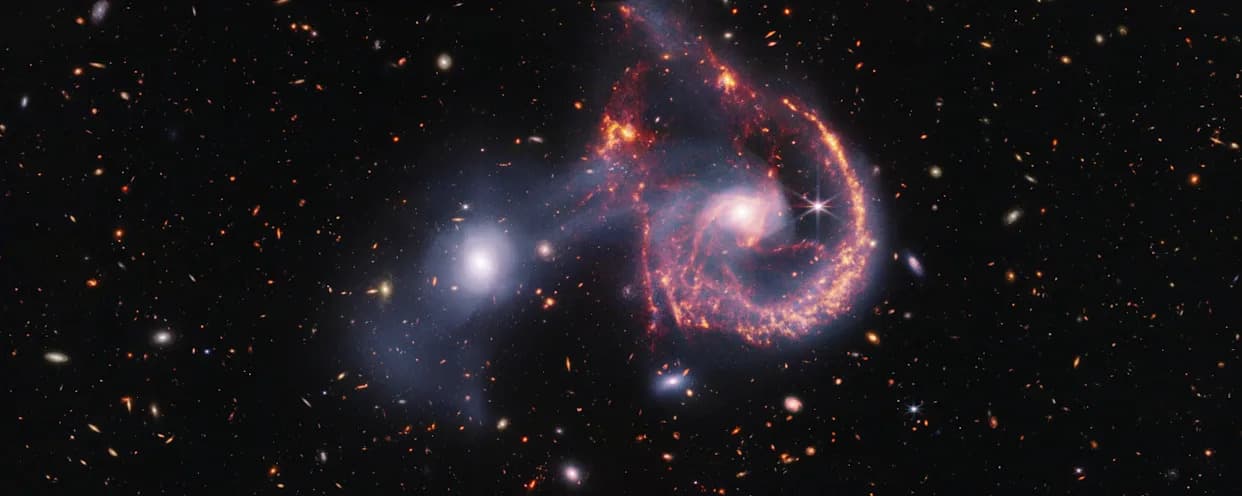
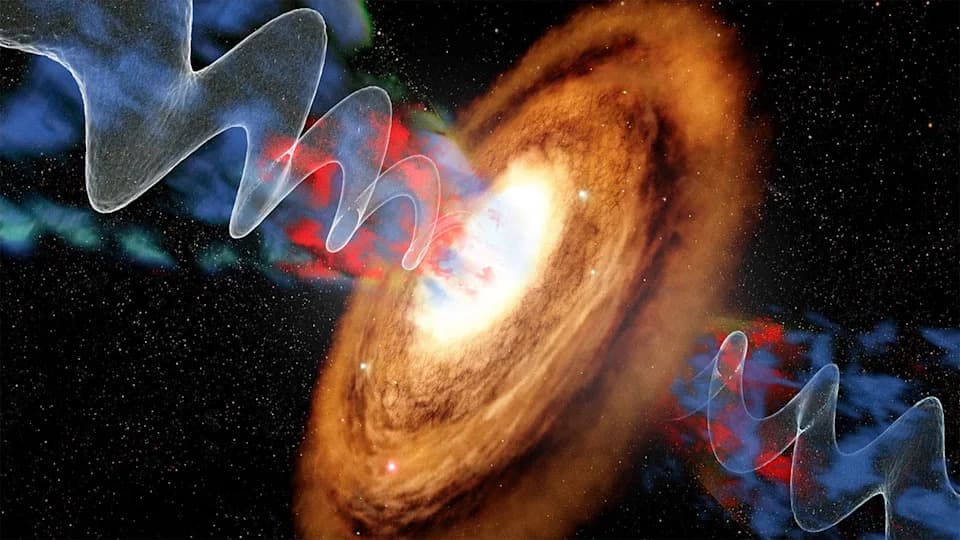
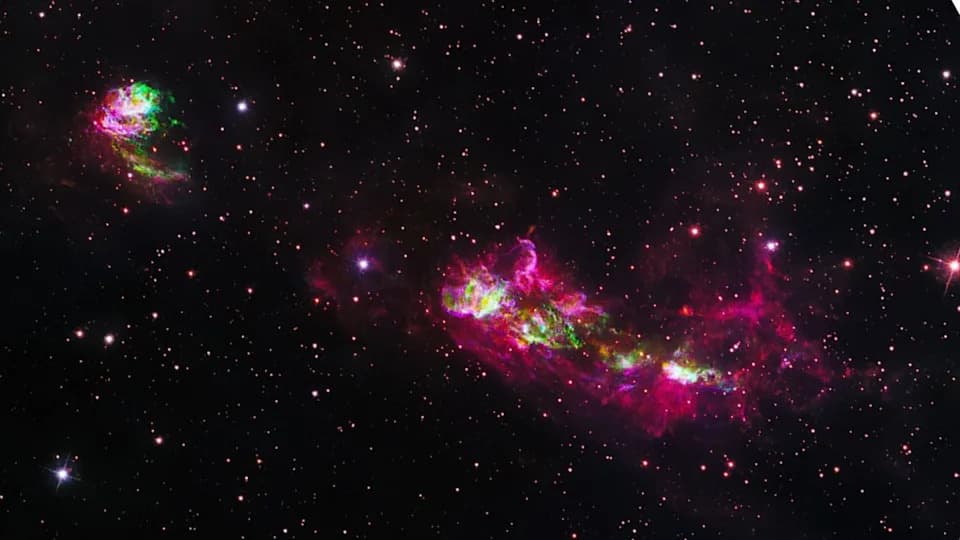
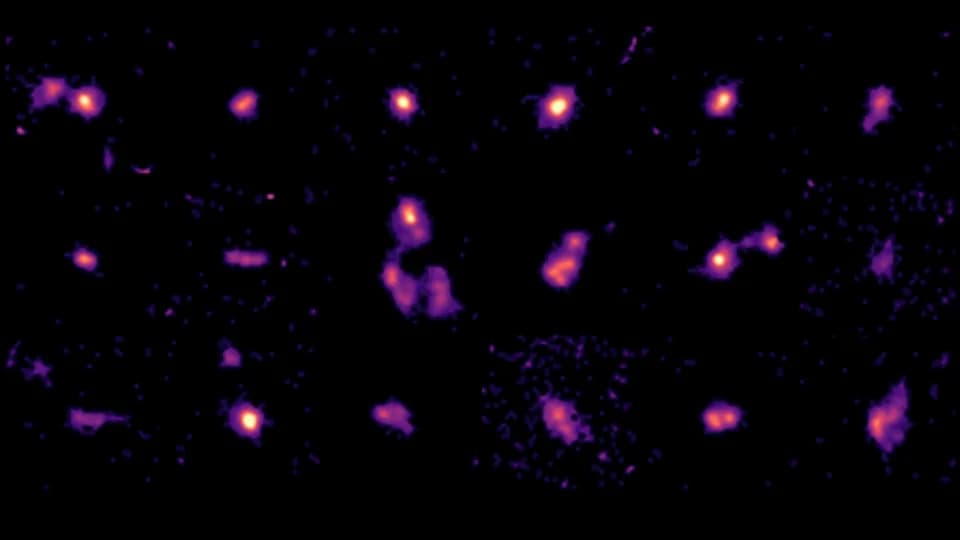
The international team, led by astrophysicist Lukas Böhme of Bielefeld University, combined data from three radio surveys, including the deepest wide-area low-frequency survey to date from the Low-Frequency Array (LOFAR) in Europe. They searched for the so-called source-count dipole: a subtle excess of radio galaxies in the direction of our motion and a deficit opposite it. Because radio waves penetrate dust and gas, radio surveys provide a broad census of distant galaxies that is well suited to this measurement.
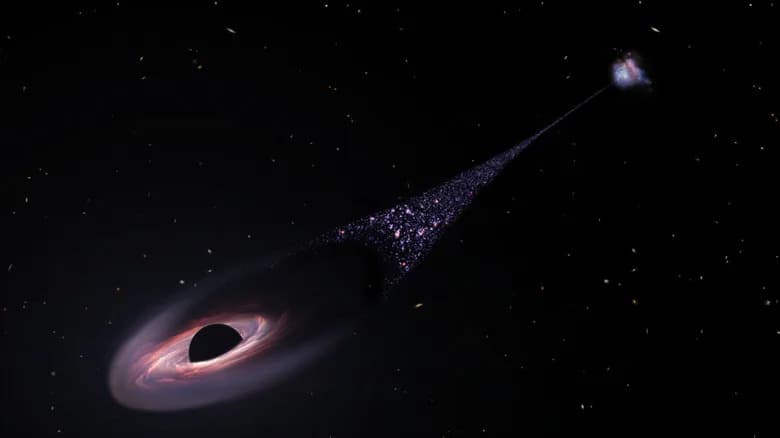
“Our analysis shows that the Solar System is moving more than three times faster than current models predict,”Böhme says. The paper reports a cosmic radio dipole that is about 3.7 times larger than the prediction from the standard cosmological model, with a discrepancy exceeding five sigma — a level usually interpreted as statistically significant.
The result challenges expectations from the standard cosmological framework, which relies on the cosmological principle: on the largest scales, matter is expected to be distributed roughly uniformly so that no location in the Universe is privileged. If the measured dipole truly reflects our motion, it would imply a Solar System velocity much larger than inferred from the cosmic microwave background and other probes. That would force a rethink of some basic assumptions about large-scale cosmic structure.
Co-author Dominik J. Schwarz, also of Bielefeld University, emphasizes alternative interpretations: the radio-galaxy population itself might be anisotropic on very large scales, or there could be observational or methodological systematics that artificially enhance the dipole signal. The team used a novel statistical method to account for multi-component radio sources — a common complexity that can bias dipole estimates if not treated carefully — but they acknowledge further checks are necessary.
Future work will test these findings with independent radio catalogs, deeper surveys, and cross-checks against other cosmological probes (for example, the cosmic microwave background and optical galaxy surveys). If confirmed, the result would have profound implications for cosmology; if resolved as an observational effect, it will still teach us important lessons about radio-source populations and survey biases.
Publication: The study appears in Physical Review Letters. The analysis and its interpretation remain under active discussion in the community as additional data are brought to bear.
Help us improve.