President Trump plans to unveil a proposal to limit health care costs by offering an alternative to enhanced ACA subsidies used by nearly 22 million people. The framework would temporarily continue subsidies while reinstating an income cap (previously 400% of the federal poverty level) and requiring all enrollees to pay a modest premium to reduce fraud. Provisions under discussion include allowing some aid to be deposited into health savings accounts and expanding non-ACA plan options. Officials say the plan is not final and may change before an announcement.
Trump to Unveil Plan to Curb Health Costs — Proposes Limits on Expanded ACA Subsidies

President Donald Trump is preparing to unveil a proposal to address rising health care costs as soon as Monday, according to three people familiar with the matter. The framework is being developed as an alternative to the enhanced Affordable Care Act (ACA) subsidies that nearly 22 million people currently rely on.
The White House and Trump aides stepped up work on the plan after Senate Republicans agreed to hold a mid-December vote on extending the enhanced subsidies — which are scheduled to expire at year’s end — in exchange for pushing government funding through January. The enhanced assistance was enacted in 2021 as part of a Covid‑19 relief package.
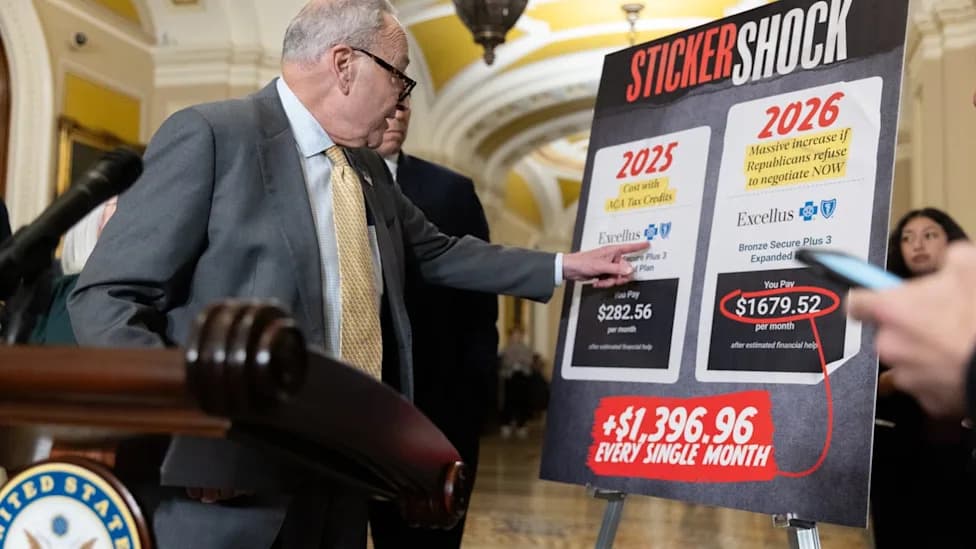
Analysts warn of steep consequences if the expanded subsidies lapse. The Kaiser Family Foundation (KFF) projects that average premiums could more than double next year, and the Congressional Budget Office (CBO) estimates roughly 2 million more Americans could become uninsured if the enhancements expire.
The administration’s framework under discussion would temporarily continue ACA subsidies in some form but add limits intended to narrow their reach. Potential guardrails include reinstating an income cap on premium subsidies (previously set at 400% of the federal poverty level) and requiring all enrollees to pay at least a modest monthly premium.
Supporters of the changes say the measures would address key Republican criticisms of the enhanced subsidies: restoring a cap would limit benefits for higher-income households, while a required nominal premium is aimed at curbing fraud that allegedly arose when some plans carried zero premiums and brokers received commissions for enrollments.
The draft also reportedly includes an option for certain enrollees who choose lower-tier exchange plans to redirect some federal assistance into a health savings account (HSA). In recent weeks, President Trump has repeatedly advocated for directing federal funds more directly to individuals so they can use the money to purchase coverage rather than routing it to insurers through subsidies.
Two Senate Republicans have offered complementary proposals: Sen. Rick Scott of Florida would allow enrollees to use all federal aid to buy coverage, potentially including plans outside the ACA exchanges, which critics warn could weaken risk pools. Sen. Bill Cassidy of Louisiana proposes shifting only the enhanced portion of subsidies into HSAs, letting people use the funds for medical services such as doctor visits, prescriptions and eyewear.
In addition, the Paragon Health Institute has proposed letting lower-income enrollees place cost-sharing subsidies — those that reduce deductibles and out-of-pocket costs — into HSAs to increase beneficiary control. Paragon’s plan also calls on Congress to fund these cost-sharing subsidies again to lower premiums for certain ACA plans.
Other conservative ideas being discussed include expanding access to non-ACA plans, which would broaden options outside the exchanges and reshape the individual market. Separately, the president is expected to urge Congress to codify a “Most Favored Nation” drug-pricing policy aimed at tying some U.S. drug prices to lower prices paid in peer countries.
Administration officials caution that the proposal is not final and the timing and specifics could change before any formal announcement. A White House official said, "Until President Trump makes an announcement himself, any reporting about the Administration’s healthcare positions is speculation."
Help us improve.