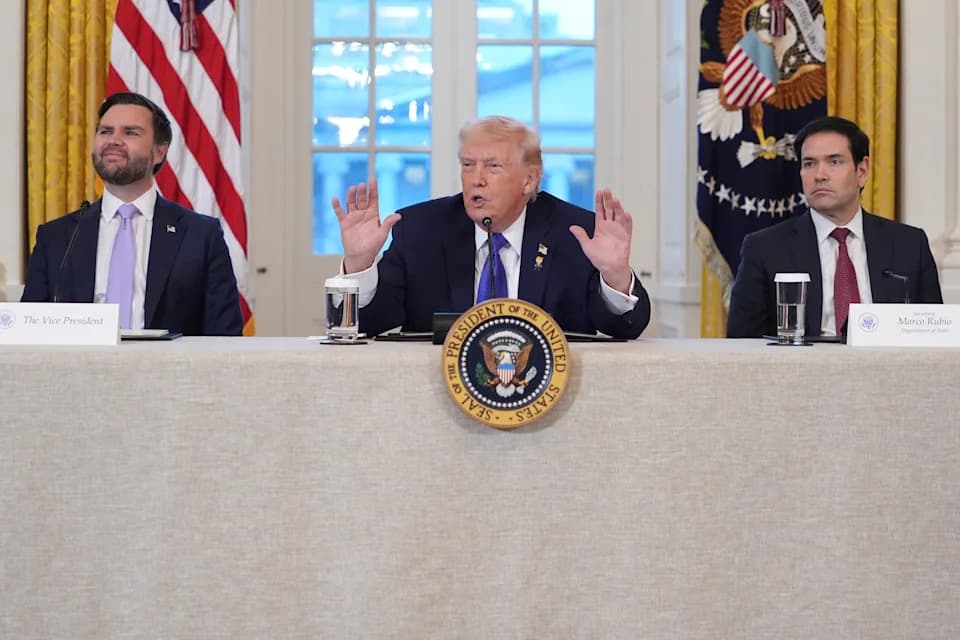
A national poll of 2,489 adults finds most Americans oppose potential U.S. military action in Venezuela and want clearer explanations from the White House. Few see Venezuela as a major threat, and only one in five has heard much about the related military buildup. The public is split on strikes against suspected drug-smuggling boats and largely doubts such action would reduce drug flows. Separately, voters report a gap between official messaging and their own experience of inflation, hurting the president's economic ratings.
Most Americans Oppose Potential U.S. Military Action in Venezuela, Poll Finds

A national poll of 2,489 U.S. adults conducted Nov. 19–21, 2025 (margin of error ±2.4 points) finds broad public skepticism about U.S. military action in Venezuela and widespread calls for clearer explanations from the White House. Across party lines, large majorities say officials have not clearly explained any planned actions and want more information about the purpose and expected outcomes.
Views on Venezuela and possible military action
Most respondents do not see Venezuela as a major threat to the United States; more describe it as a minor threat. The idea of using U.S. military force in Venezuela draws widespread disapproval and does not command overwhelming support even among Republicans. About three in four Americans say President Trump would need congressional approval before taking military action there, a view shared by just over half of Republicans.
Awareness and evidence concerns
Only one in five Americans reports having heard a lot about the U.S. military buildup related to Venezuela, suggesting limited public awareness of the operation's purpose. Americans are divided over recent strikes on boats suspected of carrying drugs: just over half approve overall, but that support is driven almost entirely by Republicans. An overwhelming majority say they want to see clear evidence that suspected vessels actually contain drugs, while most doubt that military action in Venezuela would substantially reduce drug flows into the United States.
Differences inside the GOP
Support for potential action is stronger among MAGA-aligned Republicans than non-MAGA Republicans. This reflects a broader pattern in which that segment of the party tends to defer to the president on foreign-policy moves. MAGA supporters are more likely to say the president has explained his plans and to believe intervention would decrease drug inflows.
Economy and inflation: a widening perception gap
The poll also highlights a disconnect between White House messaging on inflation and Americans' personal experiences. Most respondents say President Trump portrays inflation and price trends as better than people feel they are in their daily lives. This view is shared by about four in 10 Republicans, many of whom also report rising prices at home.
Overall ratings for the economy remain low and fell to their lowest point in 2025 during this poll. A majority believe the president's policies are increasing the cost of food and groceries as the holiday season approaches. More than two-thirds disapprove of his handling of inflation, and those who judge the president primarily on economic performance are particularly critical, saying he does not spend enough time on the issue.
Immigration and deportation
The administration's deportation program remains divisive. Republicans generally support the effort, while many outside the GOP base feel ICE is detaining more people than necessary. About one-third of respondents—especially those in cities and suburbs—say the program is making conditions in their communities worse and that it is causing people to stay home more. Many also view the deportation program as undermining rather than strengthening the economy.
Epstein files and public expectations
Across party lines, Americans say releasing the Epstein files is important. Most expect the files will include damaging information about powerful people, and on balance more respondents expect the material to be true than false, though many say it is too early to be certain. Republicans report greater satisfaction with how the administration handled the matter after the president urged congressional release; however, most Republicans say the files do not heavily influence how they evaluate him, while independents and Democrats give the issue more weight.
Survey methodology
This national poll surveyed 2,489 U.S. adults between Nov. 19 and Nov. 21, 2025. The sample was weighted to reflect the adult population by gender, age, race, and education using U.S. Census benchmarks and adjusted for 2024 presidential vote. The margin of error is ±2.4 percentage points.
Takeaway: Americans want clearer answers about U.S. intentions in Venezuela, are skeptical that military action would curb drug flows, and remain dissatisfied with current economic conditions—especially rising food prices and inflation.
Help us improve.