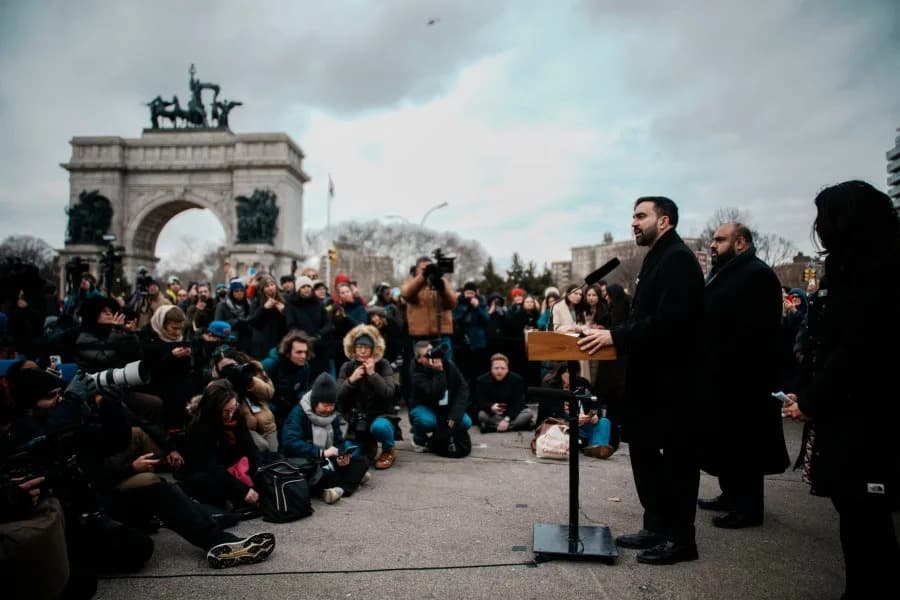
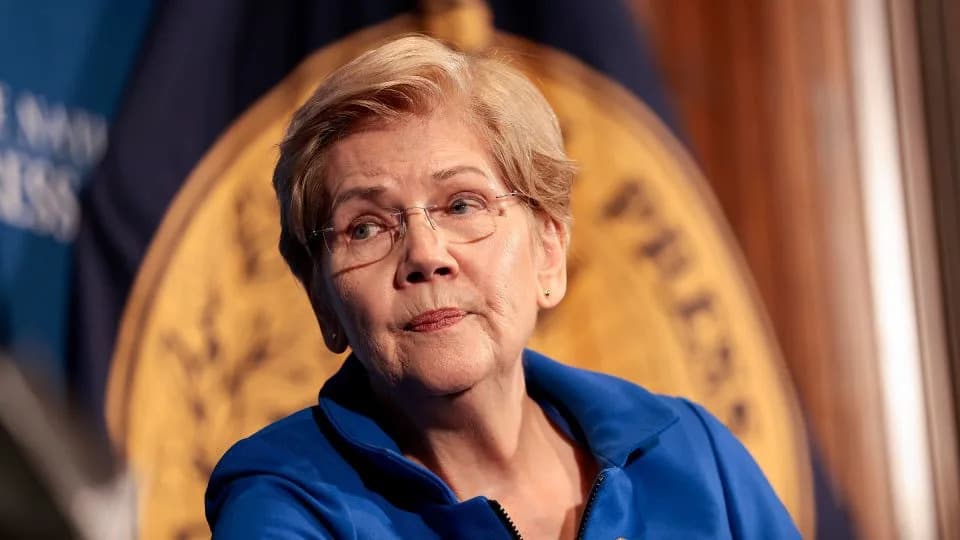
Summary: The Democratic Party now oscillates between left-wing moral populism and a technocratic managerial center—a split underscored by the 2025 victories of Zohran Mamdani and Abigail Spanberger. Both tendencies sacrifice a coherent public philosophy for either administrative competence or sweeping state action. Revisiting the party’s classical-liberal "Bourbon" tradition—emphasizing constitutional restraint, civil liberties, and market-friendly reforms—could offer a pragmatic third path that adapts old principles to modern problems.
The Democratic Party’s False Choice: Socialism or Technocratic Managerialism

The Democratic coalition that once held disparate factions together has frayed into two competing tendencies: a moralistic, left-wing populism that champions bold redistribution and civic reform, and a managerial technocracy that prizes expertise, procedure, and administrative competence. The 2025 electoral cycle — symbolized by victories from Zohran Mamdani in New York City and Abigail Spanberger in Virginia — crystallized that split and exposed a deeper identity problem within the party.
Two Models, Shared Weaknesses
Mamdani’s democratic-socialist model emphasizes state planning, rent regulation, and steep taxation to address inequality. Its critics warn that such policies can replicate the contradictions of earlier collectivist projects if they lack pragmatic implementation and institutional checks. Spanberger’s centrist, technocratic path relies on managerial competence and incremental reform. It is politically viable but often appears as maintenance of the status quo rather than a compelling moral or philosophical vision.
Both impulses share a common blind spot: a tendency to treat government as the primary source of solutions and to place institutional continuity above a clear public theory of liberty and civic purpose. Political thinker James Burnham foresaw a similar problem in which liberalism risks becoming an administrative order sustained by expert consensus rather than by a shared program of civic ideals.
A Forgotten Tradition: The Bourbons and Classical Liberalism
The party’s fractured identity is easier to understand when read against its 19th-century history. For much of its early life the Democratic Party contained strong strains of classical liberalism—skepticism of centralized authority, emphasis on constitutional restraints, free trade, and a limited federal government. Critics of the time dubbed this grouping the "Bourbon Democrats." They championed fiscal restraint, opposition to imperialism, civil-service reform, and a market-friendly economic approach.
"Though the people support the Government, the Government should not support the people." — Grover Cleveland, explaining his veto of the 1887 Texas Seed Bill.
That sentiment reflected a belief that voluntary charity and civic institutions should carry much of the burden of social support, and that expansive federal intervention risked undermining civic character and self-reliance. The Bourbon coalition was imperfect—particularly in accommodating and sometimes enabling racial exclusion in the post–Civil War era—but it represented a coherent philosophy that contrasted with later technocratic and interventionist currents.
How Progressive and Managerial Politics Took Over
By the late 19th and early 20th centuries, populist insurgencies, the Progressive movement, and the centralizing policies of Woodrow Wilson and later Franklin D. Roosevelt shifted the party’s center of gravity. The New Deal redefined political language by treating economic security as a public responsibility and establishing a durable federal apparatus. Successive administrations built on this managerial approach, expanding the administrative state and creating a politics in which expert-driven policy and institutional preservation became central.
Where That Leaves the Party Today
Contemporary Democrats now grapple with a choice that often appears binary: embrace expansive redistribution and moral reform, or double down on technocratic governance and procedural competence. But framing the debate as a binary obscures an alternative: a renewed, modernized commitment to restrained government, constitutional safeguards, civil liberties, and market-friendly reforms adapted to current challenges.
Remnants of that older liberal DNA remain across the political landscape—civil libertarians opposing surveillance, decentralists advocating local solutions, and a handful of heterodox figures (from diverse ideological backgrounds) who emphasize fiscal restraint and skepticism of bureaucratic overreach. Though small, these currents suggest an opening for a center that rejects both managerial complacency and messianic state expansion.
Policy Implications and a Way Forward
Recovering a coherent center would not mean wholesale return to 19th-century policies. Rather, it would mean:
- Reasserting constitutional limits and checks on administrative power.
- Designing social policies that combine effective public support with private and civic institutions.
- Promoting economic growth and innovation while guarding civil liberties and local autonomy.
- Framing governance around a clear civic purpose instead of treating administration as an end in itself.
Whether the Democratic Party can reconcile its competing instincts remains an open question. The party’s internal debate is not merely tactical; it is a contest over first principles: what role should government play in shaping the good life, and how should democratic institutions preserve liberty while addressing inequality and social change? A durable answer will require both realism about institutional limits and ambition about civic renewal.
Note: This analysis draws on historical figures and political thought to assess contemporary trends and does not reference or credit any single publication as its source.
Help us improve.