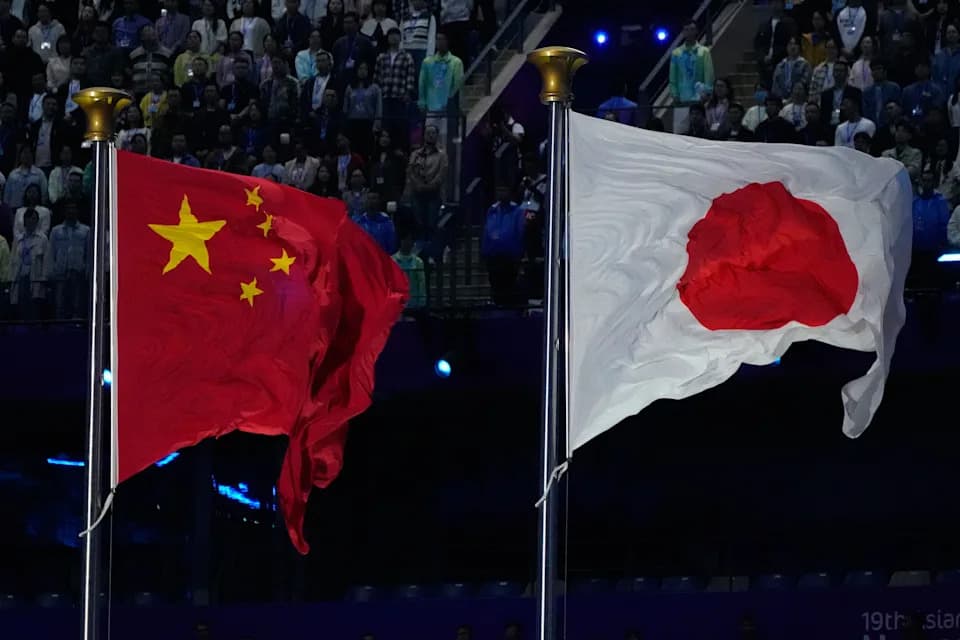
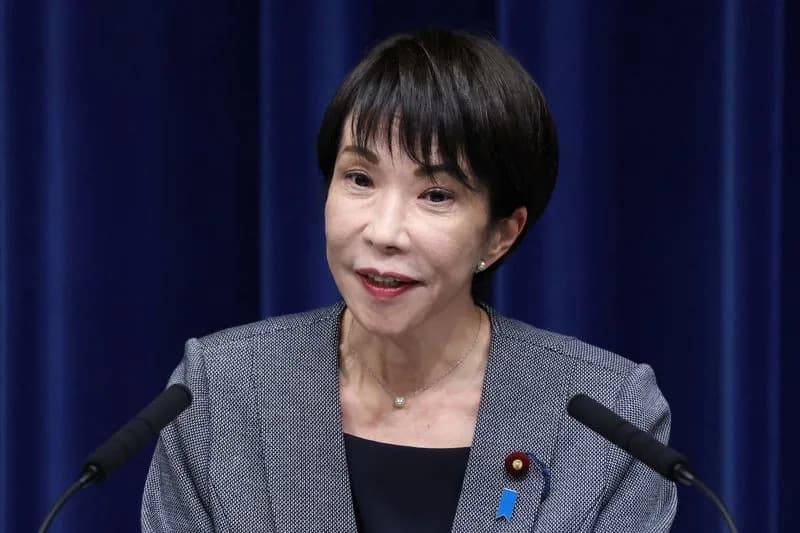
Chinese Foreign Minister Wang Yi said Japan "crossed a red line" after Prime Minister Sanae Takaichi suggested Tokyo might intervene militarily if China used force against Taiwan. Beijing sent a letter to the U.N. accusing Takaichi of violating international norms, and U.N. Ambassador Fu Cong warned any armed intervention would be treated as aggression. Takaichi refused to retract her comments but said she would avoid discussing specific scenarios. The dispute highlights rising regional tensions and the risks of public escalation.
China Says Japan 'Crossed a Red Line' After Prime Minister's Taiwan Intervention Remarks
Chinese Foreign Minister Wang Yi on Sunday accused Japan of having "crossed a red line" following comments by Japan’s new prime minister, Sanae Takaichi, that suggested Tokyo might consider military action if China attempted a blockade or other coercive measures against Taiwan.
In a statement published on the Chinese Foreign Ministry’s website, Wang described Takaichi’s remarks as "shocking," saying Japan’s leadership had sent a dangerous signal by publicly discussing possible military involvement in the Taiwan issue.
"It is shocking that Japan’s current leaders have publicly sent the wrong signal of attempting military intervention in the Taiwan issue, said things they shouldn’t have said, and crossed a red line that should not have been touched," Wang said.
Wang, the most senior Chinese official to comment on the tensions so far, added that China must "resolutely respond" to what he called Japan’s provocative posture and warned of a broader responsibility among nations to "prevent the resurgence of Japanese militarism."
On Friday, Beijing sent a letter to U.N. Secretary-General António Guterres accusing Prime Minister Takaichi of a "grave violation of international law" and diplomatic norms. China’s U.N. Ambassador Fu Cong wrote that "If Japan dares to attempt an armed intervention in the cross-Strait situation, it would be an act of aggression. China will resolutely exercise its right of self-defense under the UN Charter and international law and firmly defend its sovereignty and territorial integrity."
Beijing regards self-ruled Taiwan — which was previously under Japanese rule — as part of its territory and has not ruled out using force to bring the island under its control. China objects to third-party involvement in Taiwan, particularly from the United States, the island’s main weapons supplier, and U.S. allies in the region such as Japan and the Philippines.
Observers note that Takaichi’s remarks appear more explicit than those of recent Japanese leaders, who have warned about China’s threats but typically avoided detailing specific military responses. The prime minister declined to retract her comments, saying she would avoid discussing specific scenarios in the future.
Regional implications
The exchange underscores growing tensions in East Asia as countries weigh responses to shifting security dynamics. Analysts say such public statements can escalate diplomatic friction and increase the risk of miscalculation, underscoring the need for careful diplomacy among Beijing, Tokyo, Taipei and Washington.
Help us improve.