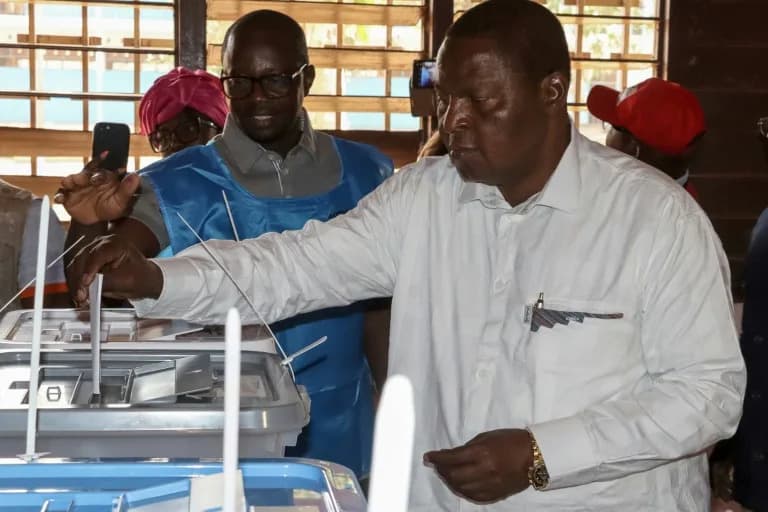
Guinea-Bissau held presidential and parliamentary elections as President Umaro Sissoco Embalo sought a second term amid a tense political climate. The main opposition party and its leader, Domingos Simoes Pereira, were barred from the vote for missing a filing deadline, making the contest highly contentious. Observers warned that recent coup attempts, disputes over Embalo’s tenure and long-standing poverty and criminal networks increase the risk of instability. Nearly half of the country’s roughly 2.2 million people were registered to vote.
Guinea-Bissau Vote Turns Contentious as Main Opposition Is Barred and Embalo Seeks Second Term

Voting opened across Guinea-Bissau on Sunday as President Umaro Sissoco Embalo seeks a second term in a nation long marked by coups, political instability and organized crime networks. The concurrent presidential and legislative ballots have taken place amid accusations that the country’s main opposition party and its leader were improperly excluded, raising fears of further unrest and regional consequences.
Key developments
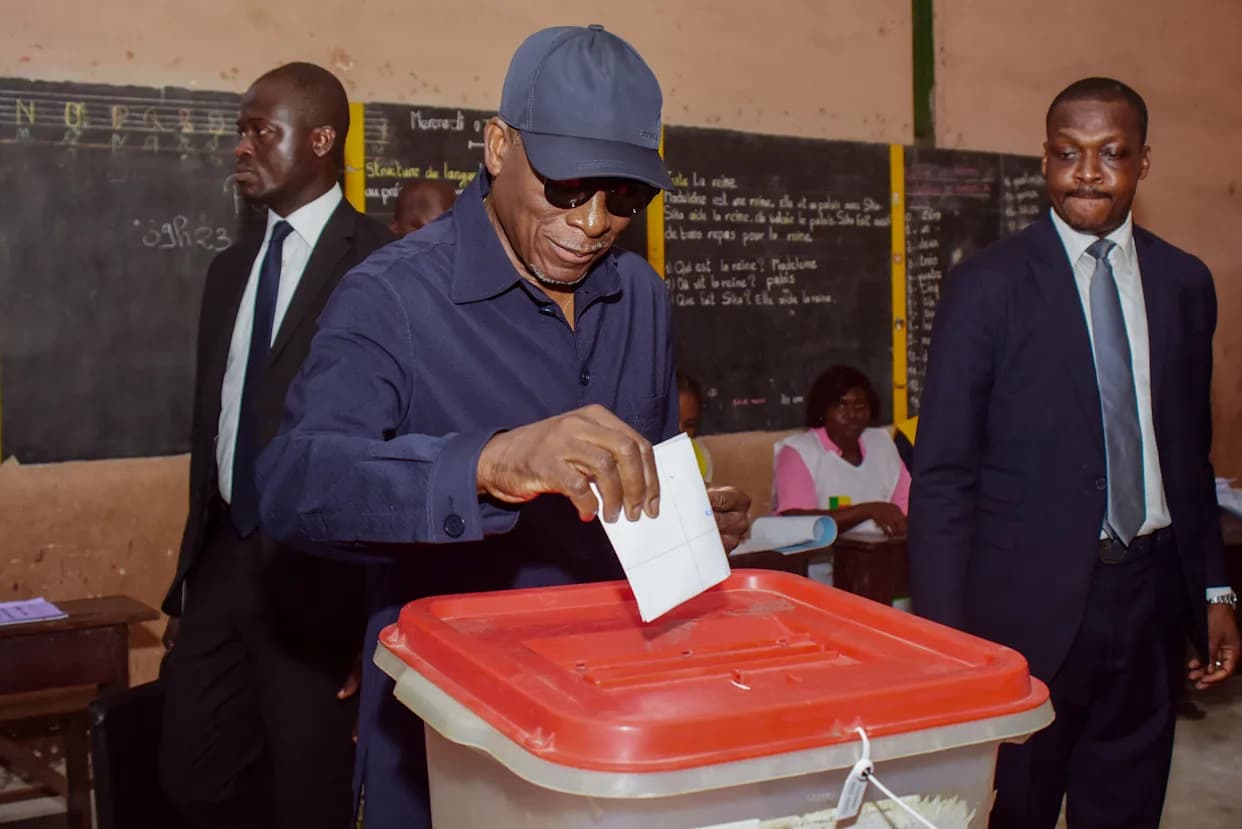
Incumbent President Umaro Sissoco Embalo, a 53-year-old former army general, cast his ballot in Gabu, about 200 kilometres from the capital, Bissau. Speaking after voting, he urged citizens to participate:
“I am the one who will serve a second term, and I hope that the electoral process will take place calmly and peacefully.”
The presidential race is widely seen as close between Embalo and Fernando Dias da Costa, a relatively unknown 47-year-old who is backed by former prime minister Domingos Simoes Pereira. More than a dozen candidates are on the ballot; a candidate must win more than 50% of the vote to avoid a runoff.
Main opposition excluded
Notably, Pereira and his party, the African Party for the Independence of Guinea and Cape Verde (PAIGC), were barred from Sunday’s election after authorities said they failed to submit required paperwork by the deadline. The exclusion of the country’s principal opposition has made the poll one of the most contentious in recent memory.
"The democracy we knew ... is no longer the model we are experiencing; we are experiencing a model defined by a single person," said political analyst Augusto Nansambe, reflecting concerns among critics about the narrowing of political space.
Context and tensions
The vote takes place against a fraught backdrop: Guinea-Bissau has seen repeated coups and coup attempts since independence, and authorities reported a coup attempt as recently as October. The opposition has challenged Embalo’s legitimacy, arguing his term had expired; the Supreme Court later ruled that his current term runs until a specific later date, and the new vote was scheduled for November.
The National Assembly, which the main opposition controlled, has not convened since December 2023 after it was dissolved following an attempted coup. That breakdown in normal institutional functioning has added to uncertainty about the path forward after the election.
Issues shaping the campaign
Campaign rhetoric has been heated, with accusations ranging from corruption and hate speech to violence. Embalo emphasized infrastructure projects — including roads and modernization of the main airport — as central to his platform. Dias da Costa has campaigned on promises of greater stability, expanded freedoms and improved security, accusing the government of systematic human rights violations and urging voters to seek change and national reconciliation.
Guinea-Bissau remains among the world’s poorest countries: the World Bank estimates roughly half of the population of about 2.2 million lives in poverty. The country is also a known transit point for drug trafficking between Latin America and Europe, a persistent challenge for governance and security.
On the ground
Nearly half of the country’s roughly 2.2 million people are registered to vote. In the capital, residents expressed cautious hope that the election could improve living conditions. "I hope that these elections will bring peace and tranquility so that there is no more hunger," said voter Marinho Insoldé.
The coming days and any possible runoff will be closely watched by regional and international observers concerned about stability in West Africa and the implications of disputed or exclusionary elections for democratic norms.
Reported by Asadu; contributions by Caitlin Kelly.
Help us improve.