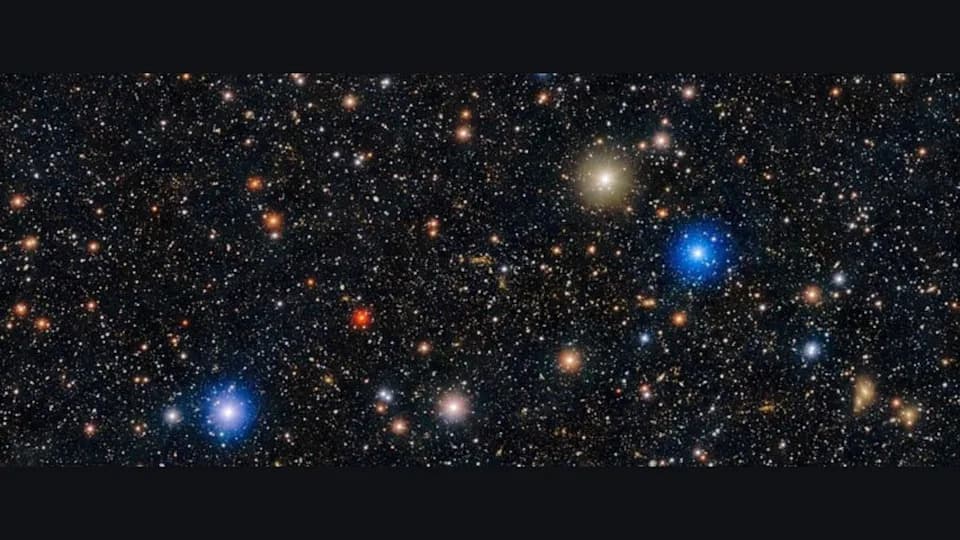
The question of whether the universe is infinite remains unanswered. We know the observable universe is finite because light is limited and space has been expanding, and measurements show spatial flatness. That flatness is consistent with either an endless cosmos or a finite but edgeless topology. Because we can only observe a finite volume, distinguishing true infinity from an unimaginably large finite universe may be impossible.
Is the Universe Truly Infinite? What Astrophysicists Actually Say

We still don't have a definitive answer to one of the biggest questions in cosmology: is the universe infinite? Decades of observations and theoretical work have greatly improved our understanding of the cosmos, but whether space extends forever or curves back on itself remains unresolved. Several plausible scenarios fit current data, and the difference between them can be subtle.
What we do know
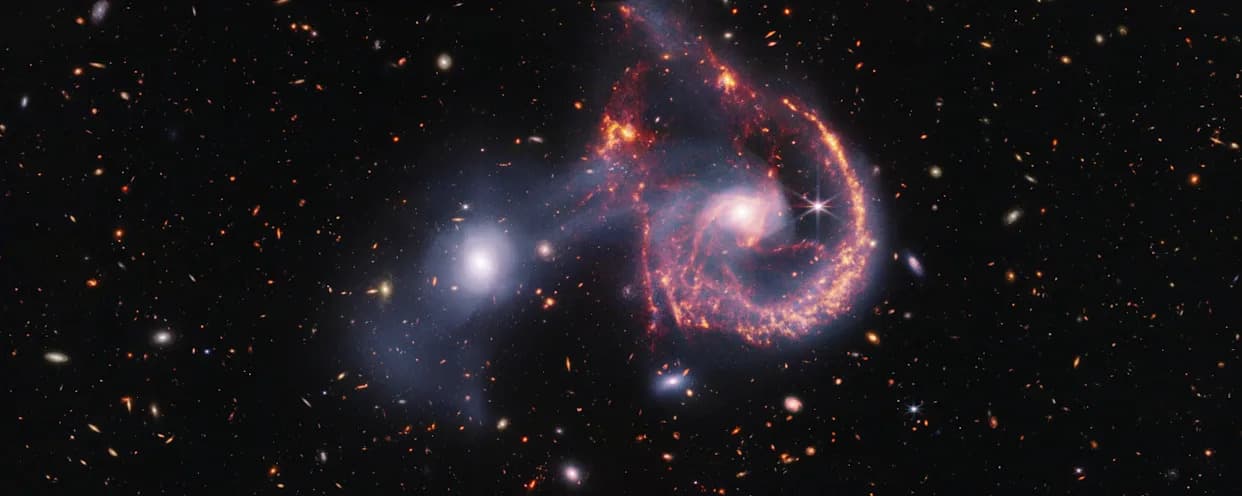
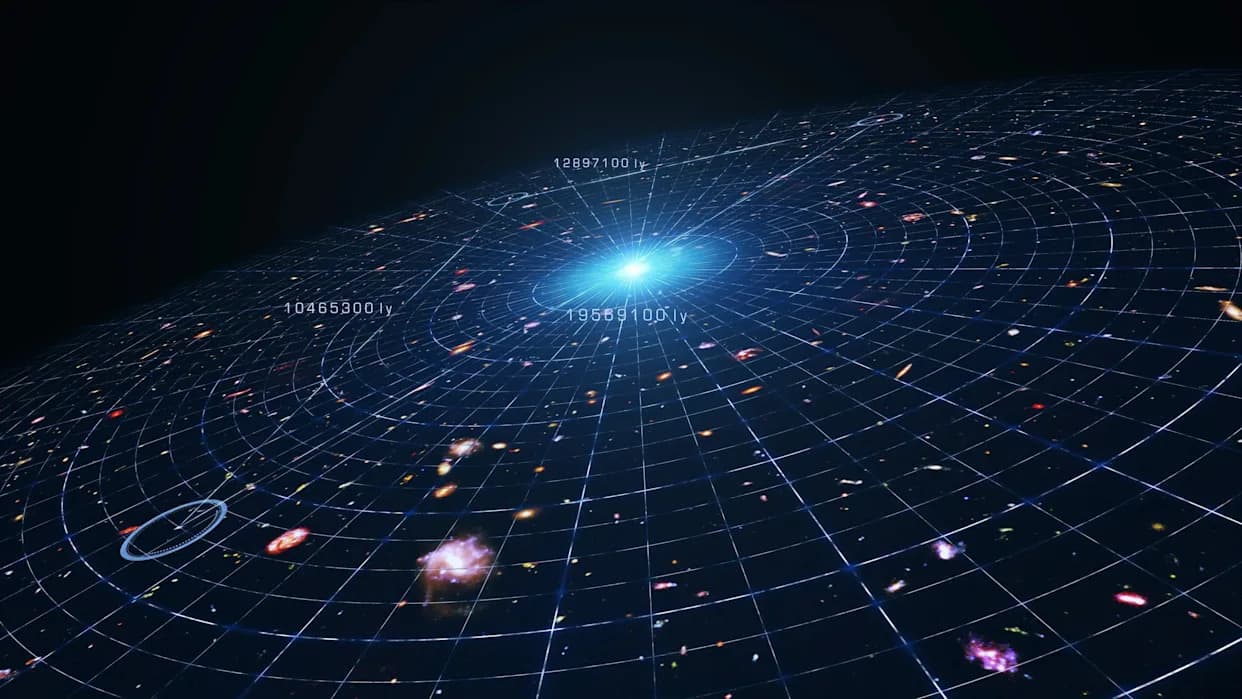
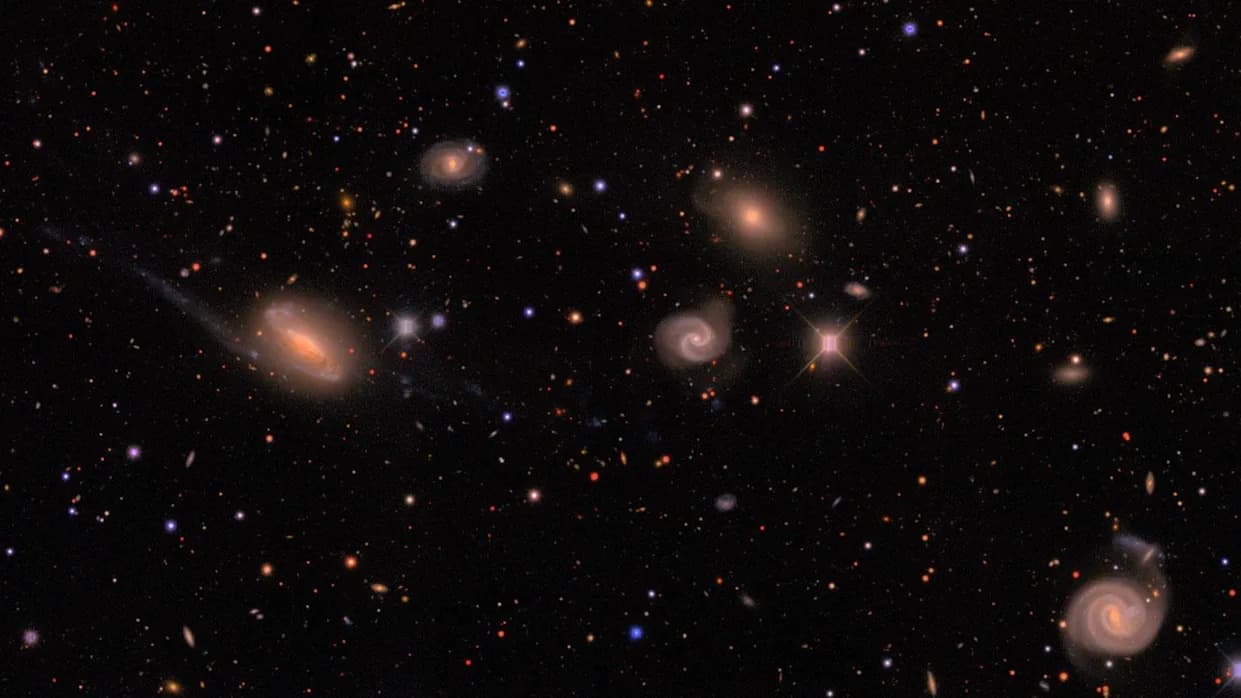
The portion of the cosmos we can observe is certainly finite. Because light travels at a limited speed and the universe has been expanding since the Big Bang, there is a horizon beyond which we cannot see. Galaxies recede from one another, and the more distant a galaxy is, the faster it appears to be moving away — an effect often illustrated by the balloon analogy, where dots on an inflating balloon move apart as the surface stretches.
Geometry vs. topology: flatness and global shape
Measurements of the universe's large-scale geometry indicate it is spatially flat to high precision. In cosmology, "flat" means that parallel light beams would neither converge nor diverge over cosmic distances. That geometric flatness, however, does not uniquely determine whether the universe is infinite.
Flatness allows two broad possibilities. One is an infinite, unbounded space — like an endless sheet — that keeps going forever. The other is a flat space with a nontrivial topology (think of a three-dimensional analogue of a torus) that is finite but has no edge: traveling far enough in one direction could, in principle, bring you back to your starting point.
Why it's hard to decide
Observational limits make a decisive test difficult. We can only see within our cosmological horizon, so any claim about the whole universe requires extrapolation beyond the data. Even with increasingly precise measurements of the cosmic microwave background and the distribution of galaxies, there are fundamental limits such as cosmic variance and the impossibility of performing controlled experiments on the universe as a whole.
Moreover, theoretical alternatives — including various finite topologies and speculative ideas like the multiverse — complicate interpretation. Some researchers favor an infinite cosmos; others prefer a very large but finite universe. Because several models can reproduce the observations within current uncertainties, the global question may remain open for a long time.
Practical implications and the outlook
Whether the universe is infinite or just unimaginably large may have limited practical consequences for everyday physics, but it matters for fundamental cosmology and philosophy. If space is finite but vastly larger than the observable patch, it would appear effectively infinite to us. If it is truly infinite, certain statistical or philosophical questions gain new weight.
For now, the best description is modest: the observable universe is finite and expanding, the large-scale geometry appears flat, and both infinite and finite-but-edgeless topologies remain viable. Future surveys and theoretical advances may tighten constraints, but the ultimate answer could remain beyond empirical reach.
Help us improve.