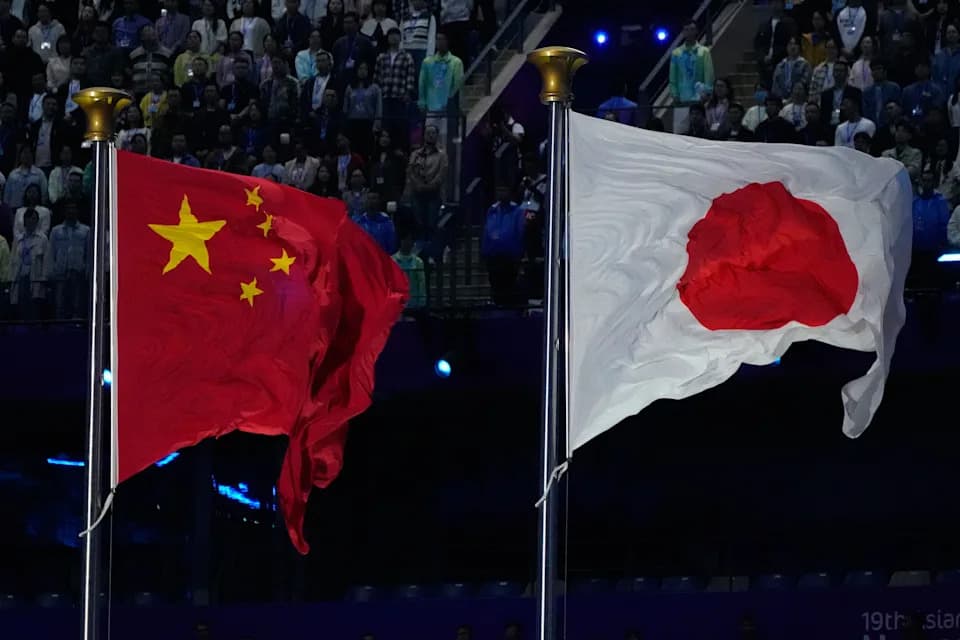
China has taken its dispute with Japan over Prime Minister Sanae Takaichi's comments on Taiwan to the United Nations. Beijing demanded a retraction after Takaichi said a Chinese blockade or military action against Taiwan could prompt a Japanese response; Tokyo has refused. The row has spilled into economic and cultural retaliation — travel advisories, flight changes, halted film screenings and seafood bans — and a Nov. 18 diplomatic meeting failed to resolve the impasse. The incident raises historical sensitivities and risks damaging major bilateral trade ties.
China Escalates Dispute with Japan Over Taiwan Remarks, Takes Case to the UN

China has taken its dispute with Japan over remarks by Japan's new prime minister about Taiwan to the United Nations, further deepening tensions between the neighbours and pushing bilateral ties to their weakest point since 2023.
What happened
In a letter to UN Secretary-General António Guterres, China’s permanent representative to the UN, Fu Cong, warned that “if Japan dares to attempt an armed intervention in the cross-Strait situation, it would be an act of aggression.” The reference was to the Taiwan Strait, which separates mainland China from the self-governing island Beijing regards as part of China. Beijing has repeatedly said it has not ruled out using force to bring Taiwan under its control.
The row began in early November after Prime Minister Sanae Takaichi, who took office in October, told parliament that a Chinese naval blockade or other military action against Taiwan could prompt a Japanese military response. During her first parliamentary questioning on November 7, Takaichi — a long-time supporter of closer ties with Taiwan — said: “If it involves the use of warships and military actions, it could by all means become a survival-threatening situation.” She later said she would avoid describing specific scenarios but has not retracted the comment.
Escalation and retaliation
Beijing reacted strongly. China’s foreign and defence ministries demanded a retraction, and the consul general in Osaka, Xue Jian, posted a now-deleted message on the social platform X that criticised Takaichi and included the line: “We have no choice but to cut off that dirty neck that has been lunged at us without hesitation. Are you ready?” The post prompted calls in Japan for the diplomat’s expulsion and drew formal protests from Tokyo.
The dispute quickly spilled into economic and cultural measures. China issued a no-travel advisory for Japan, three Chinese airlines offered refunds or free changes for Japan-bound tickets, Chinese authorities suspended screenings of at least two Japanese films and banned some Japanese seafood imports. China’s Education Ministry warned Chinese students in Japan to be cautious following reports of crimes against nationals of both countries. Both governments have recorded incidents involving each other’s citizens in recent months, raising concerns about xenophobia, though direct links to the diplomatic spat are unclear.
Territorial friction and diplomacy
Tensions also rose around the East China Sea. Chinese coastguard ships patrolled waters near a group of uninhabited islands claimed by both countries — called the Senkaku Islands in Japan and the Diaoyu Islands by China — and Japan protested what it called a short-lived violation of its territorial waters by several Chinese coastguard vessels.
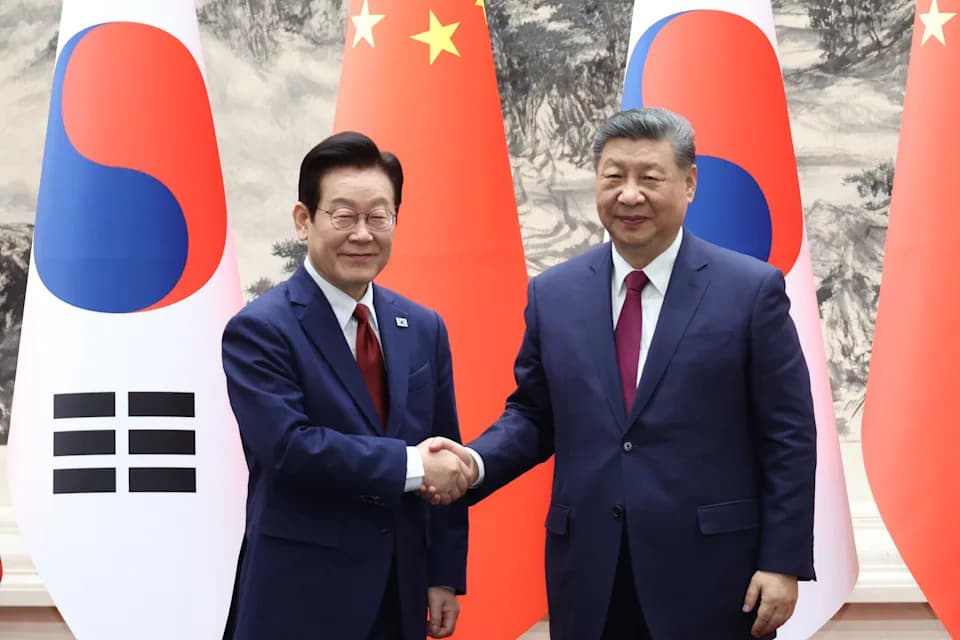
Diplomats from Tokyo and Beijing met in Beijing on November 18 to try to defuse the standoff. The talks did not resolve the dispute. Chinese officials repeated their demand for a retraction of Takaichi’s comments; Japanese diplomats said the prime minister’s remarks reflected Japan’s longstanding stance on deterrence and regional security. During the meeting, a senior Chinese official’s choice of a five-buttoned collarless suit drew attention in Japanese media as a symbolic gesture.
Historical context
The episode revives painful historical memories. Imperial Japan seized territories following the 1894-95 First Sino-Japanese War — including Taiwan — and launched a full-scale invasion of China in 1937. After World War II, and following the Chinese civil war, the People’s Republic of China was founded in 1949 while the Kuomintang government retreated to Taiwan. Japan switched diplomatic recognition from Taipei to Beijing in 1972 and accepted the “one China” principle, but has maintained robust unofficial ties with Taiwan.
Economic stakes
The dispute threatens significant trade and business ties. According to international trade data cited by analysts, China imported roughly $125 billion of Japanese goods in 2024, making it one of Japan’s top export markets, while Japan purchased about $152 billion of goods from China the same year. Japan exports industrial equipment, semiconductors and automobiles to China; China exports electrical equipment, machinery, apparel and vehicles to Japan. Several Japanese seafood exporters and other firms have expressed concern about the impact of the dispute on their businesses.
This is not the first time Beijing has used trade measures as leverage. In 2023 China banned some Japanese food imports after Japan released treated water from the Fukushima nuclear plant into the Pacific — a move the UN atomic agency judged to be safe; that ban was lifted on November 7, the same day Takaichi made her contested comments. In 2010 China briefly restricted rare-earth exports to Japan after a maritime incident near the contested islands.
What to watch next
The immediate risks include further diplomatic retaliation, more trade or travel measures, and heightened military posturing around the Taiwan Strait and East China Sea. The dispute highlights broader regional anxieties about Taiwan’s future and the risks that local incidents can escalate between major powers with deep economic ties. Diplomatic engagement, careful messaging and crisis-management channels will be critical to preventing further deterioration.
Help us improve.