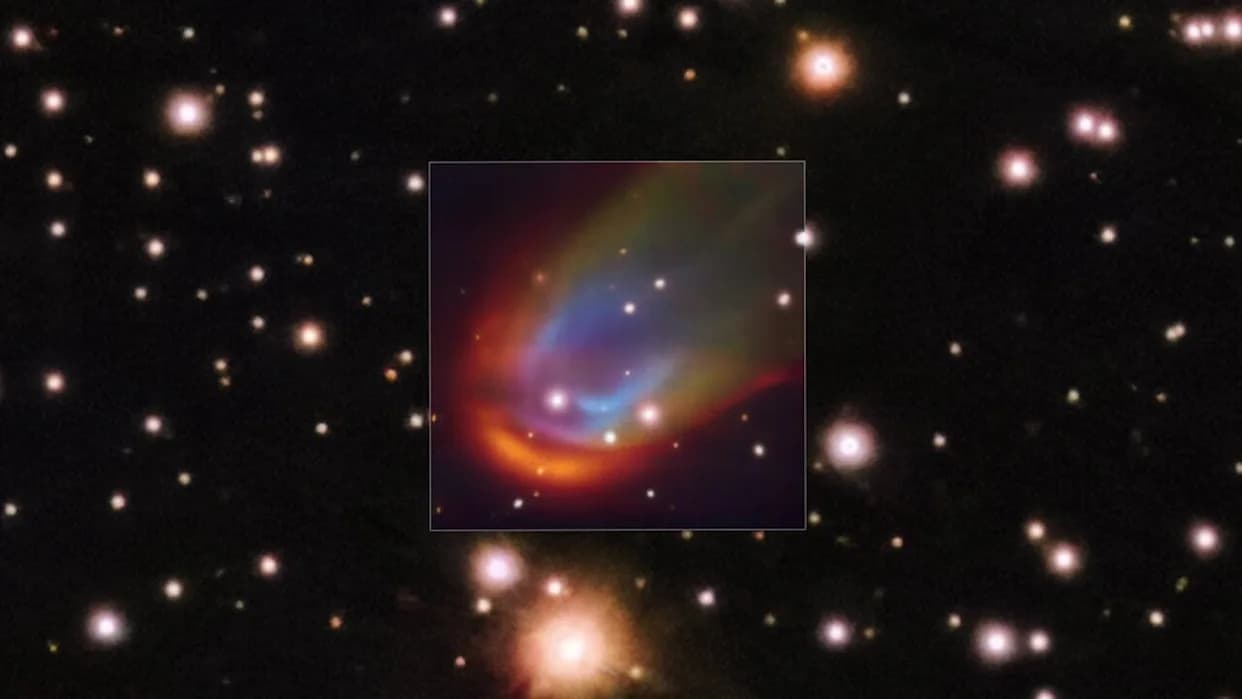
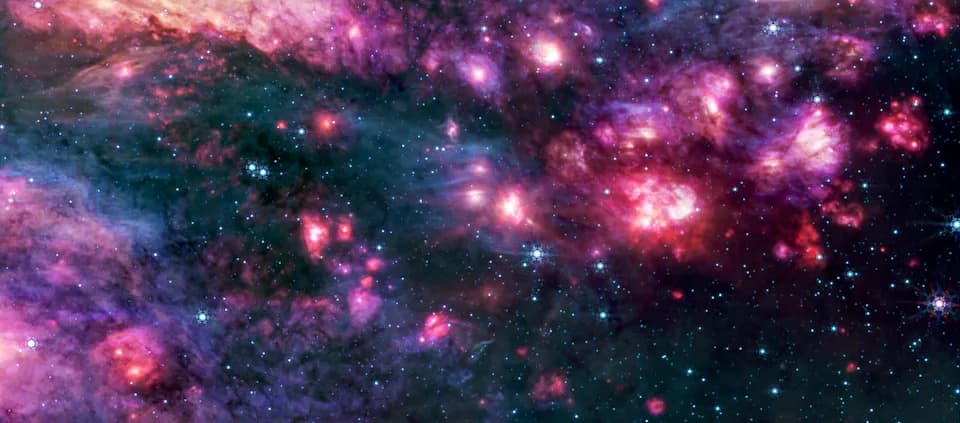
NGC 6789, a dwarf galaxy about 12 million light-years away in the Local Void, has produced roughly 4% of its stars in the last 600 million years despite the apparent absence of nearby gas or companion galaxies. A team led by Ignacio Trujillo used the Two-Meter Twin Telescope at Teide Observatory to search for merger signatures and examined the galaxy's star-forming core. Finding no evidence of interactions, they conclude the stars likely formed in situ, fueled either by retained primordial gas or by newly accreted pristine gas. Deeper observations of the galaxy's gas content are needed to resolve the mystery.
Mysterious Dwarf Galaxy in the Local Void Keeps Making Stars — with No Obvious Fuel

NGC 6789, a small dwarf galaxy roughly 12 million light-years away, is puzzling astronomers: it has formed a noticeable fraction of its stars recently, yet appears to lack the fuel or nearby companions normally required for ongoing star formation.
Why this is surprising
NGC 6789 sits in the sparsely populated region known as the Local Void. Observations over the past few decades indicate that about 4% of the galaxy's stellar mass formed within the last 600 million years — a significant recent burst for such a small system. That is unexpected because the Local Void contains few other galaxies and apparently little cold gas to feed star formation, and there is no obvious source to replenish the galaxy's gas reservoir.
How researchers investigated
A team led by Ignacio Trujillo of the Institute of Astrophysics of the Canary Islands used the Two-Meter Twin Telescope at Teide Observatory to probe NGC 6789. They scanned the galaxy's outer regions for tidal features or other signs of past mergers that could have supplied fresh gas, and they examined the central star-forming region in detail.
What they found
The observations revealed no clear evidence of mergers or tidal debris: NGC 6789 appears largely undisturbed. That suggests the recent stars likely formed in situ — inside the galaxy itself — rather than arriving from another system.
Possible explanations
The research team suggests two plausible sources for the fuel that formed the new stars: leftover gas from the galaxy's original formation that was retained until recently, or pristine, external gas that somehow accumulated in the galaxy and was rapidly consumed. Both scenarios raise questions about how a small galaxy in a void could acquire or retain enough cold gas to form stars.
Deeper, higher-resolution observations — particularly of the galaxy's gas content — will be needed to distinguish between these possibilities and to reveal the mechanism that sustained star formation in such an isolated system.
The study appears in Research Notes of the American Astronomical Society.
Help us improve.