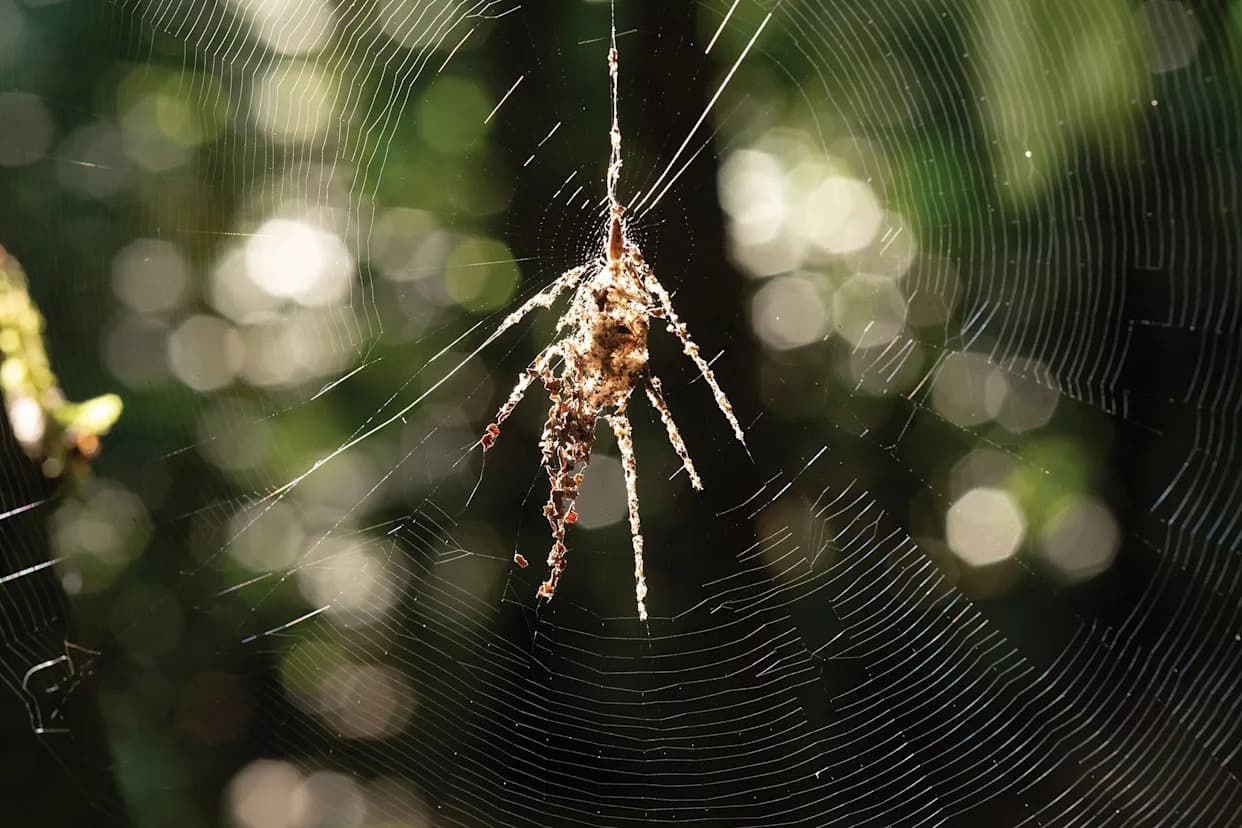
Spiders are essential predators that help control insects that damage crops and spread disease. Great Smoky Mountains National Park hosts over 550 recorded spider species, and recent research described multiple species new to science. Fewer than 1% of spiders are dangerous to humans, while globally spiders eat 400–800 million metric tons of insects yearly. When found indoors, the humane approach is catch-and-release or simply leaving them alone.
Wait — Don’t Kill That Spider: How Arachnids Protect Us and Our Ecosystems
Many people recoil at the sight of a spider, but these often-misunderstood arachnids perform vital ecological services that benefit humans. By preying on herbivorous and disease-vectoring insects, spiders help protect crops, reduce pest populations, and limit the spread of insect-borne illnesses.
Remarkable diversity in the Smokies. Researchers have recorded 553 spider species in Great Smoky Mountains National Park, including dozens that were only recently documented. A 2023 scientific study of the Appalachian genus Nesticus described 10 species new to science; three of those—Nesticus dykemanae, Nesticus binfordae and Nesticus cherokeensis—occur in the Smokies and were named to honor a writer, an arachnologist, and the Cherokee people respectively.
Why spiders matter
Spiders belong to the arthropod group—small, often unseen animals that are essential to life on land. Arachnids have two main body regions and two defining features: silk produced by spinnerets and the male pedipalp for transferring sperm. With an ancient lineage stretching back roughly 400 million years, spiders are among the planet’s most successful predators.
Estimates suggest spiders worldwide consume between 400 and 800 million metric tons of insects each year. Locally, the spiders living on about two acres of forest in western North Carolina can eat roughly 48 metric tons (about 105,840 pounds) of insects annually. Many of those insects would otherwise damage crops or transmit disease.
Benefits beyond pest control
Spiders are valuable to science and technology: their silk is an exceptional biomaterial with biomedical applications, and spider venoms offer insights for pharmacology and pest control. Researchers study spiders to learn about ecology, competition, sexual selection, venom chemistry, and biomaterial engineering.
Risk perspective: most spiders aren’t dangerous
Although a few spider species can harm people, fewer than 1% pose a real threat. It’s important to note that spiders are venomous (they inject venom), not poisonous. Venom helps spiders immobilize and pre-digest prey—one of the key innovations behind their evolutionary success.
Within Great Smoky Mountains National Park, the black widow is the only native species that very rarely envenomates humans; the brown recluse is found elsewhere in the region but is not native to the park. Black widows tend to be shy and avoid people.
“Without spiders we would probably succumb to some nasty insect-borne disease while waiting to starve to death,” said Kefyn Catley, an evolutionary biologist who has studied spiders globally.
To put dangers in perspective, U.S. mortality figures from 1979–1991 attribute 1,135 deaths to lightning strikes and only 57 to alleged spider bites—yet many supposed spider bites are misdiagnosed. Statistically, you were far more likely to be fatally struck by lightning than killed by a spider in that period.
Living with spiders
Some species, such as cellar and parson spiders, live year-round indoors and can help keep unwanted insects under control—especially in homes free of pesticides. If you find a spider inside, the recommended, humane option is to capture it with a cup and a piece of stiff paper (a postcard works) and release it outside, or simply leave it alone if it’s not causing harm.
Spiders quietly perform enormous amounts of ecological work that directly and indirectly benefits people. Appreciating their role helps us protect biodiversity and the essential services these small predators provide.
Sources: Interviews and research contributions from Kefyn Catley, Marshal Hedin, and Marc Milne; field surveys of Great Smoky Mountains National Park.
Help us improve.