Colombian teams have raised a cannon, three coins and a porcelain cup from the San José, the Spanish galleon that sank in 1708 and is believed to contain vast treasure potentially worth billions. The recovery is part of a government-sanctioned scientific expedition using remotely operated vehicles; the wreck lies about 2,000 feet deep and its location remains secret. The find has renewed legal disputes involving Colombia, Spain and U.S. claimants, including Sea Search Armada, while authorities emphasize conservation and have designated the site a protected archaeological area.
San José Shipwreck Yields First Artifacts — A Glimpse Into a Wreck Said to Hold Billions

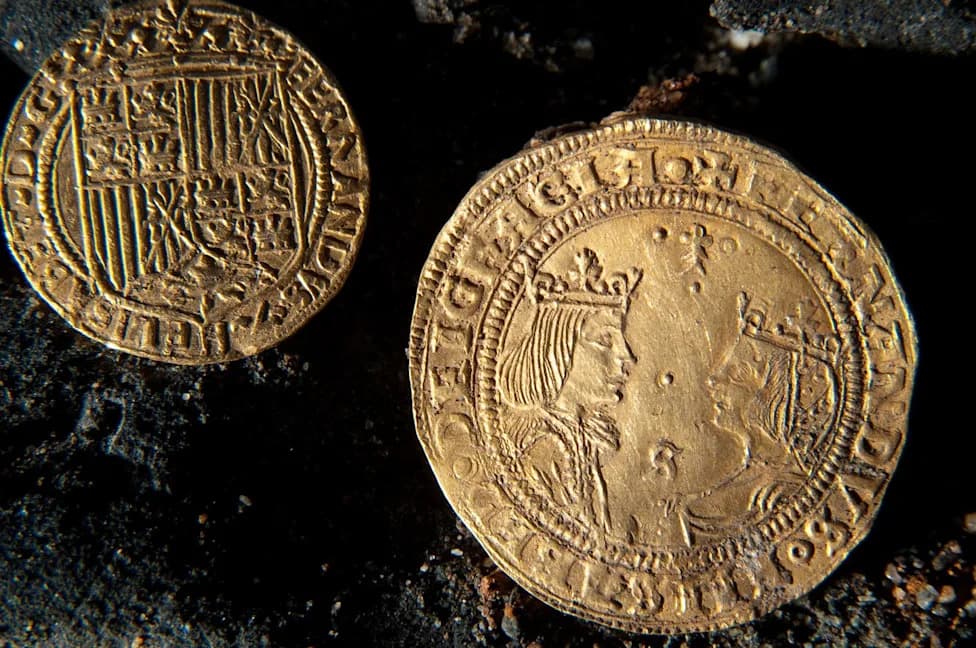
Colombian researchers have recovered the first artifacts from the legendary Spanish galleon San José — a cannon, three gold coins and a porcelain cup — from the vessel that sank in 1708 after an encounter with an English squadron, authorities announced. The retrieval is part of a government-authorized scientific expedition intended to study the wreck and determine how it sank.
Researchers first located the San José in 2015; its exact position remains a state secret to prevent looting. The wreck lies at roughly 2,000 feet (about 600 meters) below the surface and is being examined with remotely operated vehicles (ROVs). Colombian officials say the initial finds will be transferred to a dedicated conservation laboratory for careful study and preservation.
“This historic event demonstrates the strengthening of the Colombian State’s technical, professional and technological capabilities to protect and promote Underwater Cultural Heritage, as part of Colombian identity and history,” said Yannai Kadamani Fonrodona, Minister of Cultures, Arts and Knowledge.
Nicknamed the “holy grail of shipwrecks,” the San José is believed to have carried vast quantities of treasure — including emeralds, other valuables and an estimated 11 million gold and silver coins — cargo that scholars and officials say could be worth billions if ever fully recovered. Earlier this year, detailed analysis of coins recovered near the site confirmed they match iconography associated with the San José: castles, lions and crosses on the obverse and the Crowned Pillars of Hercules above waves on the reverse, according to a study published in Antiquity.
The cause of the sinking remains disputed. Longstanding accounts suggest an explosion during an ambush by an English squadron destroyed the 62-gun, three-masted galleon, but Colombian authorities have also raised alternate possibilities, such as catastrophic hull damage sustained in battle.
The ship has been at the center of international legal and diplomatic disputes. Colombia is in arbitration with U.S.-based Sea Search Armada, which claims to have discovered the wreck in 1982 and seeks $10 billion in damages, asserting rights to half the galleon’s value. Spain has also asserted claims, and Indigenous Qhara Qhara Bolivians argue that some of the cargo originated from their communities and was taken during colonial times.
In May 2024 the Colombian government declared the site a protected archaeological area and emphasized that current operations prioritize research, conservation and cultural heritage preservation rather than treasure hunting. Colombian authorities say they will continue careful scientific work with ROVs and conservation specialists to document and protect the site.
Help us improve.