The article examines how former U.K. leaders Liz Truss, Boris Johnson and Nigel Farage are tapping the U.S. MAGA speaking circuit to rebuild reputations, boost finances and promote Trump-style politics. Truss’s appearance at Liberty University illustrated the cultural friction between British conservatism and American evangelicalism. Farage benefits from close ties to Trump but faces ethical scrutiny and limited broader public support in Britain. Overall, the MAGA circuit offers spectacle and money, but also political risks for British politicians seeking influence at home.
Brits on the MAGA Trail: How Truss, Johnson and Farage Are Betting on the Trump Stage
Liz Truss looked unexpectedly small in a neat pink jacket and white blouse as she stepped into a packed ballroom at Liberty University in Lynchburg, Virginia, one October evening. The former U.K. prime minister—who served a tumultuous 49 days in office in 2022—was part of the university’s annual “CEO summit,” a gathering that blends corporate donors, conservative influencers and evangelical worship with raucous political speeches.
Truss listened as the audience was urged to repent and consider tithing to the Baptist megachurch founded by the late televangelist Jerry Falwell. She nodded along to the faith-and-politics fusion before launching into a critique of a so-called “deep state,” naming institutions such as the Bank of England and the U.K. Treasury. Announcing she was “on a mission” to transform the U.K., she was briefly thrown when an attendee shouted “amen,” then continued her remarks.
The image of a former Conservative prime minister amid fire-and-brimstone MAGA evangelicals is striking. Truss later told the author she remains a member of the Church of England—traditionally more establishment than evangelical—even as she criticizes what she perceives as its drift toward being “woke” on social issues such as trans rights. Her presence at Liberty is part of a broader trend: a cross-Atlantic “Magafication” in which some British conservatives adopt Trump-style spectacle, rhetoric and branding while touring U.S. partisan events.
Reinvention, Revenue and Reputation
For many British figures, the U.S. speaking circuit offers more than applause. It provides money, attention and an outlet to rebuild a personal brand after political setbacks. Following the Conservative defeat in the July 2024 general election, former ministers such as Truss have leaned on high-profile U.S. appearances for both income and a morale boost. For Boris Johnson, the American stage recaptures the crowd-adulation that polite London engagements often lack. For Nigel Farage, leader of Reform UK, the visits are both performative and strategic—an attempt to graft Trump-style populism onto British politics.
There is real money at stake. A former employee at a major booking agency said a former prime minister can command roughly $200,000 for a substantial U.S. speech, plus travel and support costs; marquee names such as Johnson or David (Lord) Cameron can command higher fees when logistics require more. Biographies and agent profiles are often recast to emphasize deregulation, political bravado and referendum-era achievements, while domestic controversies are downplayed.
Farage: The Most to Gain—and the Most to Lose
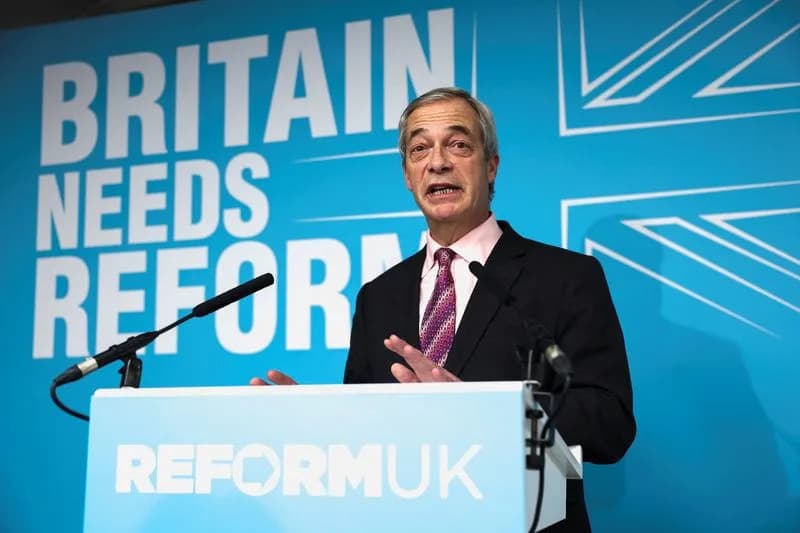
Nigel Farage arguably benefits most from close ties to Trump. He has been a frequent visitor to Mar-a-Lago and the White House, and his proximity to the U.S. president helps burnish his credentials at home. Farage headlined a high-priced Republican dinner in Tallahassee and charged premium fees and VIP packages that raised his profile among U.S. conservatives.
Yet that closeness carries risks. Farage reportedly earns substantial sums from U.S. work—figures circulated in Westminster suggest earnings as high as $1.5 million a year in addition to his MP salary—and he was forced to apologize for failing to declare a remunerated March appearance in the parliamentary register. He has disclosed only that the trip was paid in three installments without naming the funder.
Beyond ethics questions, the political calculus is tricky. Polling consistently shows limited support for Donald Trump in Britain: only around 16% of Britons express a favorable view of the U.S. president. Farage’s party polls under 30% nationally, and to form a government he must win over voters who are skeptical of Trump-style politics and American-style Christian nationalism.
Cultural Friction and Strategic Caution
British politicians face cultural limits when they engage with America’s evangelical right. Mixing overt religiosity with politics is less accepted in the U.K., where churchgoing is often considered a private matter. Hardline evangelical positions on issues such as abortion could alienate mainstream British voters, a point made by Tim Bale, an elections expert at Queen Mary University of London.
Consequently, visiting British figures often steer clear of the most charged religious arguments. Johnson plays up his affable rogue persona rather than embracing doctrinaire faith politics. Truss, despite prior support for Ukraine when she served as foreign secretary, avoided a direct answer in an interview about whether the U.K. should supply Tomahawk missiles—an issue where President Trump has expressed opposition—saying she would need to "know the facts on the ground."
Why the MAGA Circuit Matters
The U.S. MAGA circuit offers a mix of spectacle, cash and sympathetic audiences that can be intoxicating for politicians whose domestic standing is contested. For some, it is a lucrative post-office career; for others, it is a staging ground to export a more confrontational style of conservatism to Britain. The grievances that propelled Trump—concerns about national decline, distrust of established parties and appetite for theatrical politics—resonate in parts of Britain, creating fertile ground for imitation.
Whether these transatlantic tours translate into renewed electoral fortunes at Westminster or remain lucrative celebrity circuits, they underscore how one leader’s political brand can reshape international conservatism. For now, the MAGA trail is a high-reward, high-risk option for British politicians seeking reinvention, influence or simply a well-paid encore.
Help us improve.