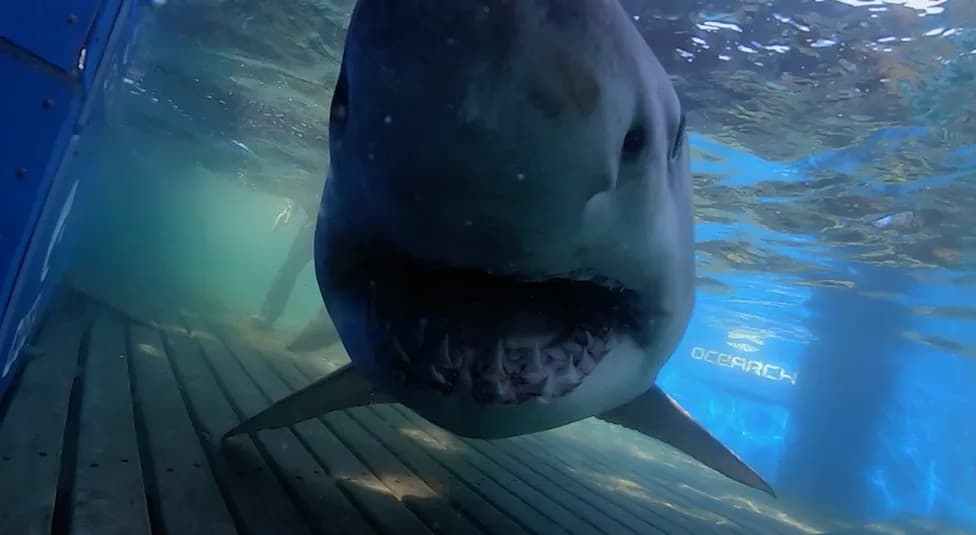
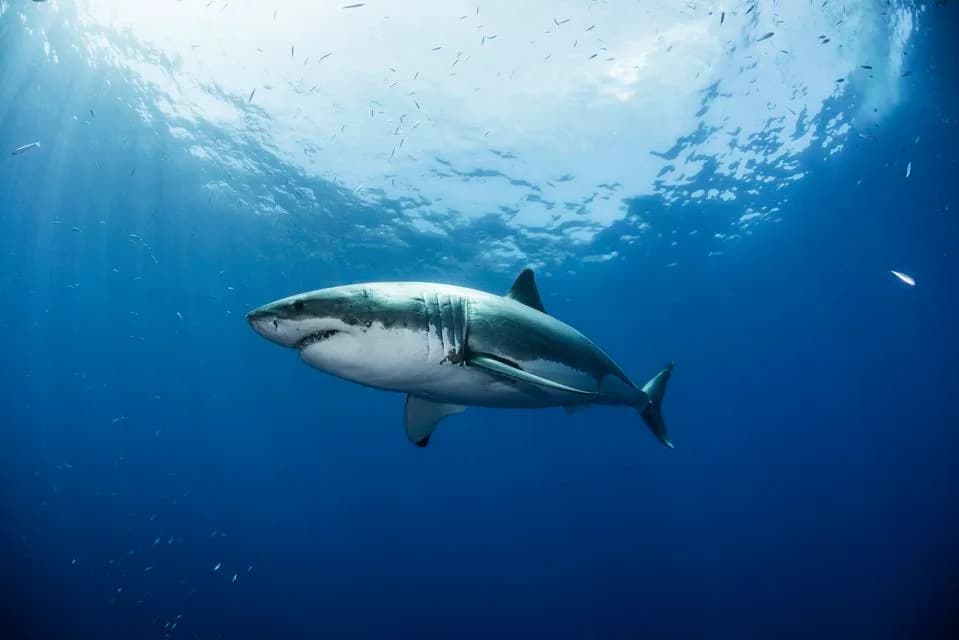
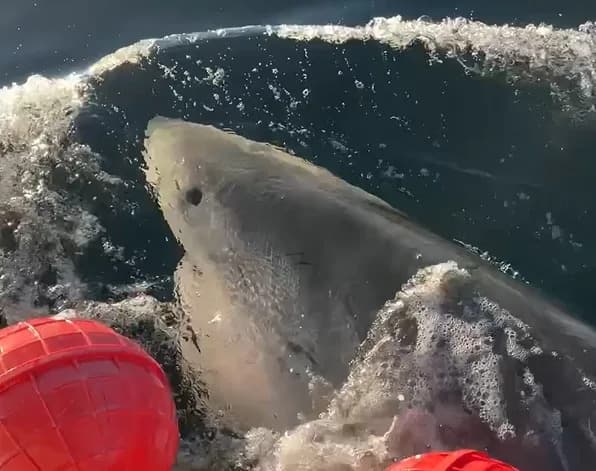
Ripple, a male white shark tagged off Nova Scotia on Sept. 30, paused for about three days near Cape Hatteras during his southward migration after traveling more than 1,000 miles in two weeks. Researchers from OCEARCH say upwelling and temperature gradients concentrate prey and create attractive feeding zones that prompt such stopovers. Other migratory sharks — including dusky, blacktip, spinner, tiger and various hammerheads — also use Hatteras as a seasonal hangout. More tagging data are needed to quantify how common these pauses are and to refine migration models.
Hatteras Hangout: Why White Sharks Pause Off North Carolina’s Outer Banks

Ripple, a male white shark tagged by the conservation group OCEARCH on Sept. 30 off Nova Scotia, made a notable three-day stop near Cape Hatteras during his autumn migration. After covering more than 1,000 miles in roughly two weeks, Ripple paused offshore before continuing into warmer, prey-rich waters.
OCEARCH, an international nonprofit that tracks and studies sharks, whales, sea turtles and other marine life, fitted Ripple with a satellite tag to monitor his movements and behavior. OCEARCH Chief Scientist and veterinarian Dr. Harley Newton and Data Scientist John Tyminski say pauses like this are common and likely linked to oceanographic features.
Why sharks linger at Hatteras
One important factor is upwelling — when winds push surface water away and colder, nutrient-rich deep water rises to the surface. That process concentrates prey and creates attractive feeding opportunities for predators like white sharks.
"Upwelling and temperature gradients create natural boundaries that can act as temporary hangouts for migrating sharks," Newton and Tyminski explained.
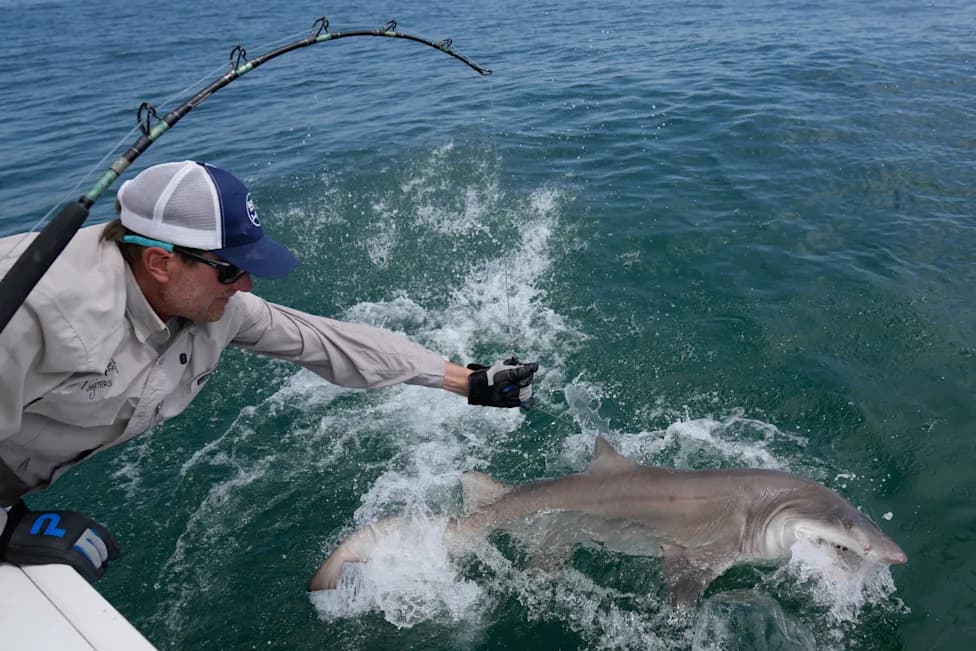
Scientists have also observed other migratory shark species using the Cape Hatteras area as a seasonal stopover, including dusky sharks, blacktip and spinner sharks, tiger sharks and several hammerhead species. The same oceanographic drivers likely influence the movements of tunas, billfishes and some marine mammals as well.
What researchers still need
Newton and Tyminski caution that current tagging data are insufficient to produce robust statistics on how often sharks like Ripple pause at Hatteras or how consistent the timing is across individuals. With more tags and longer-term monitoring, researchers hope to perform finer-scale analyses to identify consistent migration patterns and the environmental cues that trigger them.
Members of the public can follow Ripple and roughly 400 other tracked ocean animals in real time using the free OCEARCH Global Shark Tracker app.
Help us improve.