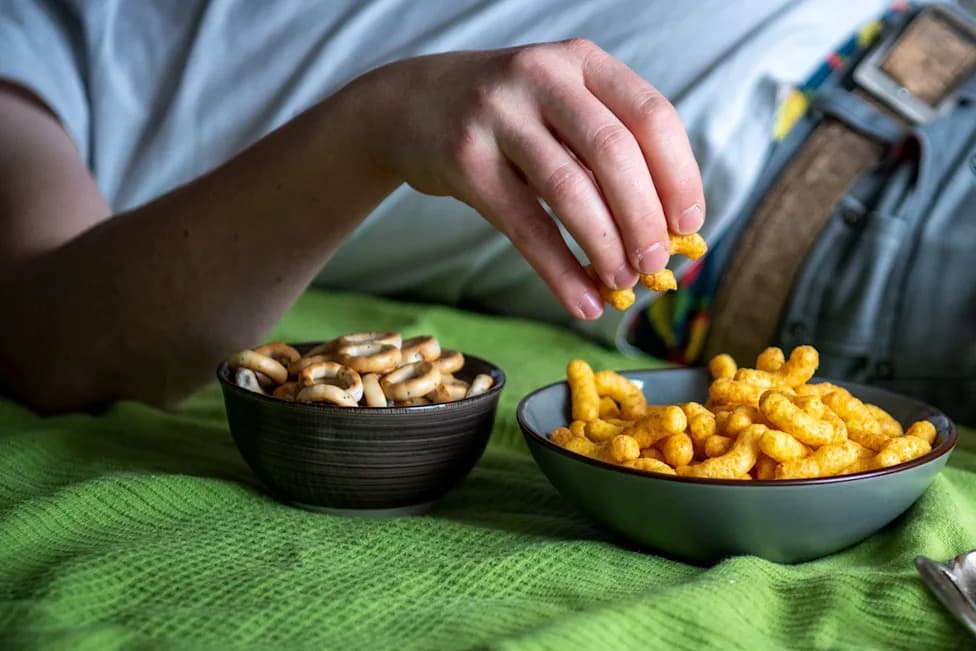
The Virginia Tech study found that a single ultra-processed meal produced a larger insulin spike and prolonged elevated blood glucose compared with a nutritionally matched, minimally processed meal. fMRI scans showed different activation in brain regions tied to reward and motivation when participants viewed ultra-processed versus minimally processed foods. Researchers say these results suggest two pathways — altered metabolism and altered neural valuation — that could help explain links between ultra-processed foods and poorer health, but longer studies are needed to confirm long-term effects.
Ultra-Processed Meals Trigger Distinct Metabolic and Brain Responses, Virginia Tech Study Finds
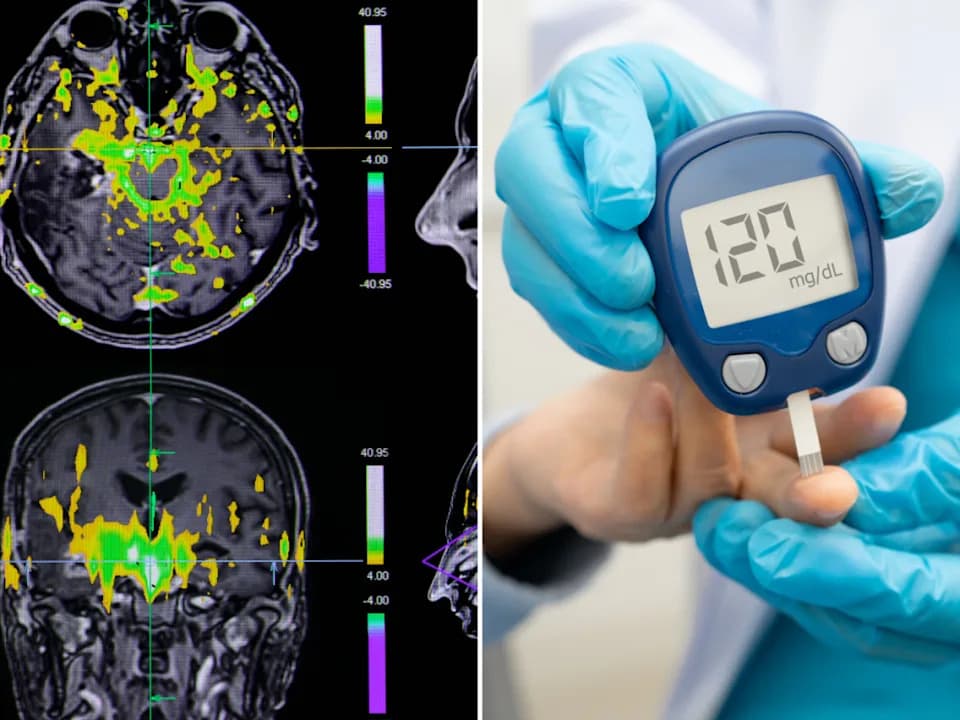
An MRI scan of the brain, left. A doctor measures a patient's blood sugar level, right.
Researchers at Virginia Tech report that how food is processed — not just its measured nutrient content — can change the body's metabolic reaction and the brain's response. In a controlled experiment, volunteers ate either a minimally processed meal or a highly processed meal that researchers matched closely for calories, macronutrients, water and salt.
Study Design
The trial enrolled just under 60 healthy adults aged 18 to 45. Participants completed testing after an overnight fast so researchers could compare metabolic activity before and after a single test meal. The highly processed plate included a small piece of a peanut butter and jelly sandwich, deli turkey slices, vegetable chips, a cookie, cereal, instant mashed potatoes and a small sip of water. The minimally processed meal consisted of sliced banana, dried cranberries, cheese and a hard-boiled egg. Both meals were matched within 1% for calories, carbohydrates, fats, proteins, water and salt.
Metabolic Findings
After eating, participants had blood glucose and insulin measured repeatedly over several hours. Those who consumed the ultra-processed meal showed a substantially larger insulin response and sustained higher blood glucose levels for longer than participants who ate the minimally processed meal. Lead author Alex DiFeliceantonio said the insulin result was unexpected and that a single ultra-processed meal may "transiently create a state (higher insulin) that is associated with long-term ultra-processed food consumption (insulin resistance)."
Brain Imaging and Behavior
In a separate session while fasted, participants underwent functional MRI (fMRI) scans. They viewed images of ultra-processed and minimally processed foods — including the exact items from the metabolic test — while researchers measured activity in brain regions linked to reward and motivation. Participants also indicated whether they would be willing to pay for each item, providing a behavioral measure of perceived value. Brain regions involved in motivation and reward responded differently to ultra-processed versus minimally processed foods, and these neural differences tracked with participants' stated valuations.
Expert Reactions and Interpretation
Outside experts highlighted two possible pathways suggested by the study: metabolic (different insulin and glucose handling after ultra-processed foods) and neural (different reward-area responses to ultra-processed items). Lindsey Smith Taillie of UNC-Chapel Hill noted that even when meals are matched for calories and macronutrients, processing-related features — colors, flavors, textures and rapid dissolution in the mouth — may change how the body and brain respond.
Limitations and Next Steps
The authors and external commentators caution that this experiment tested only a single meal and cannot by itself prove long-term health effects. The findings are hypothesis-generating: they identify short-term metabolic and neural differences that deserve follow-up, including validation studies and longer-term trials to test causality and real-world outcomes.
Citation: Zach Hutelin et al. (2026) "Ultraprocessed Foods Evoke Distinct Metabolic And Neural Responses." Nature Metabolism. https://doi.org/10.1038/s42255-026-01618-5
Help us improve.