The University of Idaho team has described a new spider species, Hexura vandal, discovered near Kooskia and published Aug. 31 in ZooKeys. The dark, nickel-sized spider appears confined to a small, damp conifer pocket in the Nez Perce–Clearwater National Forests and is visually and genetically distinct from other regional Hexura. Researchers suggest mountains, elevation and rivers isolate the population, and warn its limited range could make it vulnerable to habitat drying and landscape change.
Hidden Idaho Spider, Hexura vandal, Reveals a Rare Remnant Mountain Ecosystem

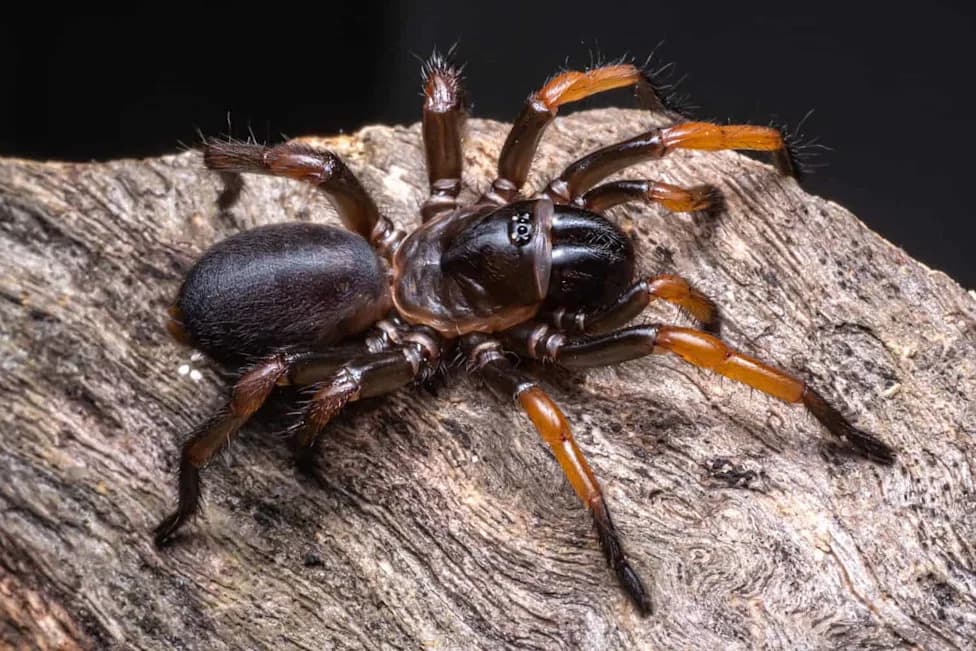
Photo Credit: University of Idaho
A University of Idaho team has identified a previously unknown spider species, Hexura vandal, discovered Sept. 8, 2024 near Kooskia. The dark, nickel-sized arachnid appears restricted to a small, damp pocket of conifer forest in the Nez Perce–Clearwater National Forests and may be isolated from other populations by surrounding dry terrain, higher elevations, mountain ridges and river corridors.
Distinct Species Backed By Morphology and Genetics
Doctoral student Arnau Calatayud-Mascarell, former postdoctoral researcher Ethan J. Briggs and associate professor Chris Hamilton formally described the species in an Aug. 31 paper published in the journal ZooKeys. Unlike many closely related mygalomorph spiders that require DNA tests to distinguish species, the Idaho specimens were visually distinct; genetic analysis confirmed they are a separate species from the two other Hexura known in the Pacific Northwest.
Evidence of Long-Term Isolation and a Unique Habitat
On repeated visits, the team found numerous individuals concentrated in a core habitat of moist conifer forest characterized by mossy ground and abundant decaying logs. The spiders were absent in the drier landscape that surrounds this pocket, suggesting long-term isolation. Researchers infer that elevation, mountain topography and river corridors likely limit dispersal and keep the population cut off.
Conservation Implications
Because Hexura vandal may occupy only a very small area, it could be especially vulnerable to habitat drying and broader landscape changes, including climate-driven shifts in moisture and temperature. The scientists made several return trips to map the species' distribution and better document the microhabitat features it depends on — essential steps for any future monitoring or conservation planning.
Local Significance and Broader Context
The team named the species after the University of Idaho mascot, and the discovery has prompted suggestions that an Idaho-endemic spider might make a symbolic state emblem. More broadly, the find underlines that even in well-studied countries, undescribed species and small, remnant ecosystems can persist undetected. The report joins other recent unusual spider stories that highlight how targeted fieldwork and conservation efforts continue to reveal surprising biodiversity.
'We didn\'t care about Microhexura at all after that. We found something way, way cooler,' Calatayud-Mascarell recalled of the moment the team realized they had discovered an unexpected Hexura in Idaho.
Reported authors: Arnau Calatayud-Mascarell, Ethan J. Briggs, Chris Hamilton. Published in ZooKeys, Aug. 31. Specimens collected Sept. 8, 2024, near Kooskia, Idaho.
Help us improve.