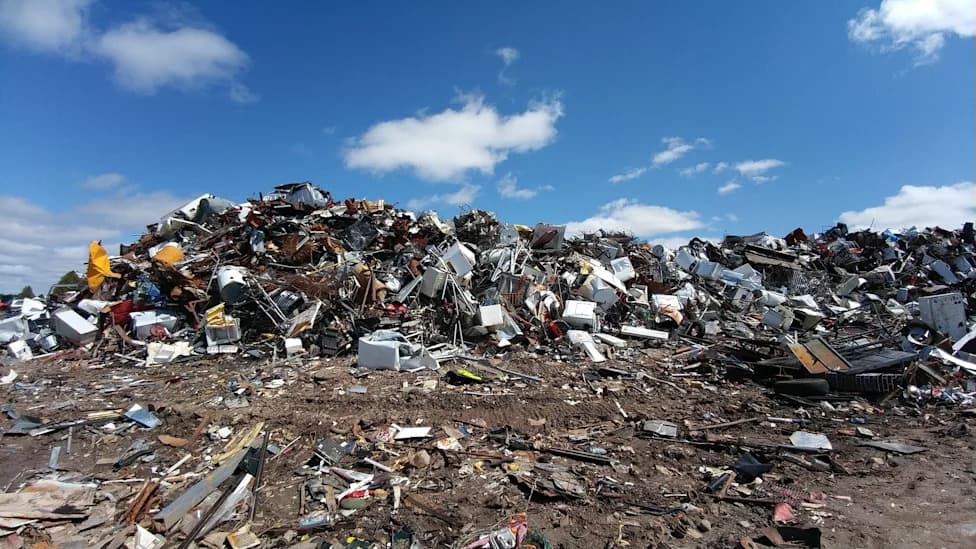
Researchers at Southeast University in Nanjing and collaborators modeled what would happen if parts or all of China’s urban asphalt network were rebuilt using a durable pavement made from steel slag — the industrial byproduct from converting iron ore or scrap into steel. Their results suggest substantial climate, air-quality and public-health benefits, but also higher up-front costs and emissions during production.
What Is SEAM?
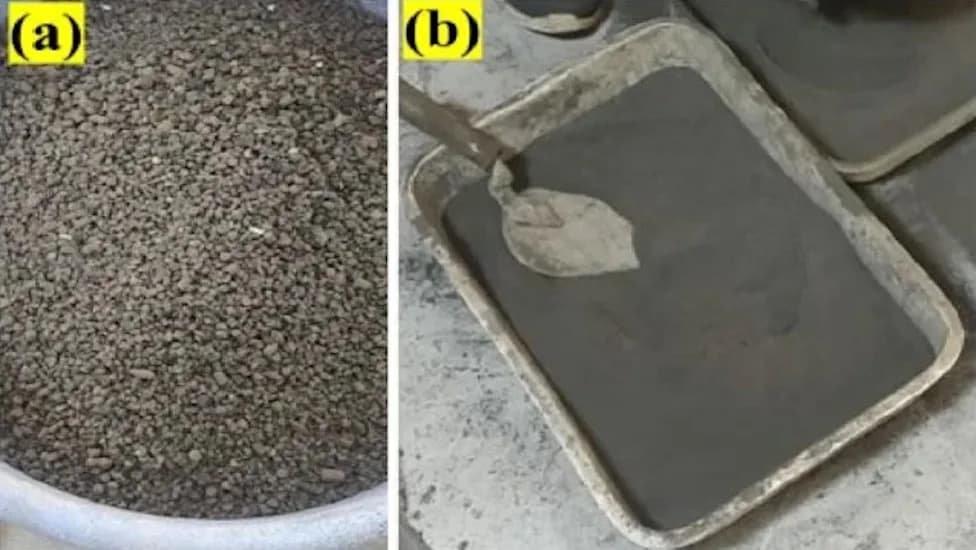
The material analyzed is a steel slag epoxy asphalt mixture (SEAM). SEAM replaces all natural coarse aggregate in conventional asphalt with steel slag and uses an epoxy-modified binder. This differs from current practice, where slag typically supplies about 60% of coarse aggregate.
Formulations and Assumed Service Lives
- Tested epoxy contents: 20%, 35%, and 50%.
- Assigned service lives: 6 years for 20% epoxy, 15 years for 35% epoxy, and 20 years for 50% epoxy.
- Conventional asphalt is modeled with a 6-year service life.
Costs and Up‑Front Emissions
SEAM requires more resources up front. Over a single service life, the study found SEAM’s carbon intensity to be 215%–261% higher than conventional pavement, and immediate costs 189%–365% higher. The epoxy binder costs about 4–5 times more than conventional binder, and SEAM needs 7 days to cure versus 1 day for standard asphalt.
Why It Could Pay Off
The main advantage is durability. Longer-lived SEAM pavements require resurfacing less often, which spreads construction impacts over more years and reduces the extra fuel vehicles consume on rougher roads. In the study’s baseline scenarios, the use phase — mostly vehicle fuel consumption and pavement condition — accounted for 95.45% of lifecycle emissions and 60.07% of lifecycle costs.
Among the mixes tested, the 35% epoxy formulation provided the best balance of durability, emissions reductions and affordability, and in the model kept total lifecycle costs below those of conventional pavement.
Scaled National Outcomes
When the model was scaled to China’s urban road network and run across scenarios replacing 25%, 50%, 75% or 100% of existing urban asphalt, the high-end projection (full replacement) yielded:
- Up to 1.9 billion tons (1.74 billion metric tons) CO2e avoided over the assessment period.
- Reduction in fine particle emissions of 2.7 billion pounds (1.23 billion kg).
- Estimated net economic benefits of 3.48–15.01 trillion yuan (~$519 billion–$2.24 trillion), depending on the replacement share.
- Modeled avoidance of between 31,802 and 128,980 premature deaths over 30 years attributable to lower fine-particulate exposure.
Benefits generally increased with larger replacement shares but tapered beyond 75%, as the logistics burden of distributing slag material began to offset some advantages.
Logistics, Supply And Regional Modeling
Steel-slag production is uneven across provinces, so the team modeled shipping slag between regions. Provinces without local production (for example Beijing, Tibet and Hainan) could still benefit when supplied by rail or truck. Shipping shortened deployment timelines in some provinces from 10–15 years to 1–5 years, and the transport emissions added were far outweighed by net savings in most modeled scenarios.
Limitations And Caveats
- The health estimates are system-level projections based on a modeled link between fine-particle exposure and mortality, not precise epidemiological forecasts.
- The analysis does not model current material production capacity, detailed regional supply networks, or competing industrial uses for steel slag, so it cannot claim that existing markets could immediately meet national demand.
- Upfront carbon and cost penalties could pose financing and procurement challenges that require policy support or incentives.
Implications
The authors argue that the modeling framework could be applied to other rapidly urbanizing economies with large steel sectors, such as India and nations in Southeast Asia and Africa. The study, published on Sept. 24 in Communications Earth & Environment, highlights a trade-off: higher initial emissions and costs for potentially large long-term gains in climate mitigation, air quality and public health when durability is significantly improved.
Bottom line: SEAM could deliver major long-term benefits if production, logistics and financing constraints are addressed, with the 35% epoxy mix emerging as the most cost-effective balance in the authors’ model.