The BCG Institute finds quantum computing could address 20–40% of emissions from hard‑to‑abate sectors like steel and cement, but stresses this outcome depends on market‑ready applications, equipment renewal and new computing capacity. The report urges early planning because many required industrial assets are already being built. It also expects quantum’s carbon footprint to be modest compared with AI and highlights carbon capture, green hydrogen and ammonia production, and batteries as priority applications.
Quantum Computing Could Cut 20–40% Of Hard‑To‑Abate Emissions, BCG Report Finds
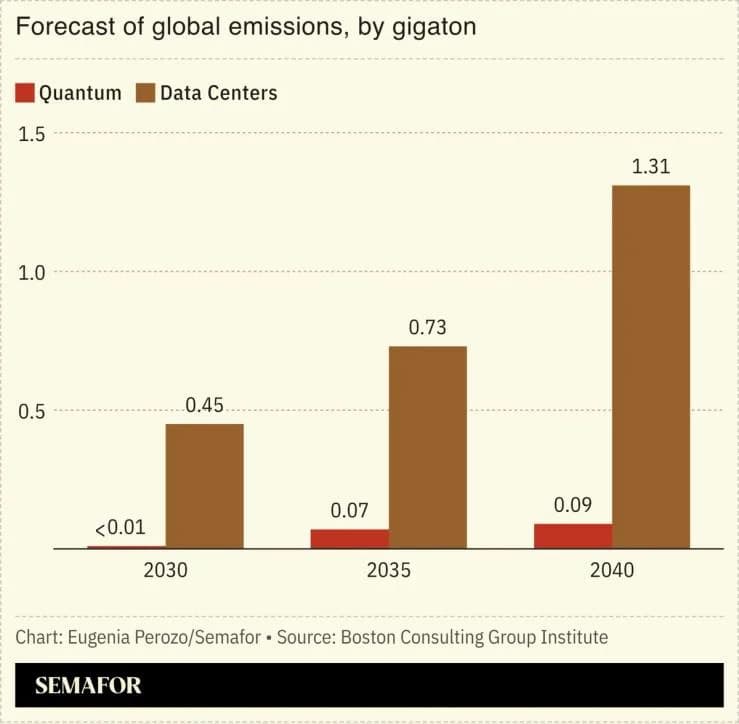
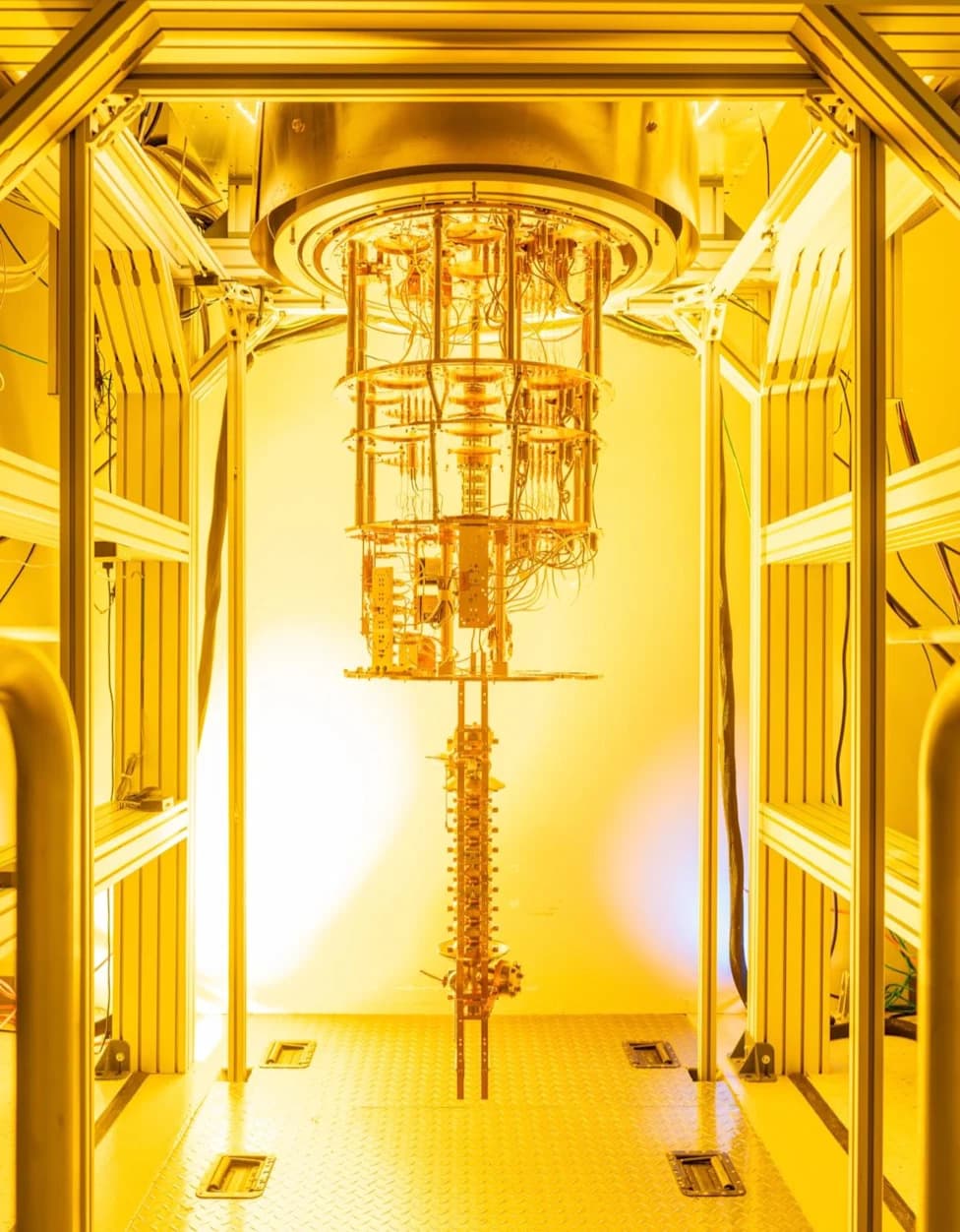
A chart showing a forecast of energy use by quantum computing.
Quantum computing could eventually tackle as much as 20–40% of emissions from hard‑to‑abate industries such as steel and cement, according to a new analysis by the BCG Institute shared with Semafor.
The report cautions that achieving this potential depends on several conditions: commercially viable quantum applications must reach the market, aging industrial equipment will need to be replaced, and sufficient computing capacity must be built. Given these long deployment cycles, the institute argues that planning must begin now to avoid missing the narrow window for aligning new industrial assets with quantum‑enabled solutions.
"Many of the industrial assets that we're going to need or deploy are being built now," Maurice Berns, one of the study's authors, told Semafor.
BCG's analysis also expects quantum's own carbon footprint to be relatively modest compared with the growing AI industry. Unlike general‑purpose AI, quantum is likely to be used for targeted, high‑impact problems—such as optimizing heavy industrial processes, discovering better materials and simulating complex chemical systems—so its overall energy and emissions profile should remain limited.
Climate Applications Highlighted
The report highlights several areas where quantum could make a meaningful difference:
- Carbon capture: Improving process design and sorbent materials.
- Green hydrogen and ammonia: Optimizing production pathways and catalysts.
- Batteries: Accelerating materials discovery for higher‑performance storage.
While the promise is significant, the report frames quantum as a complementary tool that can help decarbonize the most difficult industrial sources when paired with investment in equipment, infrastructure and workforce readiness.
Help us improve.