Researchers at Manipal University Jaipur converted treated fecal sludge from Warangal into biochar and used it to replace 5%, 10% and 15% of cement in concrete mixes. By day 91, the 10% replacement mix produced the largest gains: 42% higher flexural strength and 21% higher compressive strength; 5% mixes also showed notable improvements. The best mixes had lower water uptake, reduced porosity and less shrinkage, but the 15% mixes showed more cracking and weaker bonds. The study—accepted by Scientific Reports—highlights potential carbon and durability benefits but calls for more testing on durability and contaminant leaching before large‑scale use.
Human‑Waste Biochar Boosts Concrete Strength By Over 40% — Could Cut Cement Use
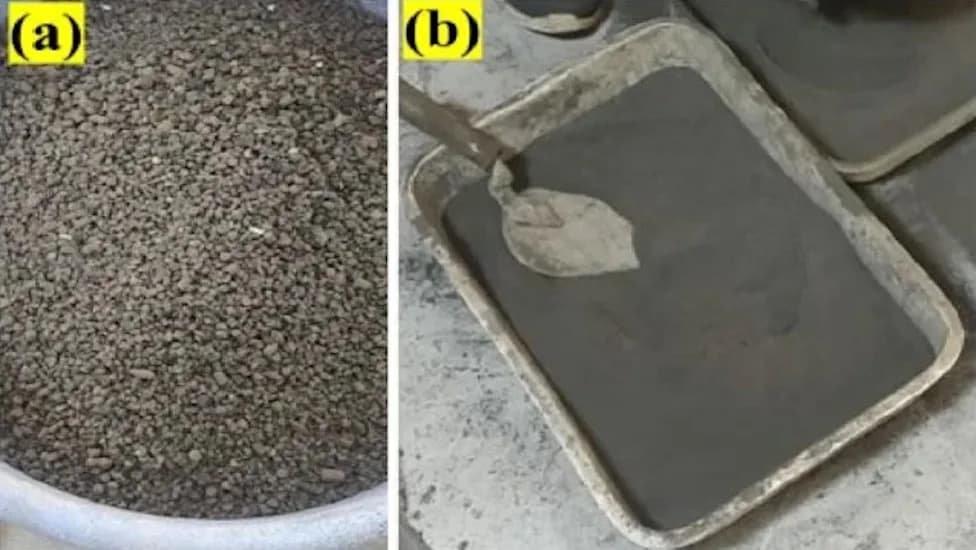
Photo Credit:Image© 2026 by Tiwari et al. is licensed underCC BY 4.0
Concrete is the backbone of modern infrastructure, but cement production is a major source of global carbon emissions. New research from Manipal University Jaipur suggests that biochar produced from treated human fecal sludge can both strengthen concrete and replace a portion of the cement required.
Study Details
Civil engineer Raghuvesh Tiwari and colleagues converted treated fecal sludge from a processing plant in Warangal into biochar, then substituted it for cement at 5%, 10% and 15% replacement levels in standard concrete mixes. By day 91 of curing, the 10% replacement mix produced the largest gains: flexural strength increased by 42% and compressive strength by 21% compared with the control. Mixes with 5% biochar also outperformed the standard concrete, with compressive strength gains of about 20% and a 36% increase in flexural strength. The 15% mix continued to gain strength over time but showed more cracking, higher porosity and weaker bonds than the lower‑replacement mixes.
Possible Mechanisms
The authors propose two complementary explanations: first, the porous biochar may act as a system of micro‑reservoirs that absorb mixing water and slowly release it during curing, supporting the hydration reactions that harden concrete (an effect known as internal curing). Second, biochar can contain silica and very fine particles that react with hydration products to form additional calcium‑silicate phases and fill microscopic voids, producing a denser matrix. The best mixes also showed reduced water absorption, lower porosity and less drying shrinkage—traits that can extend service life and cut maintenance needs.
Environmental And Practical Potential
Because cement manufacture is a major contributor to CO2 emissions, replacing even a small fraction of cement with a waste‑derived additive could lower the carbon footprint of concrete. Fecal sludge treatment plants already operate in many parts of India, so this approach could convert an existing sanitation stream into a useful construction input. If proven safe and scalable, biochar‑modified concrete could be applied in roads, housing and public buildings to reduce cement demand and improve durability.
Risks, Uncertainties And Next Steps
The research is promising but preliminary. The team and external experts note key questions that remain: how the material performs under freeze–thaw cycles, salt exposure and extreme temperatures; long‑term durability under real‑world loads; and whether heavy metals or other contaminants in sewage sludge remain permanently immobilized in hardened concrete or could leach out. Scaling the supply chain would also require consistent treatment processes, regulatory review and sanitation safeguards.
In a paper accepted for publication in Scientific Reports, the researchers concluded that the biochar "yields significant improvements in concrete properties," while cautioning that broader adoption will require further testing and monitoring.
Similar circular approaches—turning waste streams into construction inputs—are being pursued globally, from hazardous municipal‑waste conversions in China to processes that incorporate discarded plastics and mixed waste into building materials. Together, these efforts point to ways the construction sector can cut emissions while making use of discarded materials.
Help us improve.