Quick Take: The US has sent a third carrier strike group and thousands of additional personnel to waters near Iran, bringing three carriers and two amphibious groups close to the country by late November. Officials say the buildup keeps military options open while diplomacy continues; Tehran proposed a conditional seven-day plan to reopen the Strait of Hormuz that Washington rejected. With fresh sanctions and heightened rhetoric on both sides, the risk of escalation remains significant.
US Sends Third Carrier Strike Group and Up To 10,000 Troops Near Iran — Is Escalation Imminent?
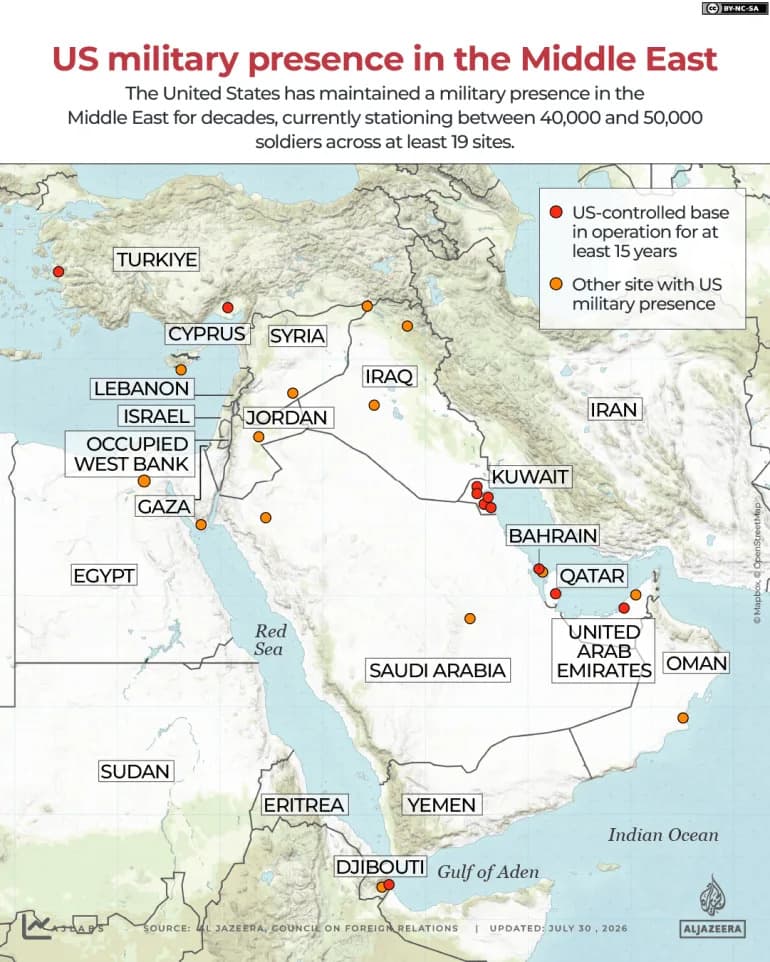
INTERACTIVE - US Military presence in the Middle East June 2026 - JUL30, 2026-1785419231
The United States has deployed a third aircraft carrier strike group and thousands of additional personnel to waters near Iran, according to US and media sources. The moves come as the conflict between Washington and Tehran enters its eighth month and diplomatic efforts continue amid heightened tensions ahead of November's US midterm elections.
What Was Deployed
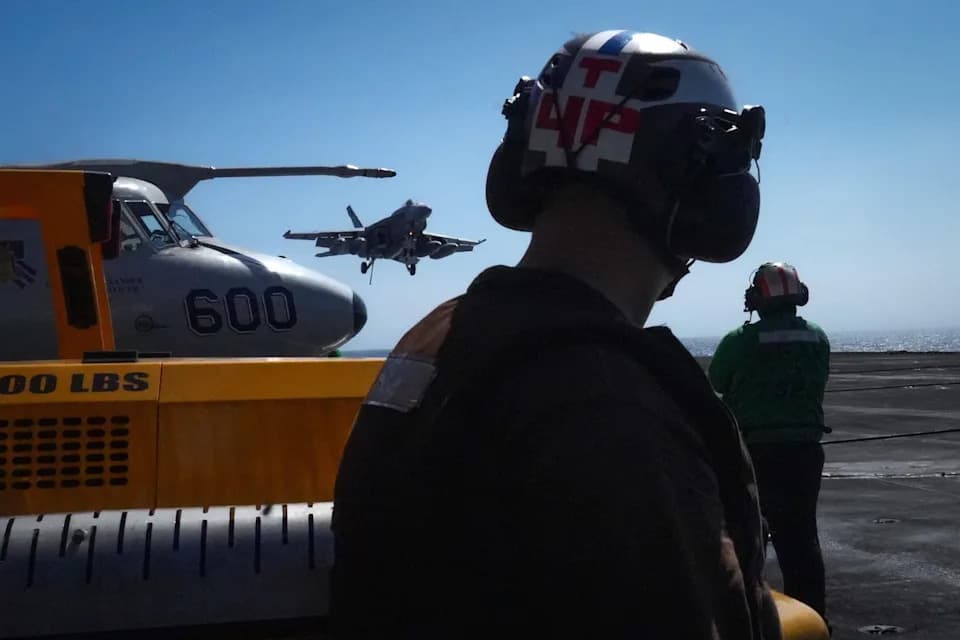
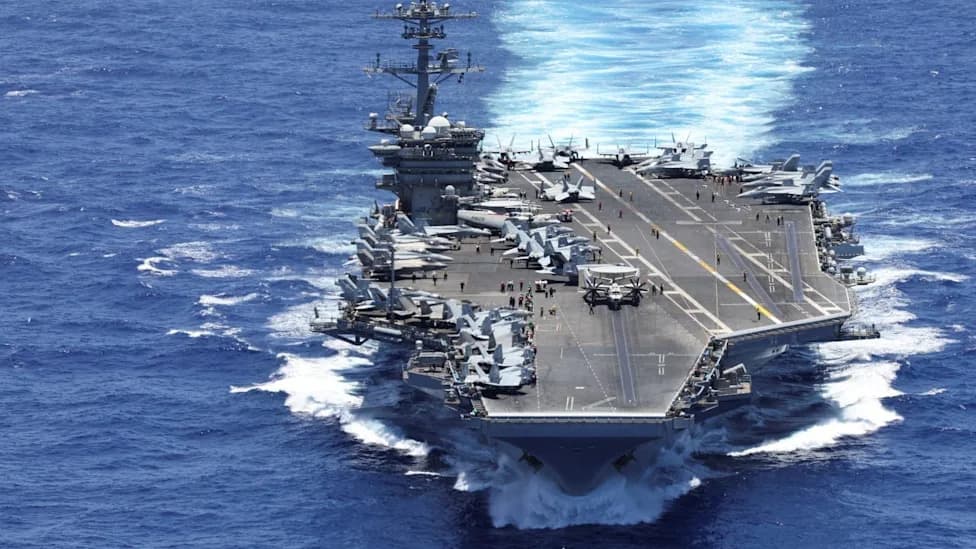
A US official told Al Jazeera that the USS Theodore Roosevelt carrier strike group departed its San Diego base, followed a day later by the Makin Island Marine Expeditionary Unit (MEU), which carries more than 2,000 Marines. The Wall Street Journal reported that those and related naval deployments could total roughly 9,000–10,000 additional US personnel, including sailors and Marines assigned to the carrier strike group and accompanying vessels.
By the end of November, the official said, three aircraft carriers and two amphibious landing groups will be positioned in proximity to Iran. Al Jazeera's reporting also said the deployment includes F-35 fighters and will add to the roughly 50,000 US service members already stationed across the region.
Context: Earlier Reinforcements
Earlier in the year the Pentagon ordered additional forces to the Gulf. Those reinforcements arrived in three main formations: the Tripoli Amphibious Ready Group with the America-class assault ship USS Tripoli and the 31st MEU; the Boxer Amphibious Ready Group centred on the Wasp-class USS Boxer and the 11th MEU; and a contingent of about 2,000 soldiers from the 82nd Airborne Division's Immediate Response Force at Fort Bragg. Together, these moves added roughly 4,500 Marines and sailors and about 2,000 soldiers — nearly 7,000 personnel — to the regional presence since the conflict began.
Airpower And Operational Signs
Open-source intelligence analysts and flight-tracking data indicate the US has deployed more than 120 aircraft to the region since early February, including E-3 Sentry AWACS, F-35 stealth fighters, F-22 air superiority jets and F-15/F-16 fighters. Analysts note many aircraft departed from bases in the US and Europe, supported by cargo planes and aerial refuelling tankers — a pattern consistent with sustained operational planning rather than routine rotations.
Political And Strategic Aims
US officials told reporters the concentration of force is intended to keep military options "on the table" for the president while diplomacy continues. Pentagon sources said they do not currently plan to withdraw assets even if an agreement with Iran is reached. Defense Secretary Pete Hegseth has said forces are "ready to go" should the president order further action.
Some analysts view the deployments as part of Washington's negotiating posture: signalling resolve and expanding leverage at the bargaining table rather than an immediate intent to launch a major offensive. However, President Trump told Time magazine that it is "possible" he could intensify strikes after the midterm elections, comments that underscored the risk that the buildup could precede escalation.
Diplomacy, Proposals And Sanctions
Indirect talks between the US and Iran have continued through mediators with no breakthrough. Iran sent a proposal — relayed via Qatar — offering to reopen the Strait of Hormuz within seven days in exchange for conditions including sanctions relief, unfreezing Iranian assets and guarantees to halt strikes. The Trump administration rejected the proposal, saying negotiations must address broader issues such as Iran's nuclear programme.
Washington has paired its show of force with economic pressure, imposing new sanctions on Iranian rail and automotive conglomerates and unveiling broader measures against Iran and third countries that trade with it. The Treasury Department characterized the measures as an effort to further drain Tehran's revenue streams.
Statements From Leaders
US Ambassador to the UN Mike Waltz described Iran's demands for frozen funds and sanctions relief as effectively non-negotiable from Washington's perspective, noting many measures are multilateral and tied to UN Security Council resolutions.
Iranian officials, including Foreign Minister Abbas Araghchi, said Tehran sought peace and insisted it did not come "to sell a war," even while warning it was "fully prepared" to resume hostilities if necessary.
President Trump warned Iran that the current confrontation would end "very soon," adding that Tehran must either "do something very proper and smart, or they won't be around very long." Such rhetoric raised concerns among diplomats and analysts about the possibility of miscalculation.
Why This Matters
The concentration of US carriers, amphibious forces and airpower near Iran increases both the options available to US policymakers and the risk of an escalatory incident. Combined with intensified sanctions and high-level rhetoric on both sides, the deployment makes the coming weeks critical for whether diplomacy can prevent a wider conflagration.
Help us improve.