An image claiming Busan’s famous bull shark "Bukhangi" was seen with a newborn pup has been debunked as AI-generated. Reverse-image checks trace the altered photo to a Yonhap News Agency picture of a single shark, and Google’s SynthID Detector reportedly found AI watermarks. Busan officials confirm no additional sharks have been sighted, and marine experts say it is highly unlikely Bukhangi gave birth in the confined artificial waterway. The episode highlights how AI images can mislead the public amid intense local fascination.
AI-Generated Photo Fuels False Claims About Busan’s Celebrity Shark “Bukhangi”
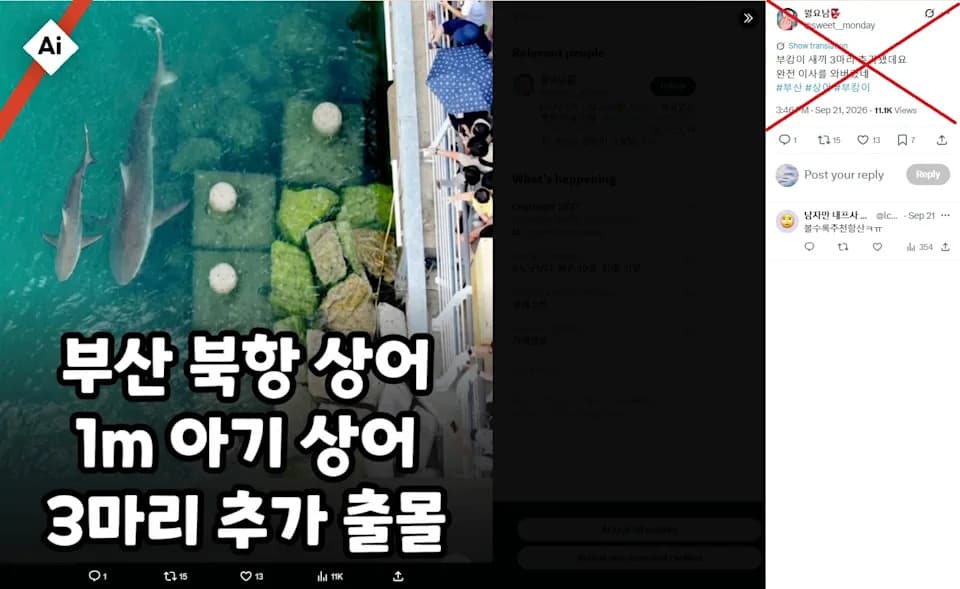
Screenshot of the false post captured on October 1, 2026, with a red X and AI symbol added by AFP
A widely shared image claiming Busan’s famous bull shark, nicknamed "Bukhangi," was photographed swimming beside a newborn pup has been debunked: city officials and marine experts say the photo was generated or altered using AI tools.
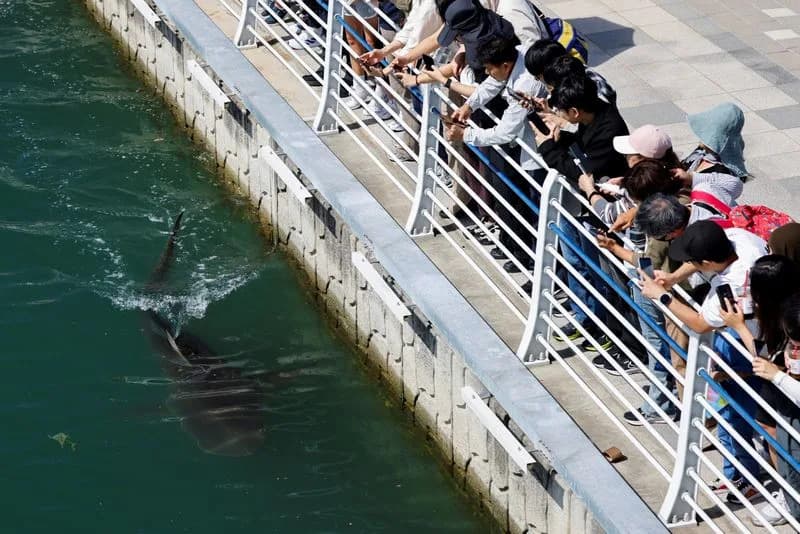
Bukhangi, a roughly 3.5-metre (11.5-foot) bull shark, first drew national attention after appearing in an artificial waterway in Busan on September 18, 2026. Since then, more than 650,000 visitors have come to North Port Waterfront Park hoping to catch a glimpse of the animal, which locals named from the Korean words for "north port" (buk-hang). Authorities have tried to guide the shark back to sea and planned another attempt on October 2.
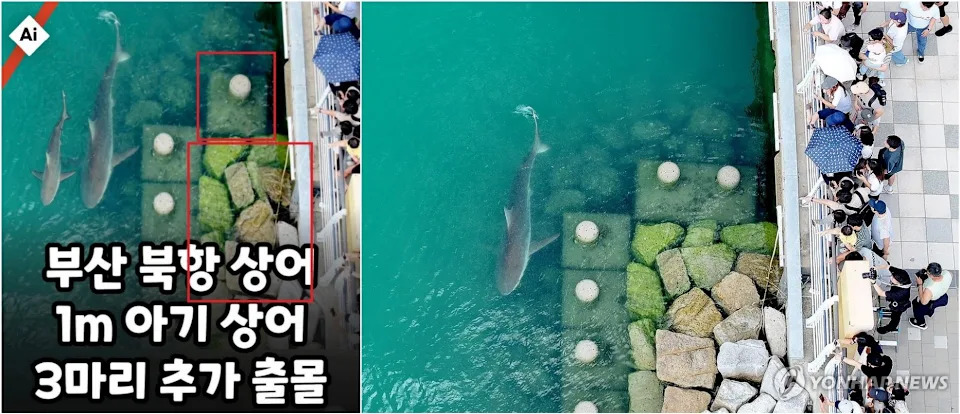
Screenshot comparison of the falsely shared image (L) and the Yonhap photo, with inconsistencies highlighted by AFP
How The Image Was Proven Fake
AFP and other investigators used a reverse image search to trace a similar photo to a Yonhap News Agency image that showed a single shark. Visual comparison revealed inconsistencies in the circulating image — compressed or missing rocks and unnaturally sharp outlines around the sharks — suggesting manipulation.
Google’s SynthID Detector, a tool that recognizes imagery produced by Google's AI systems, reportedly detected hidden digital watermarks consistent with AI generation. Those invisible watermarks are designed to persist even after common edits like cropping or filtering.

Screenshot of results from the analysis by Google's SynthID Detector
Experts And Officials Weigh In
An official from Busan’s City Park Policy and Planning Division told AFP that no additional sharks have been found since Bukhangi’s arrival and that the two-shark image was AI-generated. Marine scientists also say a newborn pup is unlikely.
"It is very unlikely" Bukhangi gave birth, said Choi Youn, professor emeritus at Kunsan National University’s Department of Marine Living Resources. He noted bull sharks typically have 10–20 pups at once, and newborns immediately begin hunting — behavior unlikely to go unnoticed in the confined artificial waterway.
Kim Jin-koo, a professor of global fisheries at Pukyong National University, said Bukhangi may have come closer to shore because water temperatures around South Korea have risen, a trend some groups see as consistent with intensifying climate change.
Why This Matters
The false image fed local excitement and speculation about Bukhangi’s family. The shark has become an unexpected cultural phenomenon — named an honorary public relations ambassador for Busan and linked to a near 30% spike in sales of shark-shaped ice cream near the waterfront — and highlights how easily AI-manipulated images can distort public perception and complicate wildlife reporting.
Facts at a glance: No additional sharks have been confirmed; the two-shark image shows signs of AI alteration and likely derives from a Yonhap single-shark photo; SynthID detected AI-origin watermarks; marine experts say birth in the artificial waterway is highly improbable.
Help us improve.