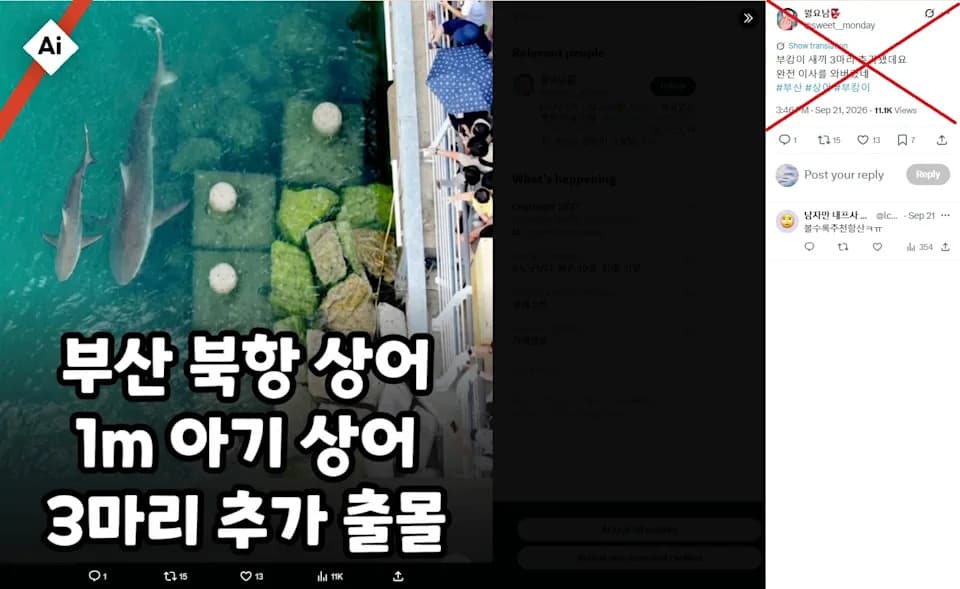
A 3.5-metre shark nicknamed "Bukangi" remains trapped in a narrow Busan canal after a second rescue attempt using a 50-metre net and earlier water jets failed. Rescuers left the net in place to limit the shark's range to a roughly 100-metre stretch and hope shifting tides and currents will allow it to exit on its own. The sighting has drawn around 600,000 visitors and prompted discussion about warming seas after shark sightings rose on the east coast this year.
Second Rescue Fails: 3.5m Shark "Bukangi" Remains Stranded in Busan Canal
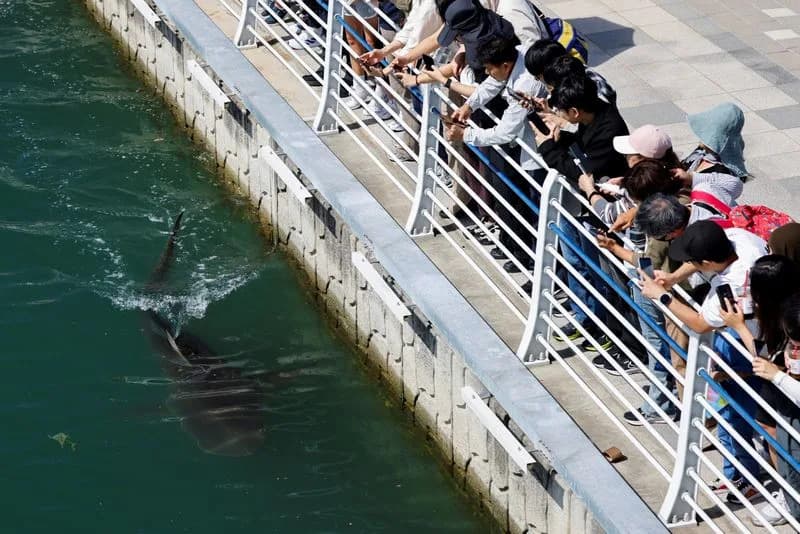
People watch a shark nicknamed "Bukangi" swimming in a canal at the North Port in Busan, South Korea, October 2, 2026. REUTERS/Kim Soo-hyeon
A 3.5-metre (about 11.5 ft) shark nicknamed "Bukangi" remains trapped in a narrow canal at North Port in Busan after a second coordinated rescue effort ended without success on Friday. The animal has now stayed in the waterway for a third consecutive week since it was first spotted on September 18.
Rescue Attempts and Net Strategy
Rescue teams initially tried to coax the shark toward the open sea using vessels fitted with water jets, but the animal swam away from the jets and remained in the channel. On the second attempt, officials deployed a 50-metre-long, 6.8-metre-high net across the canal to prevent the shark from turning back.
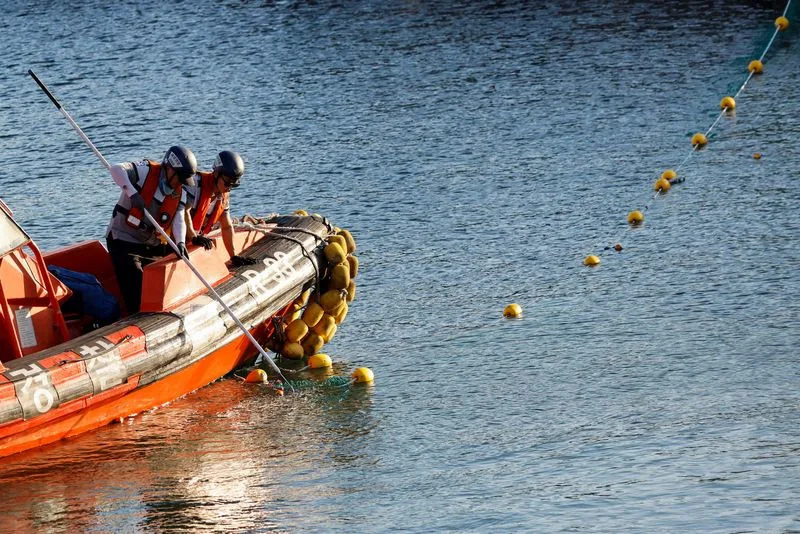
Rescue workers aboard a boat adjust a net during an operation to guide a shark nicknamed "Bukangi" out of a canal at the North Port in Busan, South Korea, October 2, 2026. REUTERS/Kim Soo-hyeon
A vessel pulled the centre of the net while teams of five people on each side walked along the waterfront, coordinating their speed to guide the shark seaward. After a roughly two-hour chase, rescuers halted the operation because the large net risked snagging on submerged rocks.
Authorities left the net in place to restrict the shark's range to a roughly 100-metre stretch that leads to the sea. Officials hope that changing tides, water levels and currents will eventually allow the shark to swim out on its own.
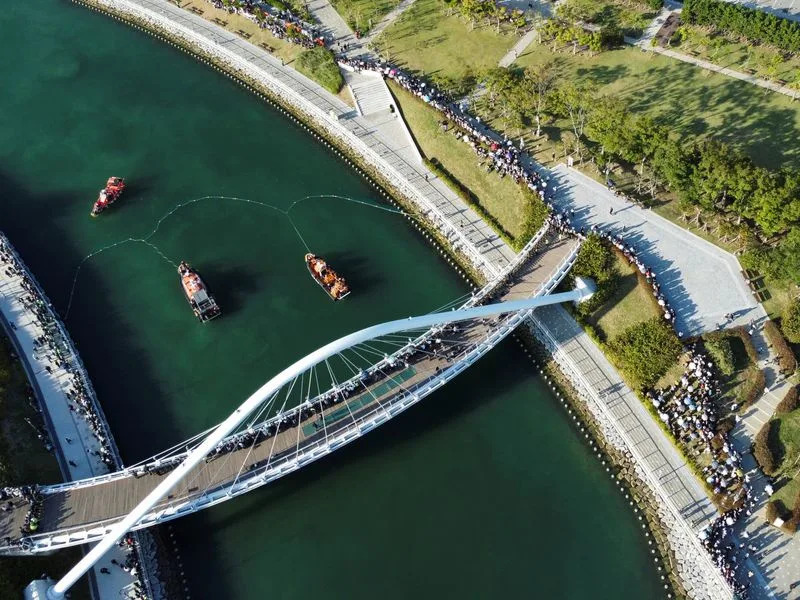
A drone view of boats and a net during an operation to guide a shark nicknamed "Bukangi" out of a canal at the North Port in Busan, South Korea, October 2, 2026. REUTERS/Kim Soo-hyeon
Expert Views and Urban Challenges
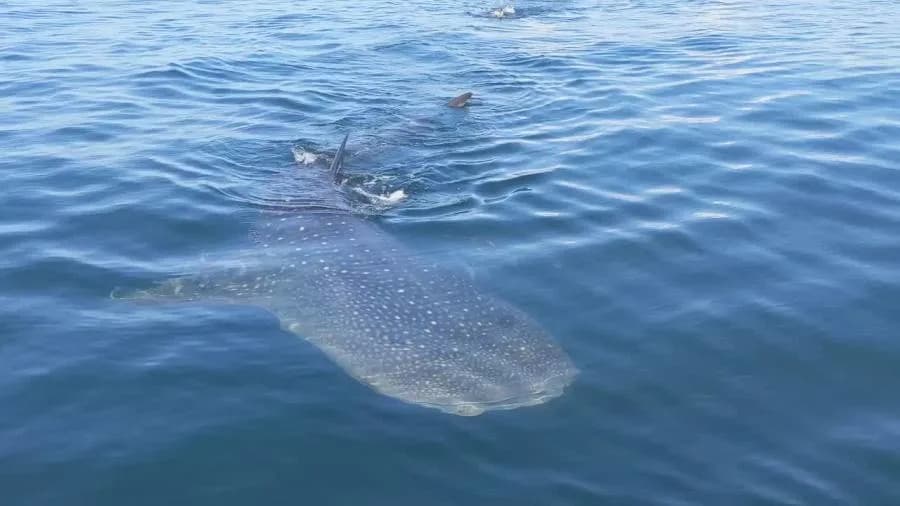
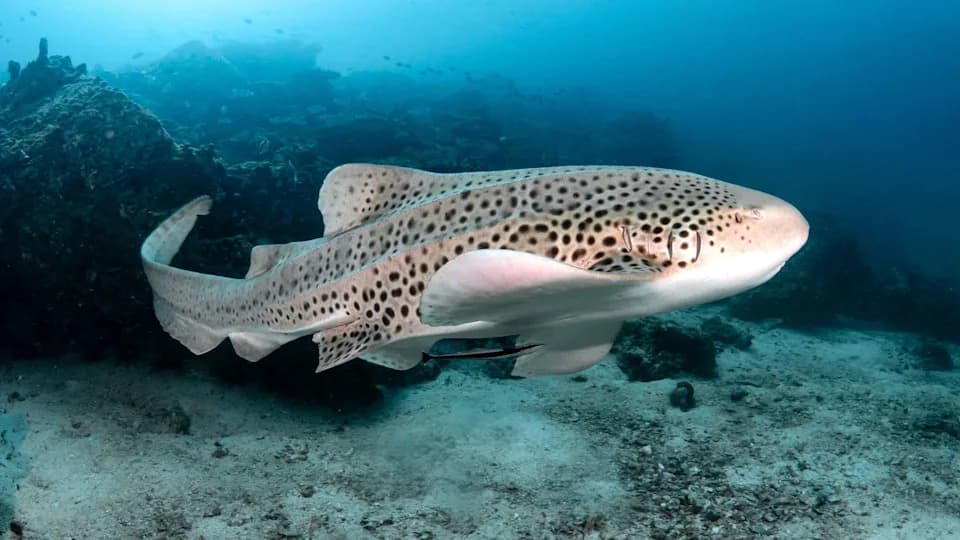
Marine specialists suspect the animal may be a bronze whaler, a species commonly found in warm temperate waters and previously observed off South Korea's coast. Experts say urban noise, bright lights and electrical signals in the busy port environment could be disorienting the shark and complicating rescue efforts.
"As the water level changes and the current shifts, we expect the shark may eventually be able to make its own way out," said Kim Hyun-woo, a senior researcher at the National Institute of Fisheries Science who has been leading the operation. "Once we confirm that it has completely left the canal and made its way out into the open sea, we can consider the operation a success."
Public Reaction and Broader Context
The sighting has attracted intense local interest, with roughly 600,000 visitors reported to have come to see Bukangi. Hundreds gathered along the waterway during Friday's attempt; some said they would miss the shark if it left, while others urged authorities to return the animal to its natural habitat as soon as possible.
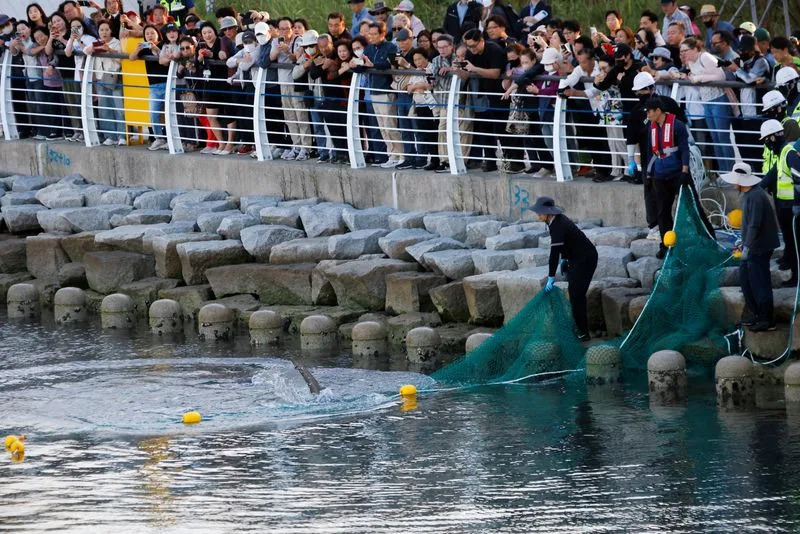
A shark nicknamed "Bukangi" is seen as workers handle a net during an operation to guide a shark nicknamed "Bukangi" out of a canal at the North Port in Busan, South Korea, October 2, 2026. REUTERS/Kim Soo-hyeon
"I do hope it eventually heads back out to the open sea. But I guess it likes Busan, too, since it's still here," said Busan resident Jo Won-ho.
Bukangi's prolonged presence has also highlighted changing marine conditions around South Korea. An analysis by the National Institute of Fisheries Science found 46 sightings of large sharks along the country's east coast during the first half of this year, up from 12 during the same period last year — a rise experts link in part to warming sea temperatures.
What Happens Next
For now, officials are monitoring the shark's movements and environmental conditions. They say they will consider the operation successful once they confirm the animal has left the canal and returned to open water. In the meantime, they continue to weigh public safety, the animal's welfare and the operational risks of further direct intervention.
Help us improve.