The familiar image from The Lion King — hyenas as the sneaky thieves and lions as noble defenders — clashes with six years of fine-scale GPS tracking. Seventeen lions and 14 spotted hyenas in Namibia and Botswana produced 349,163 location fixes from 2013–2018 at five-minute intervals. When collared animals were near one another, hyenas typically moved away while lions did not retreat; male lions showed the strongest tendency to close distance. The data document movement patterns, not motives, but they suggest lions more often lean into the rivalry.
The Lion King Got It Backward: Six Years of GPS Data Suggest Lions, Not Hyenas, Drive the Rivalry
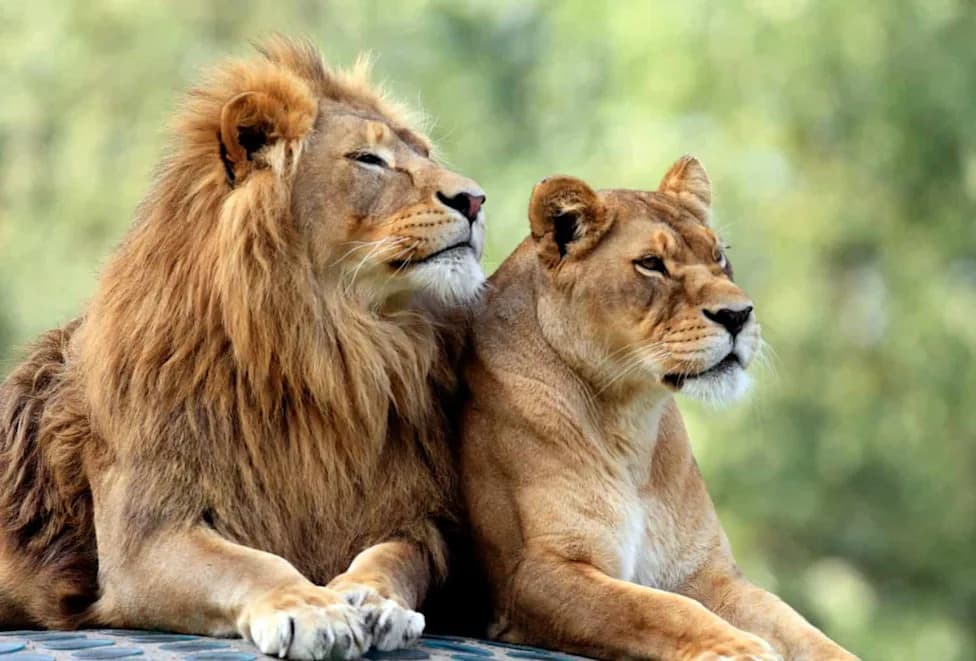
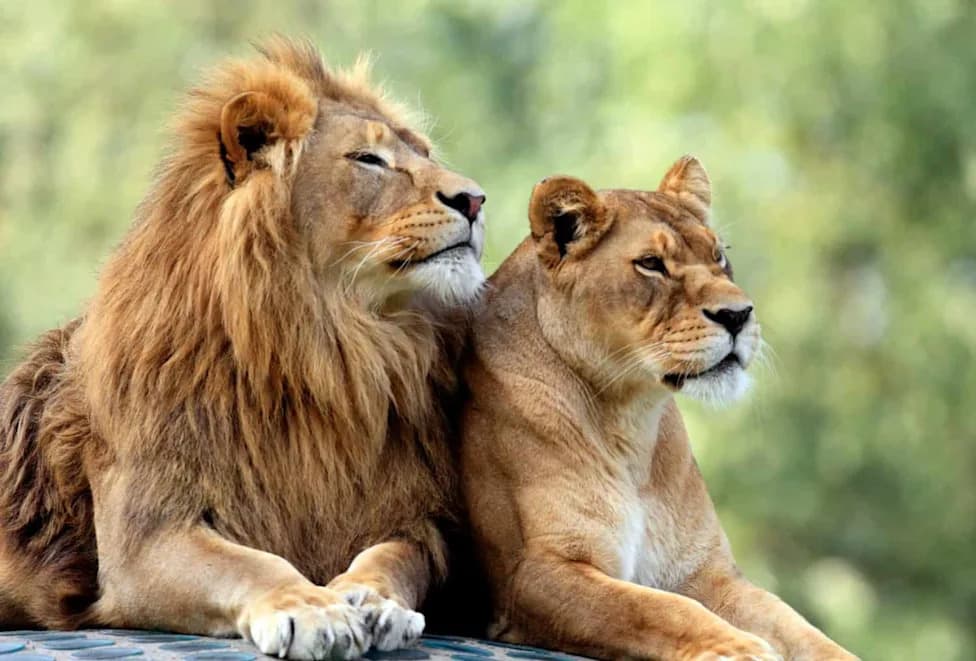
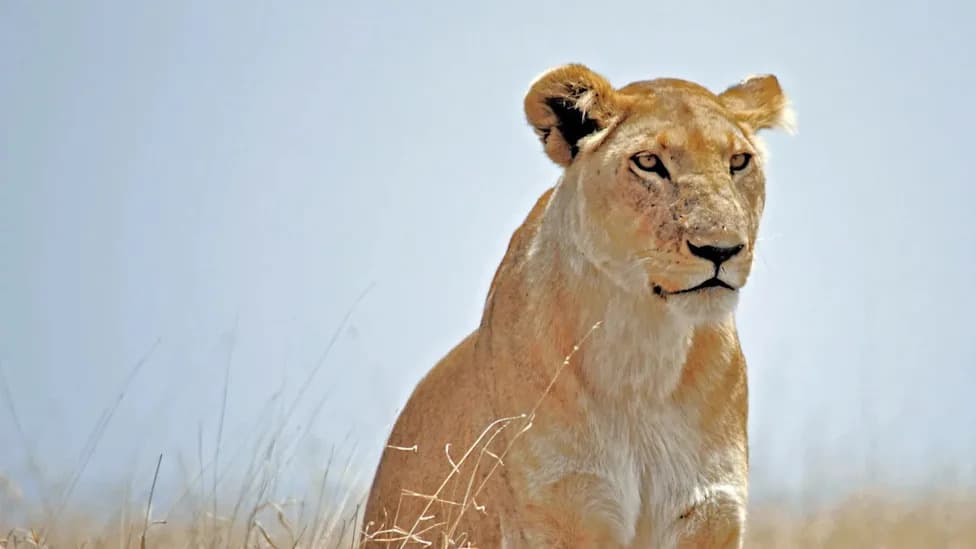
Pair of adult Lions in zoological garden© ArtMediaFactory/Shutterstock.com
Popular culture casts hyenas as the sneaky villains of The Lion King, always creeping toward a lion’s meal. But six years of fine-scale GPS tracking from Namibia and Botswana tell a different story: when collared hyenas and lions crossed paths, the hyenas usually backed away while lions held ground — and male lions were the most likely to close the distance.
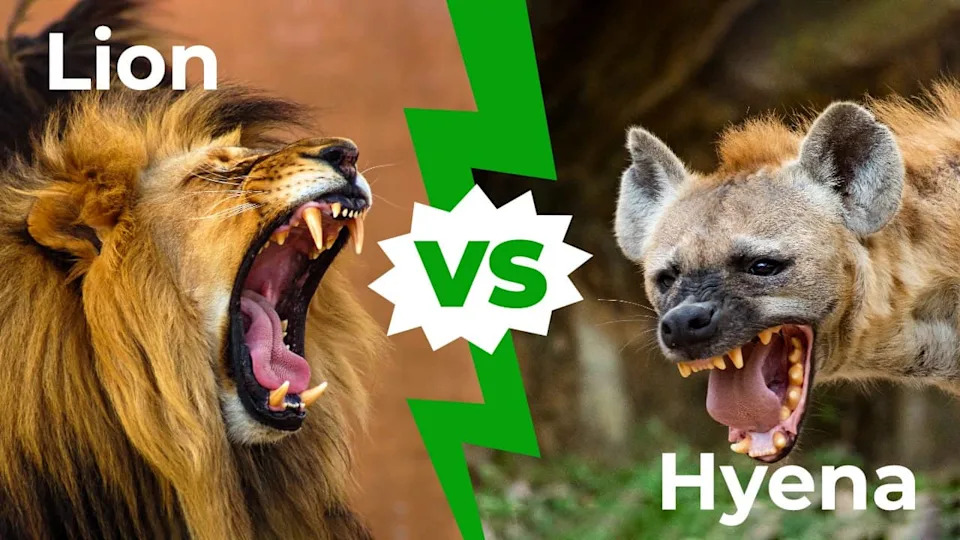
Lion vs. Hyena: The Similarities and Differences Between These African Predators
How the Study Worked
From 2013 to 2018, researchers fitted GPS collars to 17 lions and 14 spotted hyenas in Etosha National Park (Namibia) and the Chobe-Linyanti region (Botswana). The collars logged positions every five minutes during the animals’ most active hours, producing a dataset of 349,163 location fixes. When a lion and a hyena were collared and recorded at the same five-minute timestamps, researchers could align their movements step by step and determine which animal tended to move toward the other.
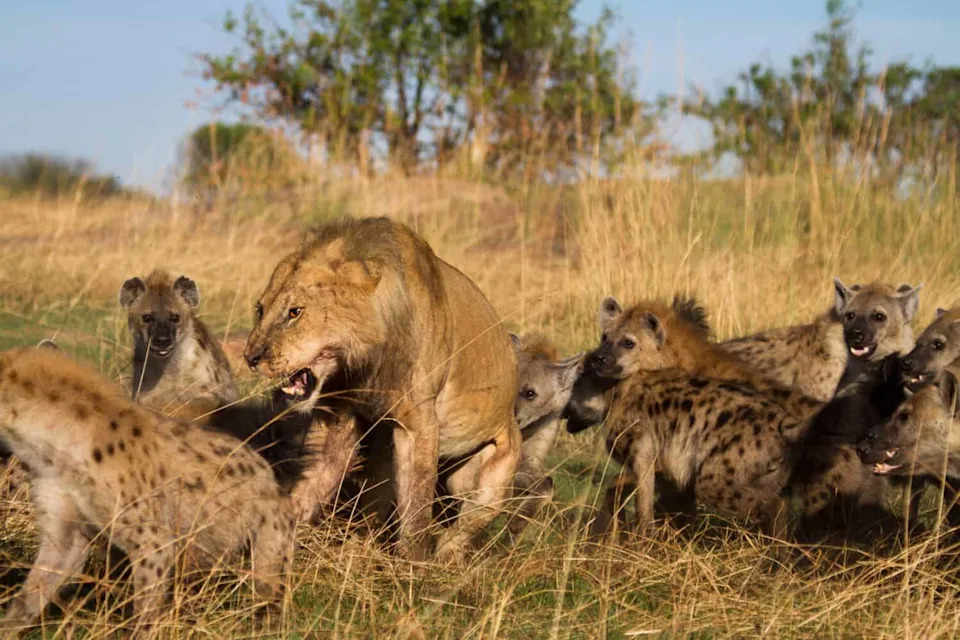
When Numbers Matter: 30 Hyenas Challenge a Male Lion©Mark Sheridan-Johnson/Shutterstock.com
Clear Patterns at Fine Scale
Across the paired encounters, a consistent pattern emerged: hyenas tended to retreat. Within 10 km of a lion, 8 of 10 tracked hyenas took more steps moving away than toward the lion. At a closer scale (within 5 km), all nine usable pairs showed the hyena retreating, strongly enough that chance was unlikely to explain the pattern.
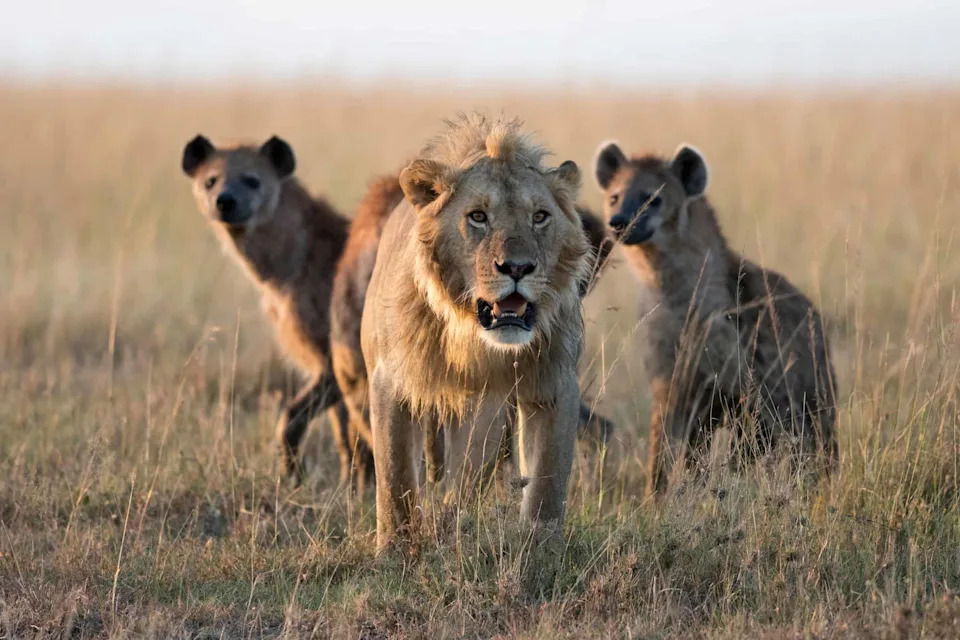
See What Happens When the King of the Jungle Gets Annoyed with a Group of Hyenas©AfricaWildlife/Shutterstock.com
"If hyena activity were aversive to lions, we would expect lion movement relative to hyenas to be biased toward retreat in at least some dyads. We see none."
Quantitatively, a hyena's probability of moving toward a nearby lion was 0.461, indicating a slight bias toward moving away. Lions overall had a toward probability of 0.517, essentially a coin flip, so as a whole lions did not consistently avoid hyenas.
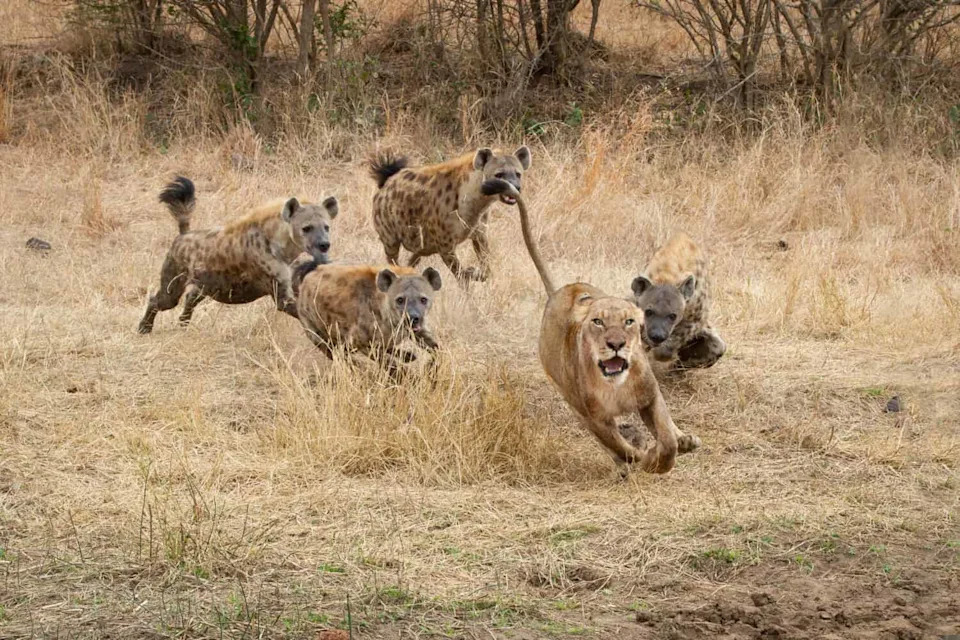
Inside the Fierce Rivalry Between Lions and Hyenas©MintImages/Shutterstock.com
Notable Examples and Sex Differences
One illustrative dyad — lion OF-34309 and hyena SA-33872 — exemplified the pattern: the lion’s toward-ratio was 0.687 (a strong tendency to close distance) while the hyena’s toward-ratio was 0.299 (a clear retreat).
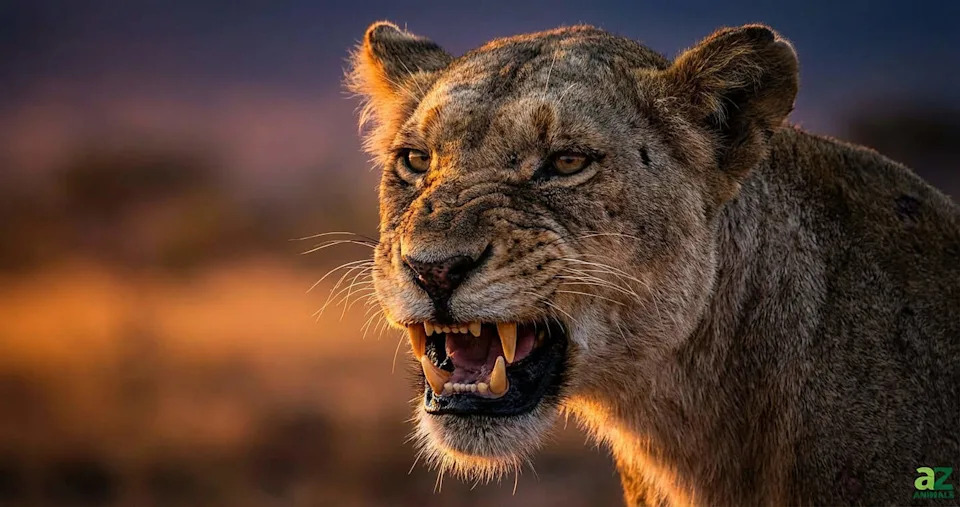
Wild Dog Pack Miscalculates Attack On Lone Lioness©A-Z Animals
Male lions showed a stronger tendency to move toward hyenas: across three male-lion pairs the mean toward-ratio was 0.573, whereas female lions averaged 0.486. The researchers had predicted that males would be more likely to track hyenas, but this result rests on a small sample (effectively two individual males across three pairs) and the sex-based difference was not statistically significant.
Context, Caveats, and What the Data Actually Show
The collars record positions and times, not intent. The data reveal a lopsided pattern of movement: hyenas typically give ground and lions, particularly males, are more likely to hold or close distance. Earlier landscape-scale studies showed hyenas and lions often use overlapping areas, suggesting coexistence at broad scales; the five-minute-step approach reveals how those interactions unfold in real time — a hyena that encounters a lion during an afternoon will usually withdraw.
These step-level results align with field observations: hyenas are more active in daylight in areas with lions (probably to reduce direct competition), and hyenas generally only steal kills when they have enough numbers to overwhelm lions — rarely when male lions are present.
Bottom Line
The GPS collars logged six years of synchronized movement showing hyenas usually moving away from lions while lions did not move away from hyenas. The study stops short of labeling any species a "villain" — it documents movement patterns. Still, if one species more often leans into the rivalry, the step-by-step tracks point to lions, especially males.
Credits: Original reporting and dataset discussed by A-Z Animals; comparative context referenced from the Ngorongoro Hyena Project and other field studies of hyena-lion interactions.
Help us improve.