The Battersea Shield is a decorated bronze shield facing recovered from the River Thames in 1857 and now in the British Museum. Measuring about 30.6 x 14 inches and weighing roughly 7.5 lb, it dates to the Iron Age (c. 350–50 B.C.) and was made from thin bronze sheets joined with rivets. Its elaborate, undamaged decoration suggests it was probably not used in combat but deliberately deposited in the river as a ritual offering. The shield has become an enduring symbol of ancient Britain.
Battersea Shield: Iron Age Bronze Masterpiece Likely Sacrificed In The Thames
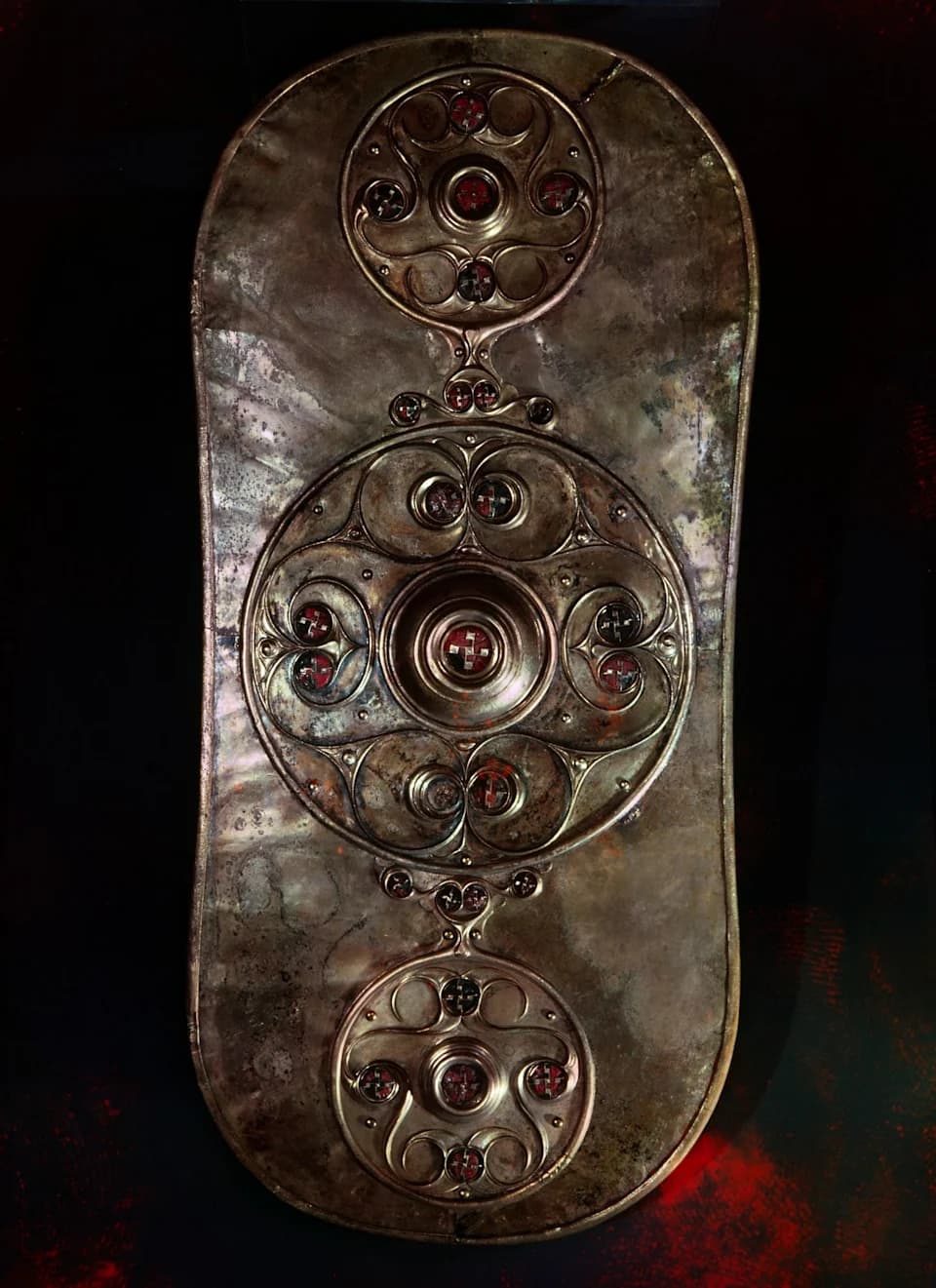
The Battersea Shield was pulled out of the River Thames in 1857. | Credit: Universal History Archive/Universal Images Group via Getty Images
The Battersea Shield is a decorated bronze shield facing recovered from the River Thames in 1857 and now held by the British Museum. Found by a labourer working on a bridge near Battersea, London, this finely worked object has puzzled and fascinated archaeologists because it shows no sign of battle use and may have been deliberately deposited in the river as an offering.
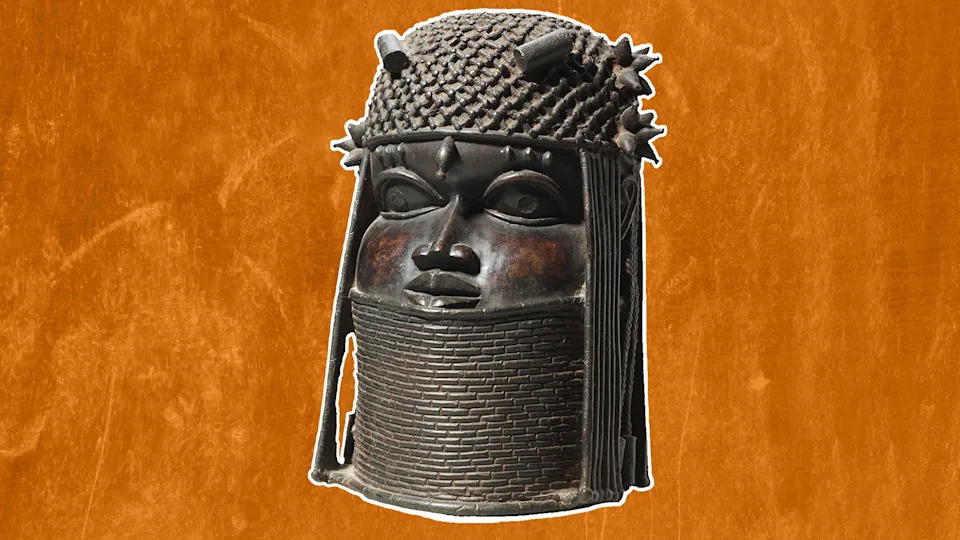
This brass head depicts an
What It Is
According to the British Museum, the shield is made from several sheets of thin bronze joined with rivets. It measures about 30.6 inches (77.7 cm) long by 14 inches (35.7 cm) wide and weighs roughly 7.5 pounds (3.4 kg). The bronze facing would originally have been fixed to a wooden or leather backing to form a complete defensive shield; no trace of that backing survives.
an x-shaped folding wood chair frame against an orange background
Date And Origin
Stylistic features place the Battersea Shield in the Iron Age, probably made between 350 and 50 B.C.. The decoration was repoussé (hammered from the back) in a Celtic style. The circular shield boss at the centre is a form identified by specialists as specifically British, which suggests the shield was manufactured in Britain rather than imported from another Celtic region.
a gold and garnet crown against an orange background
Decoration And Symbolism
The shield is richly ornamented with palmettes and interlocking S-shaped motifs. It also carries 27 round fittings set with red glass enamel and bronze in patterns that resemble hooked crosses or swastika-like forms—motifs that in many ancient cultures, including some Celtic contexts, conveyed positive or protective meanings. These circular elements may also have been intended to look like rows of staring eyes, a design meant to intimidate or ward off enemies, as suggested by Sophia Adams, a curator at the British Museum.
"There’s something of a watery element to these shapes, the swirls and eddies," Adams has observed. "So I wonder if there’s almost an intention that this was meant to end up in the water."
Function And Interpretation
Because the bronze facing shows no clear signs of use or damage, most specialists think it was unlikely to have been used in combat. The prevailing interpretation is that the shield was deliberately deposited in the Thames as a ritual offering—either to the river itself, to a deity associated with water, or to an important ancestor.
Legacy
Archaeologist Kate Sumnall, a curator at the London Museum, has called the Battersea Shield "the most famous object ever to be found in the Thames." Over time it has become a potent emblem of pre-Roman Britain and has appeared on postage stamps and a range of commercial products. The object provides an important window onto Iron Age craftsmanship, ritual practice and regional decorative styles.
Discovery and Acquisition: Found in 1857 and acquired directly from the construction worker who discovered it, the Battersea Shield remains a key piece for understanding Iron Age Britain and the archaeological record of the Thames.
Help us improve.