Red Queen Bio, an OpenAI‑backed startup, is using AI to design broadly neutralizing antibody drugs intended to protect against entire families of viruses, potentially including strains that have not yet emerged. The company has raised $36 million and plans initial clinical trials beginning in 2027, starting with influenza and bird flu. While AI has not produced a pandemic‑capable human virus, advances in generative biology motivate building faster countermeasures. The approach remains experimental and depends on successful lab validation and human trials.
Can AI Help Stop the Next Pandemic? Inside Red Queen Bio’s Plan to Prebuild Antibody Defenses

(Dreamstime)
Could advanced artificial intelligence someday enable the design of dangerous biological agents — and if so, could that same technology be used to stop them? Red Queen Bio, an OpenAI‑backed biotech startup, is pursuing a provocative answer: use AI to design broadly neutralizing antibody drugs that could protect against entire families of viruses, including strains that have not yet emerged.
What Red Queen Bio Is Building
Red Queen is developing antibody therapeutics intended to bind tightly to conserved viral targets across whole virus families. The company has raised $36 million and is initially focusing on influenza — including bird flu — with plans to begin human clinical trials in 2027, according to reporting by The Wall Street Journal. Over time it plans to expand to coronaviruses, Ebola‑like viruses, relatives of smallpox and other high‑risk families.
How the Platform Works
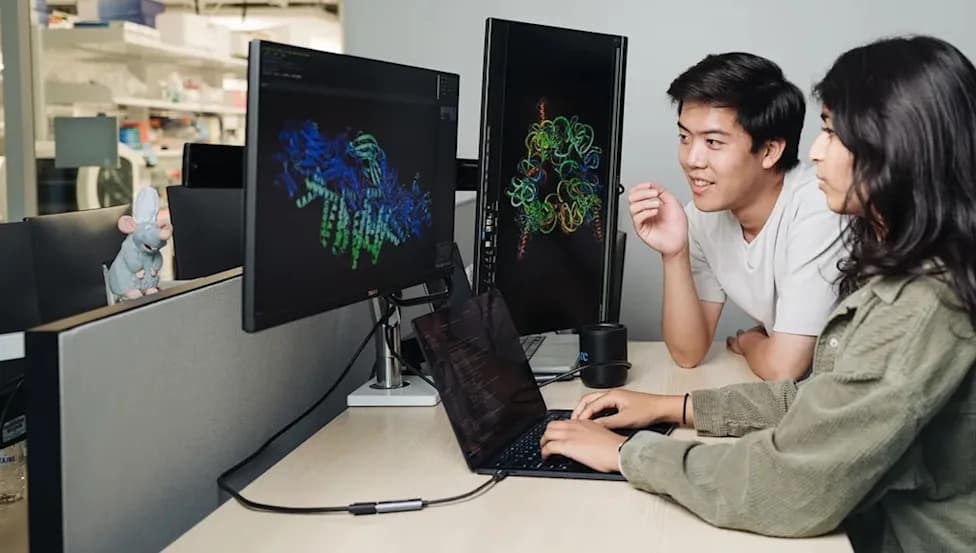
The company uses generative AI models to propose antibody sequences predicted to attach strongly to chosen viral sites. Promising candidates are synthesized and tested in the laboratory; experimental results are fed back into the models to refine subsequent designs in an iterative loop. In theory, higher binding affinity means lower required doses and easier scaling for deployment.
“The tighter they bind, the less of them you need. Suddenly, you have something that can scale,” said Red Queen CEO Nikolai Eroshenko.
Why This Matters
Red Queen frames its mission as creating an "AI‑powered biodefense layer" — a capability to design and produce medical countermeasures rapidly when a new biological threat appears. The company says it does not perform gain‑of‑function experiments or create and isolate dangerous pathogens.
If successful, broadly neutralizing antibodies could be stockpiled for emergency use or rapidly modified to address an emerging pathogen, shortening the current reactive cycle of waiting for a threat to spread before developing treatments.
How Real Is the AI Threat?
There is no evidence that AI has produced a virus capable of causing a human pandemic. Engineering a pathogen that infects people, transmits efficiently and causes serious disease remains highly complex. Still, generative biology is progressing: researchers have used AI to design novel bacteriophages (viruses that infect bacteria), and some synthetic phages engineered with AI successfully infected and killed bacteria in lab tests. Those experiments demonstrate AI can design functional viral sequences in specific contexts — a capability that motivates preparation.
“The attackers have as much time as they want to develop a bioweapon. We don't have years to design a countermeasure,” said Olivia Scharfman, a biotechnology fellow at the Institute for Progress.
Limits and Next Steps
Red Queen’s approach could also help against naturally emerging diseases, not just deliberate threats. However, the platform remains experimental: computer‑designed antibody candidates must clear laboratory validation and then human clinical trials to demonstrate safety and efficacy. The first trials are planned for 2027, and broader impact will depend on regulatory approval, manufacturing scale, and real‑world performance.
The company takes its name from the Red Queen hypothesis in evolutionary biology — the idea that organisms must continually adapt to survive amid ever‑changing threats — and aims to apply that principle to infectious disease using AI-driven design and rapid iteration.
Help us improve.